
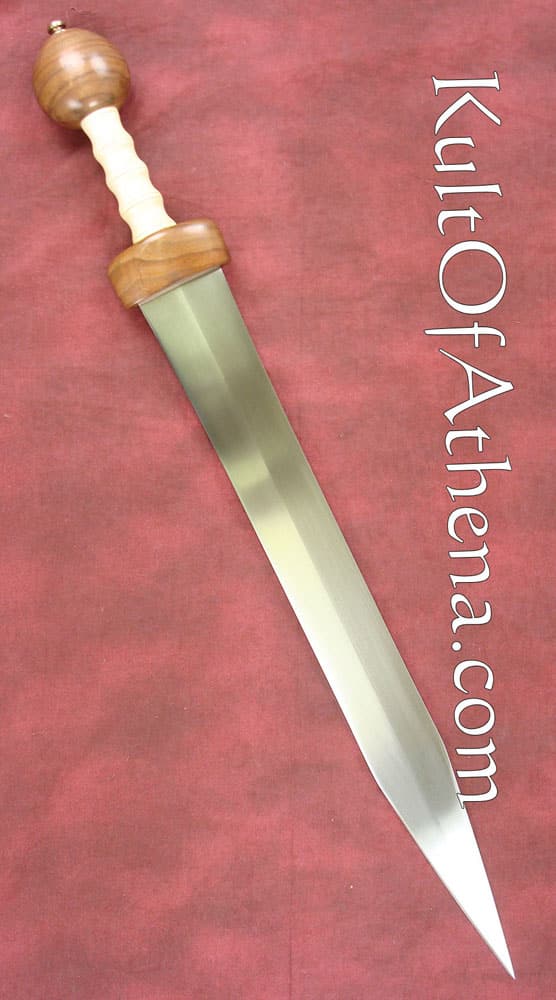



Albion Aquilifer Roman Gladius
Special Order - Estimated wait time of 18-24 months
$886.00
- Shipping estimated at checkout
- Every blade inspected before shipping
- 30-day returns
- Overall Length
- 28 1/8''
- Weight
- 1 lb 8 oz
- Brand
- Albion Swords Ltd
- Culture
- Roman
- Era
- Ancient
Overview
Albion Aquilifer Roman Gladius
The Roman Legions were renowned for their brutal, efficient use of the short sword and over the centuries the style of short sword changed as tactics changed or were refined. Beginning with the ''gladius Hispaniensis'' (based on a Celt-Iberian leaf-bladed short sword), over time the sword became shorter and broader (the Mainz and Fulham patterns) and culminated in the ''Pompeii'' style stabbing sword.
The Fulham pattern gladius is of the same early period as the Mainz style -- it has been theorized that they are actually the same basic pattern and represent only a slight variation of the basic leaf-blade pattern, possibly due to differing regional or manufacturing styles.
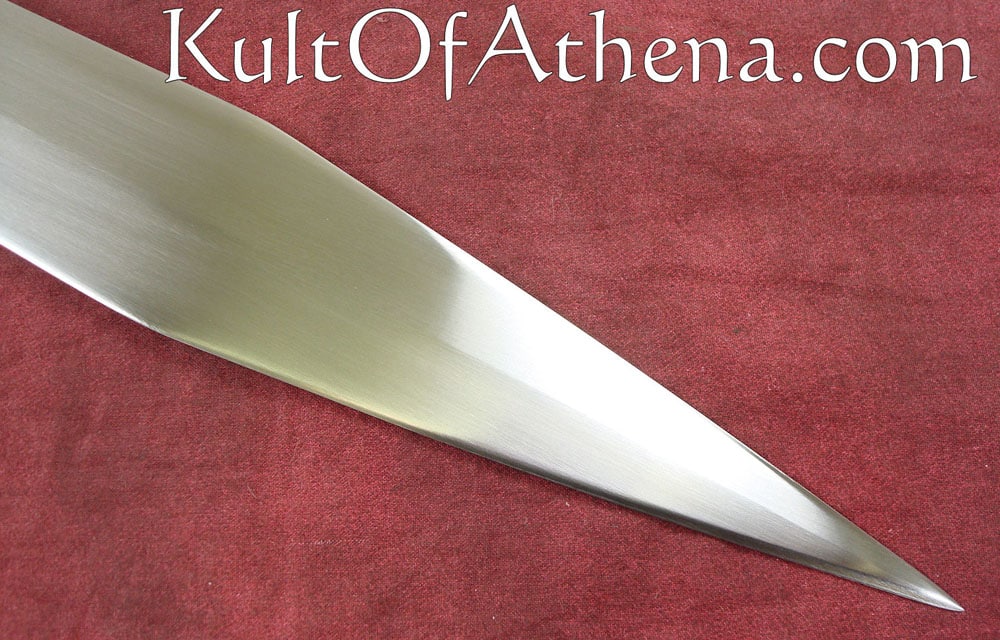
Like the Mainz gladius, the Fulham has a long point and the blade is ''waisted,'' but in the case of the Fulham it is not as severe as in the Mainz.
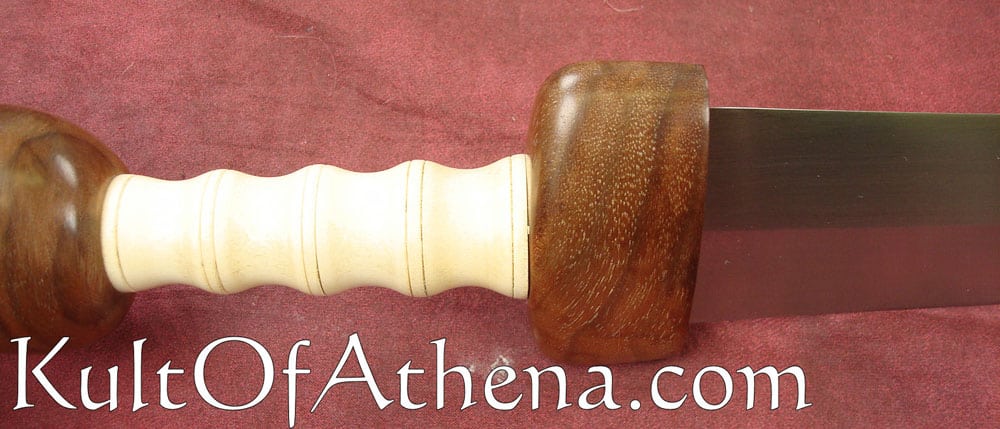
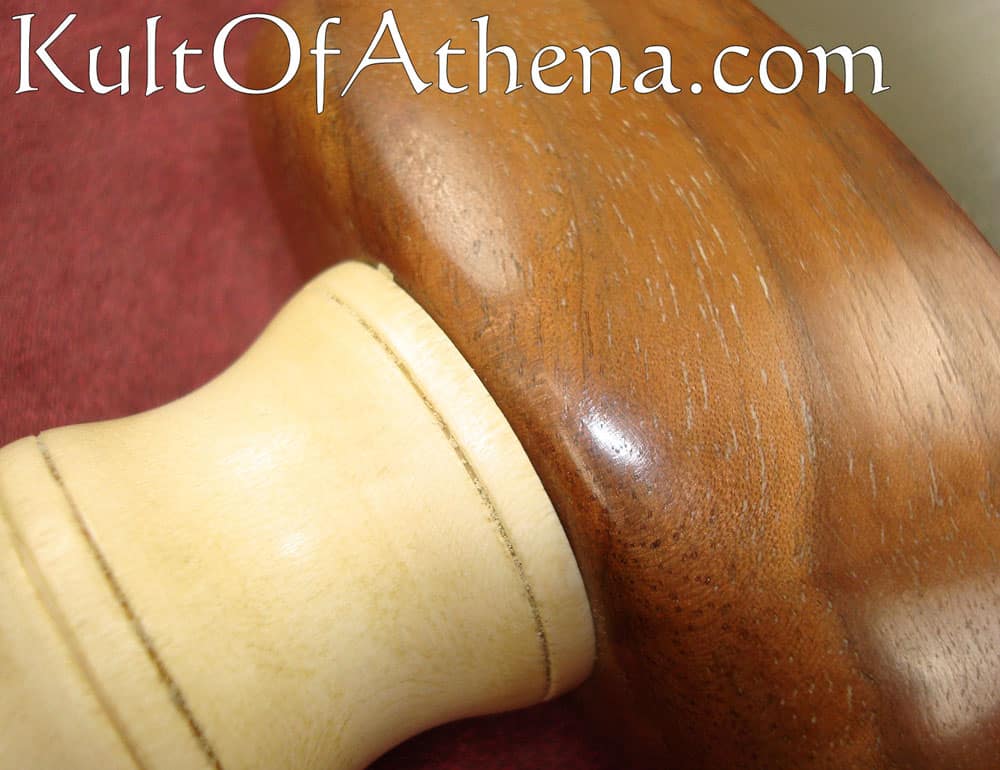
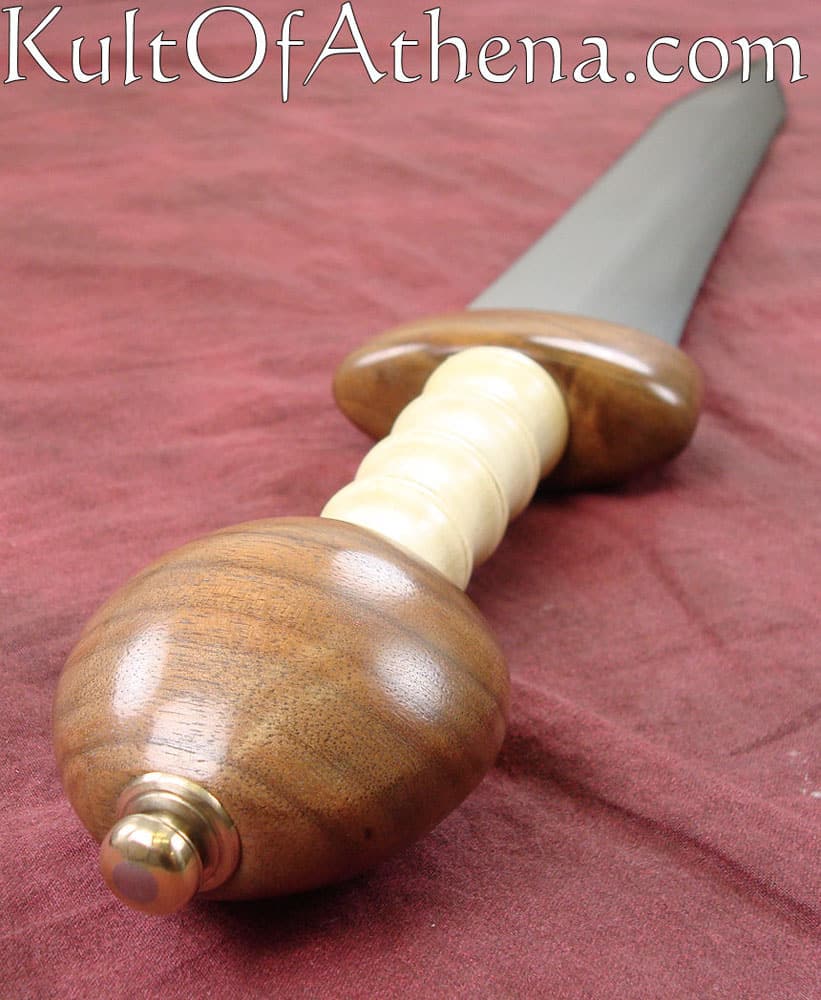
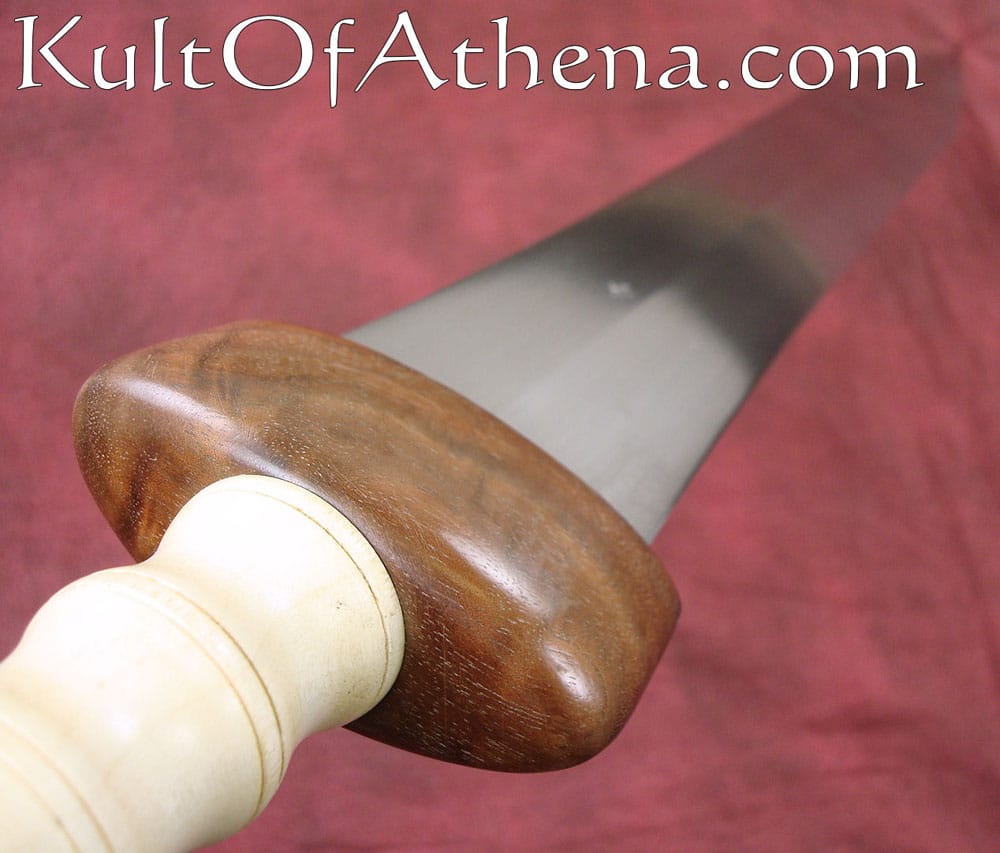
The Albion Next Generation Aquilifer Roman Gladius is a beutiful example of the Fulham pattern. The blade is hand-ground from high carbon steel to a fine satin finish, sharpened and heat-treated by hand in the Albion Forge Shop. The guard and pommel are hand-crafted of walnut, the grip turned from holly, and the inset guard plate and pommel nut are of bronze.
Specifications
Every measurement that matters
- Brand
- Albion Swords Ltd
- Culture
- Roman
- Era
- Ancient
- Edge
- Very Sharp
- Pommel
- Peened
- Overall Length
- 28 1/8''
- Blade Length
- 20 3/8''
- Weight
- 1 lb 8 oz
- P.O.B.
- 4''
- Thickness
- 5.4 mm - 3 mm
- Width
- 59.8 mm
- Grip Length
- 3 1/2''
- Type
- Gladius
Reviews
What collectors are saying
Q&A
Questions from the community
Q What steel is the blade made of, and how is it heat-treated? Common Question
The blade is hand-ground from 6150 high carbon steel and heat-treated by hand in the Albion Forge Shop. This steel is tough and holds an edge well, making it suited to a sword built for real use rather than display alone.
Q Is this sword full tang? Common Question
Yes. The tang runs the full length of the hilt in the same steel as the blade and is peened over the pommel, which is the traditional, most durable way to secure a blade for a sword meant to be swung and thrust with.
Q Does the blade come sharp? Common Question
Yes, this gladius ships with a very sharp edge, ready to cut rather than needing to be sharpened after purchase.
Q What is this sword best suited for? Common Question
This is a Battle Ready gladius built on the Fulham pattern, with a hand-ground, heat-treated high carbon steel blade and a full tang peened over the pommel. It's well suited to cutting practice on targets like tatami or water bottles, as well as historical study and display of the Roman short sword.
Q What are the grip, guard, and pommel made of? Common Question
The guard and pommel are hand-crafted from walnut, the grip is turned from holly, and the inset guard plate and pommel nut are bronze. The photographs show the pale, ribbed grip section against the darker, polished wood guard and rounded wooden pommel, with a small bronze cap at the pommel's end.
Q How should I care for this sword? Common Question
Wipe the blade down after handling to remove oils and moisture, then apply a light coat of oil to the high carbon steel to prevent rust. Store it in a dry place, and keep the wooden grip and guard lightly oiled as well to preserve the walnut and holly over time.
Q What does the point of balance tell me about how this sword handles? Common Question
The point of balance sits 4 inches out from the guard, close to the hilt for a blade of this length. That placement keeps the sword lively and quick to bring to point, matching the thrusting and cutting style the Roman gladius was built for.
Q What's the historical background of this pattern? Common Question
This sword follows the Fulham pattern gladius, closely related to the Mainz pattern from the same early Roman period. Like the Mainz, it has a long point and a waisted blade profile, though the waist is less pronounced than on a Mainz-style gladius.
Q Can I use this sword for cutting practice? Common Question
Yes. With its very sharp edge and high carbon steel blade, it's suited to cutting practice on targets such as tatami mats or water bottles.
The Maker
Albion Swords Ltd
Albion Swords Ltd. offers the highest quality of finely detailed European swords and daggers.
Often paired together

No reviews yet. Only logged in customers who have purchased this product may leave a review.