
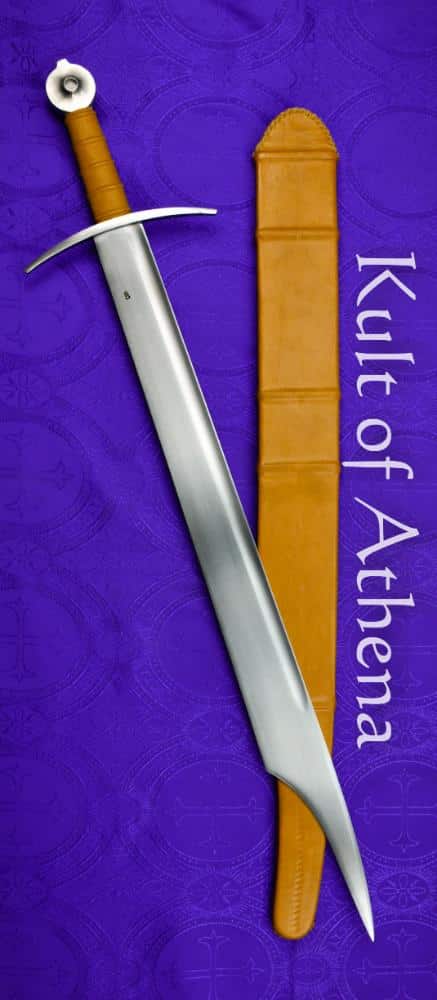
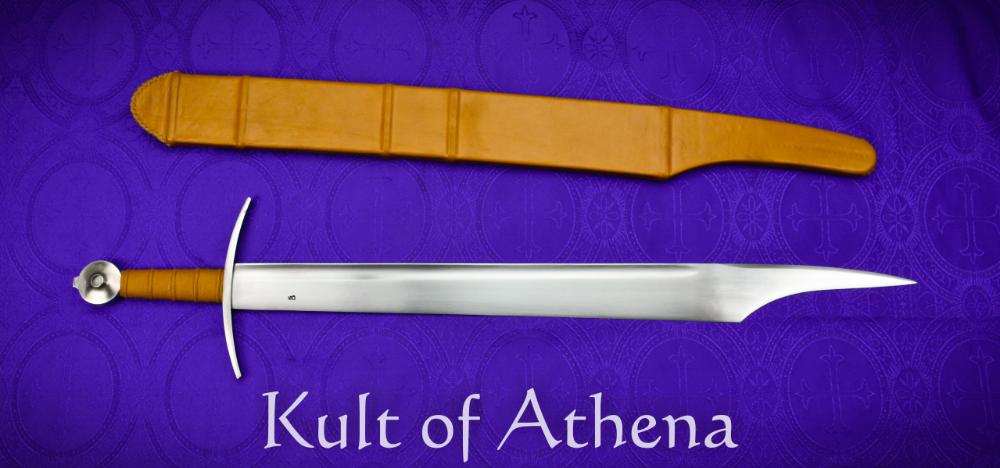
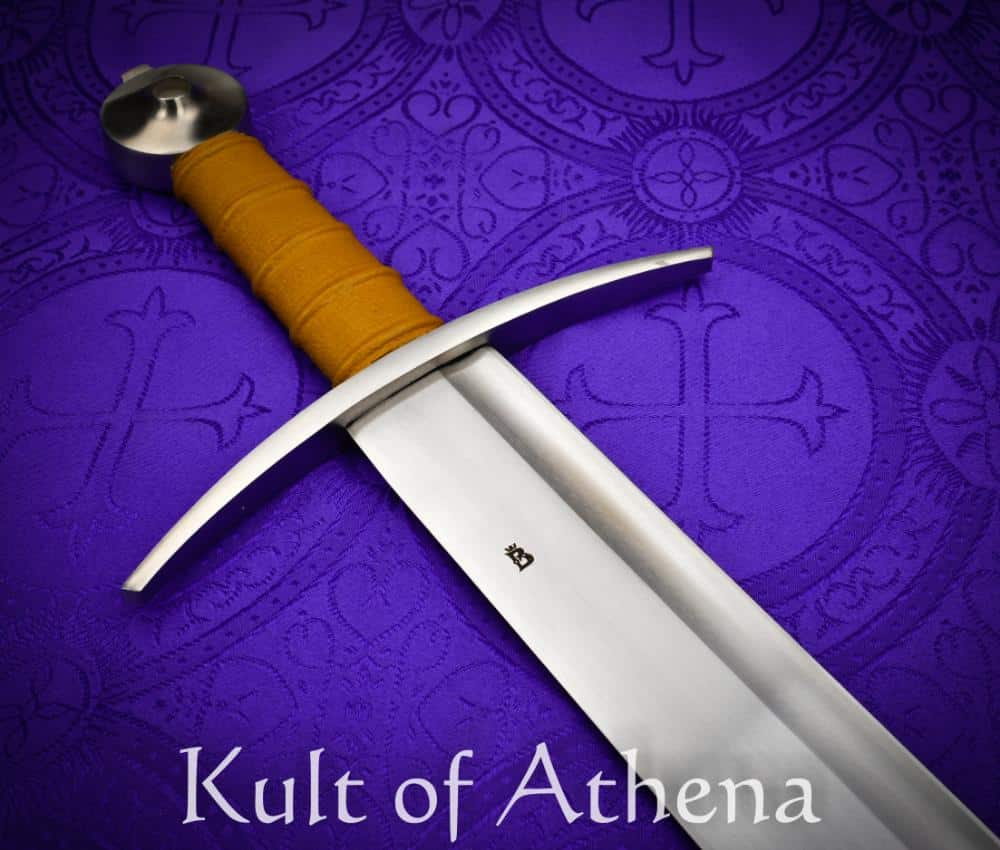
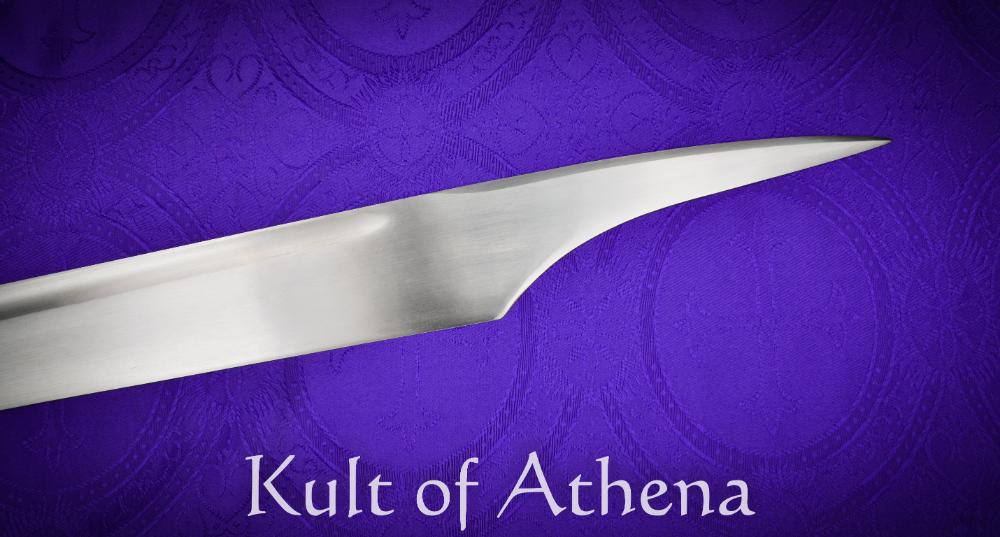
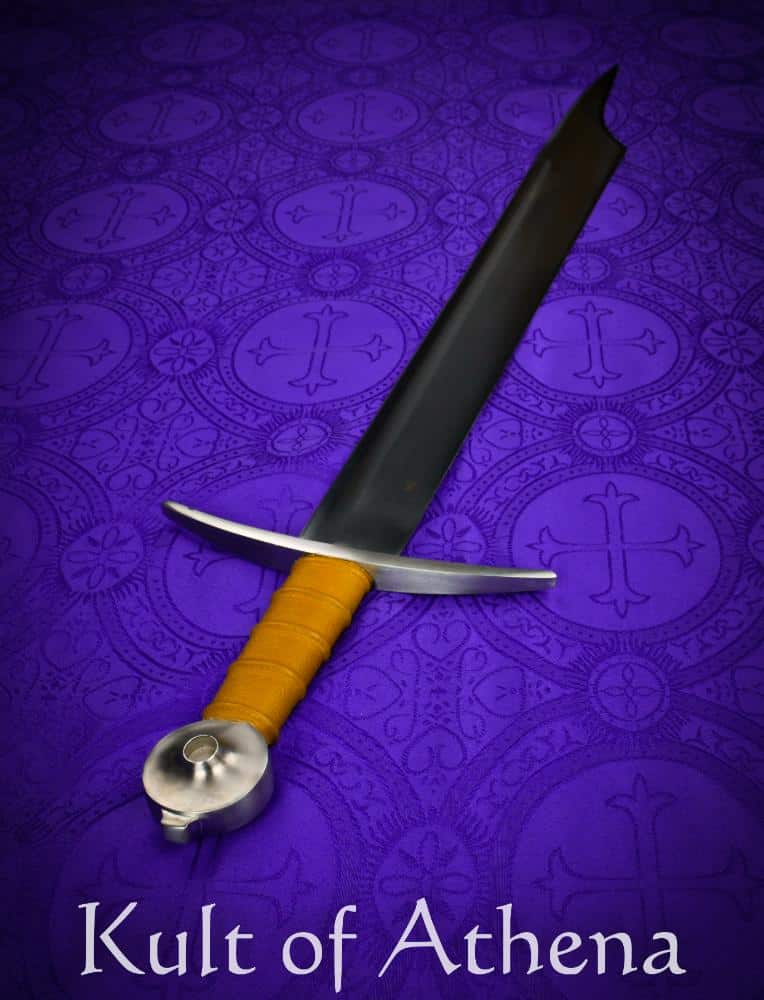
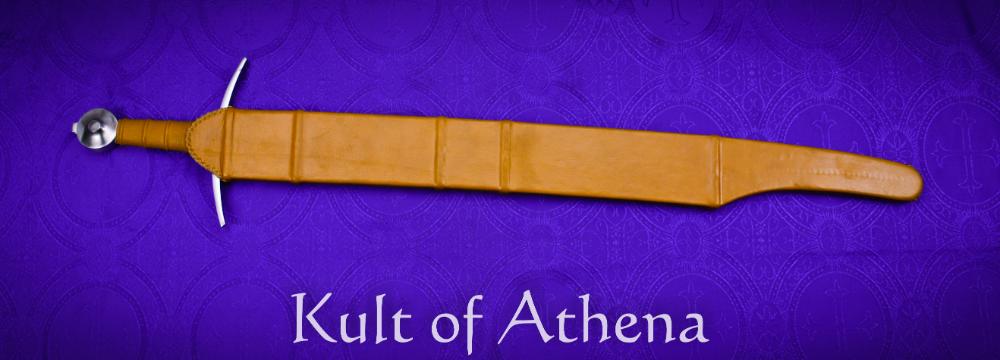
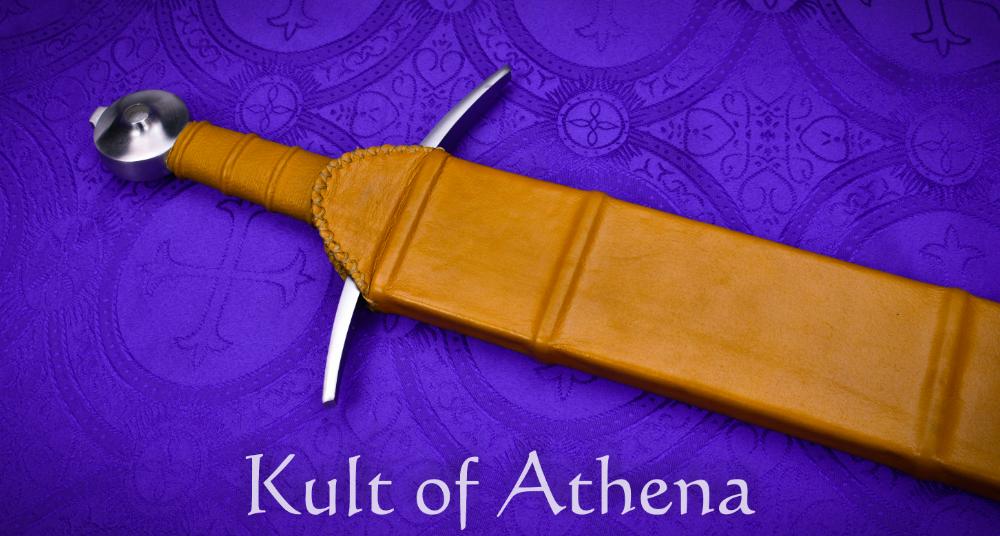
Perhaps the most vicious and “angriest” form of the medieval sword, the so-called Reverse Blade Falchion delivers grievously powerful cuts and thrusts in close-quarters melee with its wide and thin cleaver blade and talon-like tip. As unorthodox as it this form of the medieval sword may be, there are a few surviving museum examples and depictions in illuminated manuscripts. Unlike most falchions, these examples are made with the blade spine and edge reversed, with the cutting edge being along the concave curve of the blade. A closer look at the originals reveals that these swords would have been ferocious “limb-deleting” swords on the field and thankfully our modern examples are relegated to cutting tatami and bottles instead!
This design reversal gives the blade a forward-sloping curve to its edge that greatly aids in drawing, shearing and slicing as the blade move into and across the target. The blade and its point of contact to the target being forward of the wrist naturally aids in edge alignment as the placement of the tip weight makes blade alignment completely natural. It also puts the wrist in an optimal position relative to the blade to encourage a longer, drawn-out cut or slice across the target. The slight curve of the tip actually makes thrusting surprisingly intuitive and impactful than it appears and in a close-in melee a half-sword grip on that blade makes control and effect of that long talon-like tip very deadly.
The blade is crafted from tempered and keenly sharpened GB 60Si2MnA High Carbon Manganese Spring Steel (a steel with properties similar to 5160). The blade is thick at its base to give it strength and rigidity and it has an impressive amount of distal taper, thinning the blade inversely to its width to keep its weight and balance optimal, whilst giving the main portion of the blade a thin profile ideal for slicing into and cleanly through a target with minimal drag, whilst retaining a thick spine at the base and midsection to give the whole blade strength and a stiffening counterbalance to its thinned upper section to prevent blade wobble. The false edge is sharpened, not only to allow for draw cuts, but to further optimize the tip for passing through a target in both the slice and the thrust with minimized drag.
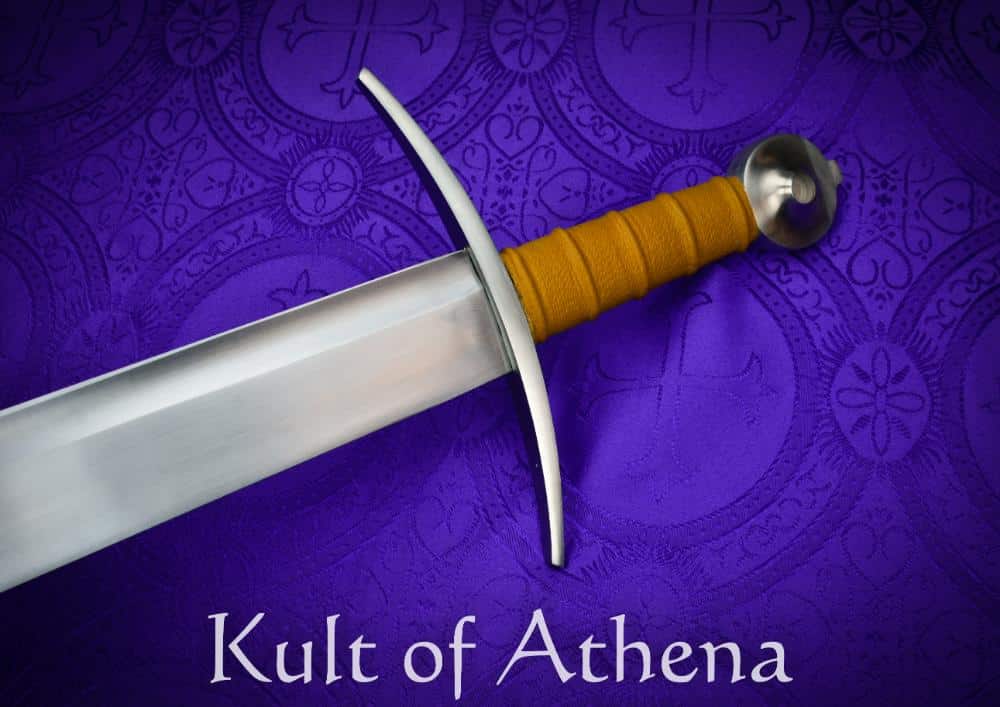
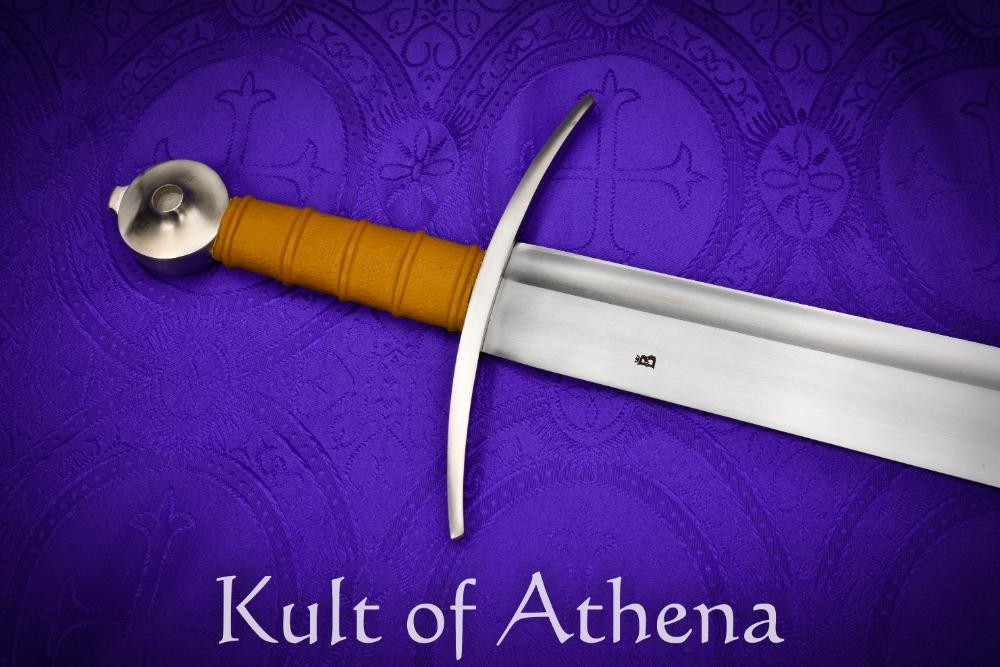
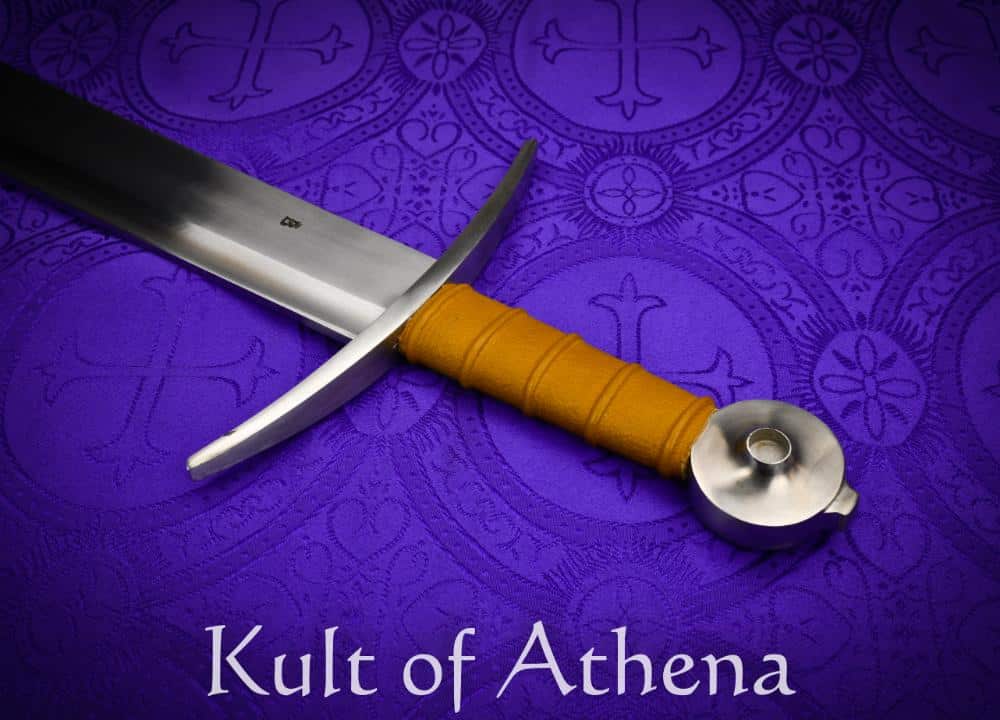
The hilt has a crossguard and pommel of stainless steel which are matched to a hardwood grip with a cord-impressioned grip of tight leather with interspaced risers beneath for a tactile grip. The blade is mounted and anchored into the hilt with a thick peen over the peen block on the pommel. A scabbard of wood with an overwrap of matched leather completes the sword.
Reviews
There are no reviews yet.