

British 1912 Pattern Cavalry Officer’s Sword – steel scabbard – Universal Swords
In stock
$219.99
- Shipping estimated at checkout
- Every blade inspected before shipping
- 30-day returns
- Class
- Battle Ready
- Blade
- 1060-1065 High Carbon Steel
- Overall Length
- 43 1/2''
- Weight
- 2 lb 3.1 oz
- Brand
- Universal Swords
- Culture
- British
- Era
- World Wars
Overview
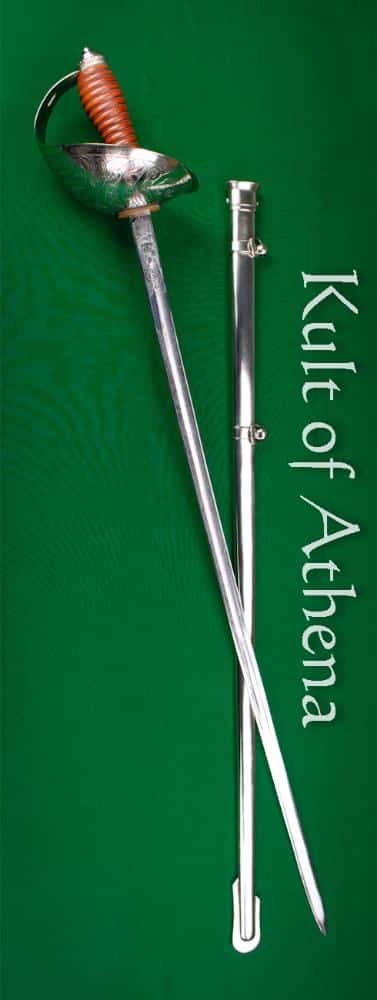
British 1912 Pattern Cavalry Officer's Sword - steel scabbard - Universal Swords
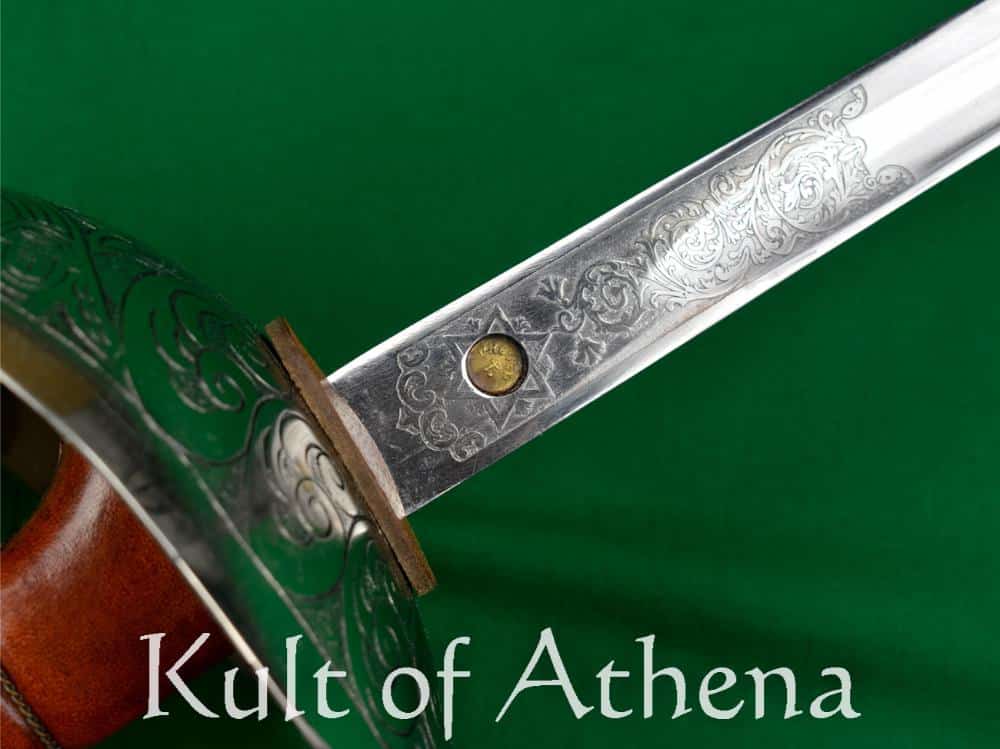
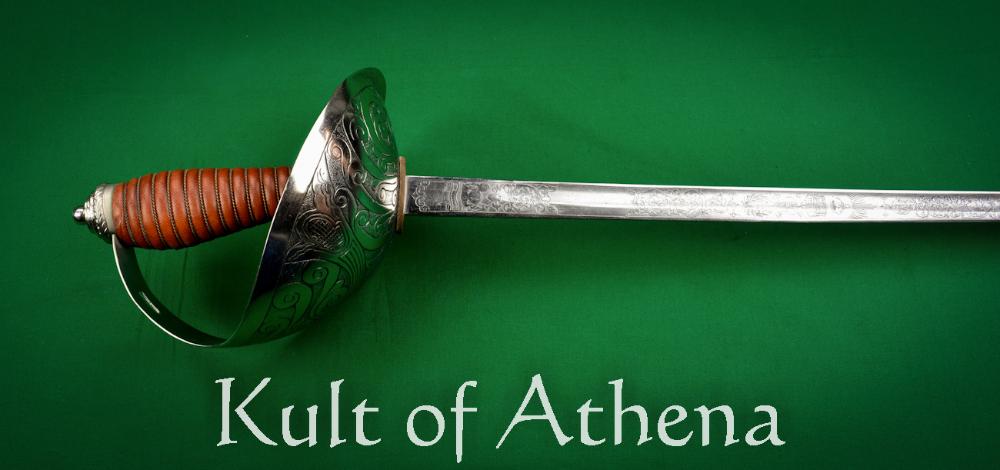
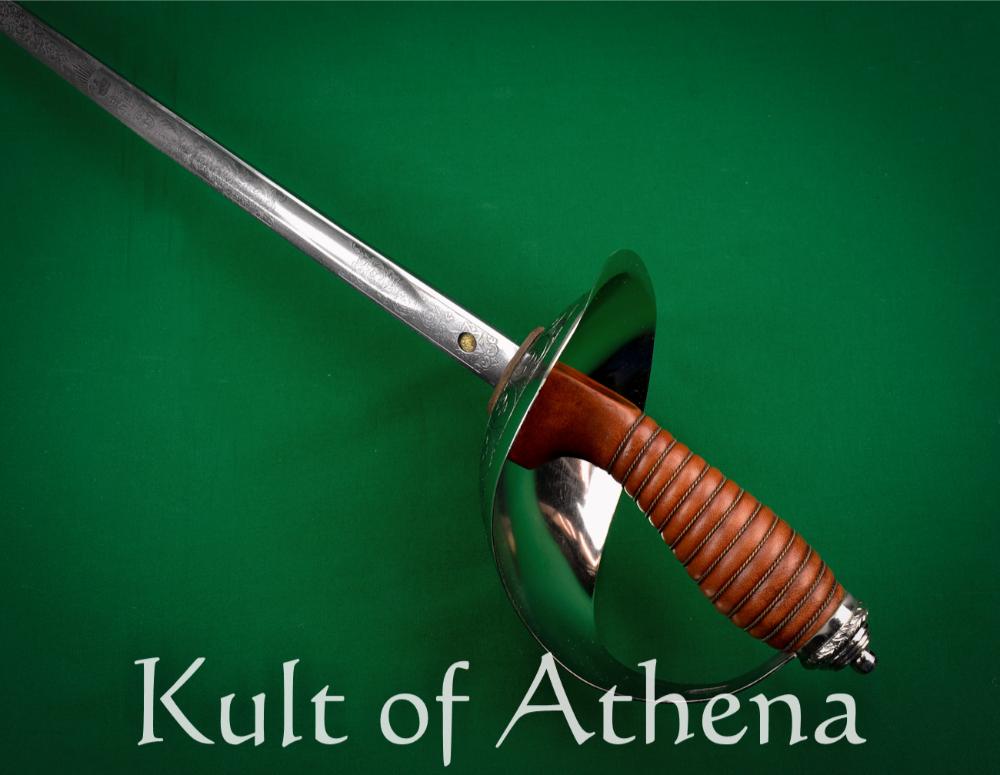
The 1912 British Cavalry Sword is akin to the 1908 Sword - it was an embellished version to separate the officers from the troopers who carried wholly utilitarian cavalry swords. The 1912 has a leather grip inlaid with wire and a decoratively engraved guard and blade.
With the introduction of the 1908 and 1912 Cavalry Sword the Victorian debate about whether a cavalry sword should be a cutting or thrusting sword was effectively over and a near century of compromise cut-and-thrust sword styles was ended in the British Empire. The model 1912 is clearly a sword intended for thrusting and has been regarded by some experts as the best cavalry sword ever created. It was used by the British, Canadian and Australian militaries. Not all agree with this assertion however and the point may be moot, for the cavalry sword was mere moments from obsolescence at this time.
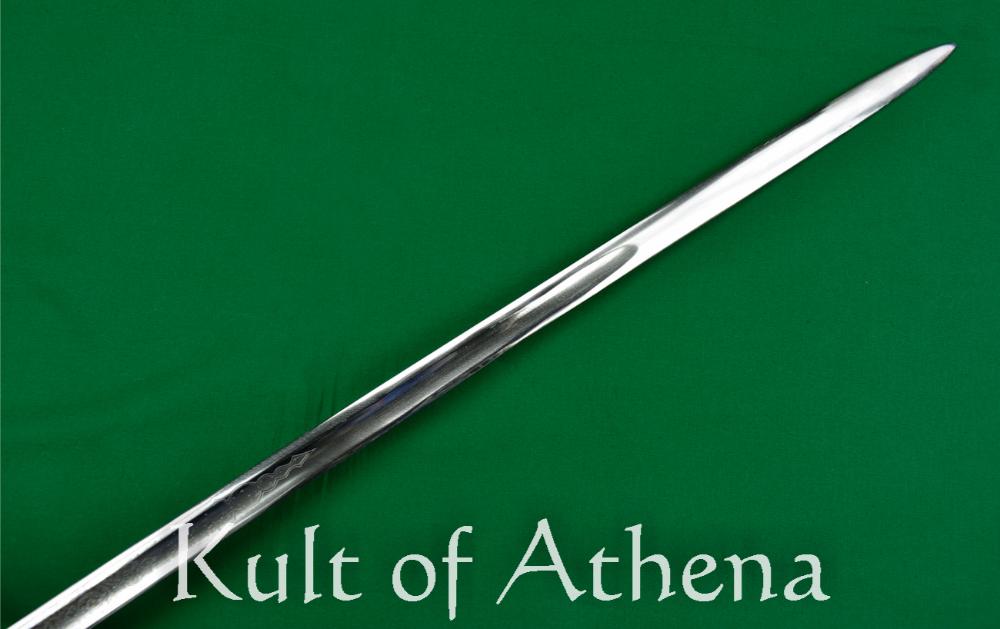
A lightweight sword, the 1912 has a thick, stiffened T-shaped blade spine. It flexes just enough to avoid breakage in a high-speed thrust, but it remains stiff enough to ensure that the blade drives home. The tip is a spear-point style - sharp on both ends and tapered to ease the blade into an enemy with frightful ease. While the last third of the sword was sharpened on both sides to allow for cutting, this is largely a token arrangement, as the sword would have been a poor slashing and cutting blade at best.
With its long blade, the 1912 is best used as in the manner of a lance while the horse charges. The only drawback and a point of criticism for the sword is that this manner of fighting has a risk of too deeply embedding the blade into the foe, forcing the cavalryman to drop the sword in the pass or risk breaking his wrist.
The large, bowl-like guard gives excellent protection to the hand without making the sword heavy and the ergonomic, pistol-like grip has a groove for the thumb on the top of the grip to maximize point and direction control of the blade. The weighted pommel helps to balance the blade, keeping it quick and maneuverable.
It would ultimately matter little, for the warfare of WWI demanded radical changes to cavalry doctrine before making horse-mounted cavalry entirely obsolete. Cavalrymen no longer did charges with blades drawn. Instead they fought as rifle-armed mobile infantry, moving quickly into positions supported with horse-drawn machine guns and artillery. The greatest proof of the forced doctrinal change was that the cavalry was issued entrenching tools. In an era of entrenched machine guns and artillery and fields churned with the tracks of smoke-belching tanks, the flashing steel charge of the cavalry was a bygone, romantic notion.
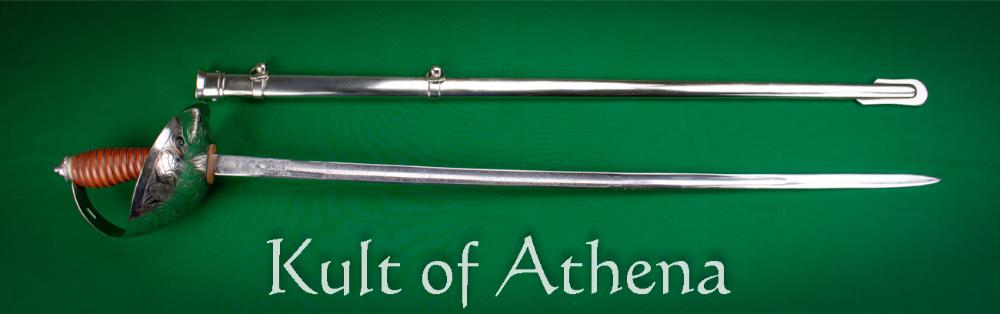
This 1912 Pattern Cavalry Sword has an unsharpened blade of high carbon steel embossed with the symbols and devices of the British Empire. The guard and pommel are of steel and the grip is wrapped with brown leather inlaid with twisted wire. The scabbard is of steel.
Specifications
Every measurement that matters
- Brand
- Universal Swords
- Culture
- British
- Era
- World Wars
- Pommel
- Nut
- Overall Length
- 43 1/2''
- Blade Length
- 35 3/4''
- Blade
- 1060-1065 High Carbon Steel
- Weight
- 2 lb 3.1 oz
- Edge
- Unsharpened
- P.O.B.
- 5''
- Thickness
- 7.8 mm - 3.7 mm
- Width
- 25.4 mm
- Grip Length
- 5''
- Class
- Battle Ready
- Country of Origin
- India
Reviews
What collectors are saying
Q&A
Questions from the community
Q What is this sword based on? Common Question
A reproduction of the British 1912 Pattern Cavalry Officer's sword, the officer variant of the 1908 thrusting cavalry sword.
Q What materials are used? Common Question
It has an EN9 high carbon steel blade, steel guard and pommel, a brown leather grip with twisted wire inlay, and a steel scabbard.
Q Is the edge sharpened? Common Question
No, it comes unsharpened.
Q How does it handle? Common Question
Designed primarily for thrusting with a stiff T‑spine blade, pistol‑style grip, protective bowl guard, and a balance aided by a weighted pommel.
Q What are the key dimensions? Common Question
Overall length 43.5 in, blade length 35.75 in, grip 5 in, point of balance approx. 5 in from the guard, blade width 25.4 mm, thickness 7.8–3.7 mm, weight about 2 lb 3.1 oz.
Q Is it suitable for cutting practice? Common Question
The design is thrust‑focused; while the last third has token cutting capability historically, this reproduction is supplied unsharpened and is best for display, collection, or controlled training consistent with its construction.
Q Where is it made and by whom? Common Question
Manufactured by Universal Swords in India.
Q What comes with the sword? Common Question
A polished steel scabbard with suspension rings is included.
Q How should I care for it? Common Question
Keep the high‑carbon blade clean and lightly oiled; periodically condition the leather grip and wipe the steel guard and scabbard dry after handling to prevent corrosion.
Q Does it have decorative features? Common Question
Yes, the blade and bowl guard have decorative etching/engraving with British motifs, and the grip is leather‑wrapped with twisted wire.
The Maker
Universal Swords
With origins going back to 1960, India’s Universal Swords has been making reproduction swords for decades. With an emphasis on military sabers, universal produces a number of designs not found elsewhere. As the official US distributor of Universal Swords, KOA will be expanding to stock their entire line over time.
Often paired together

No reviews yet. Only logged in customers who have purchased this product may leave a review.