


Citadel – Lotus Wakizashi
Back Ordered
$1,869.00
Join Waitlist
You must register to use the waitlist feature. Please login or create an account.- Shipping estimated at checkout
- Every blade inspected before shipping
- 30-day returns
- Blade
- DNH7 High Carbon Steel
- Overall Length
- 30 5/8''
- Weight
- 1 lb 14.3 oz
- Brand
- Citadel
- Culture
- Japanese
Overview
Citadel - Lotus Wakizashi
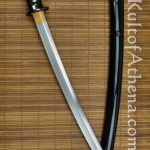
The Lotus Wakizashi is a premium production Wakizashi with a limited edition run of 20 swords. It has a blade forged from DNH7 high carbon steel which has been differentially tempered to create a hardened edge with a visible hamon and a softer, shock-absorbing body and spine. DNH7 has performance properties similar to 1075 high carbon steel and when well-tempered creates a durable blade that will hold a keen edge. A cross section of the blade shows more complex geometry than seen on more common katana: The thickest part of the blade is along the shinogi blade ridge and not at the base of the mune spine. This more complex design consideration allows for the spine to be tapered, thus lessening the overall weight of the blade and giving it a cross-section similar to lopsided diamond instead of a wedge.
Notable attention to detail was paid to the fittings of this Wakizashi; the tsuba, fuchi and kashira hilt fittings are of pure iron which has been polished to a reflective sheen - The tsuba is hand cut and chiseled and the other fittings are likewise handcrafted to fit. The seppa are brass and are edged in filework whilst the habaki is patinated copper. The habaki has been individually filed and shaped to closely fit the sword and to follow its complex geometry precisely. It also has a length of bronze brazed along its cutting edge to strengthen the copper fitting at this important junction.
The wooden tsuka grip has a full-wrap samegawa rayskin which binds and strengthens the wooden grip - a benefit that is largely lost when one only uses strips of leftover rayskin to fit into the visible section of a grip. The rayskin prominently features a raised emperor node and this is the mark of a high quality rayskin wrap as there is only one such node on a skin. The tsuka was wrapped with imported Japanese silk ito and is tightly knotted and has the proper hishigami folded paper inserts beneath the folds to ensure a proper, traditional shape. Like many traditional Japanese swords, it has a single peg and does not require two because the tsuka was well-channeled to fit the nakago tang with a friction fit. An additional, spare tapered bamboo peg is included.
The saya scabbard is carved to fit from wood and finished with a semi-gloss black lacquer. The koiguchi, kurikata and kojiri are polished buffalo horn and extra attention was paid to carving the mouth of the scabbard to give it a good fit with the habaki - according to Citadel its craftsmen spend eight hours fitting and shaping this critical piece of the saya. A length of quality sageo cord is included.
Included with the sword is a cloth sword bag, as well as a well-padded storage and transportation sword bag with a tough nylon exterior and side storage pocket. A small cloth bag in the side pocket holds a stamped production certificate from the forge which certifies the manufacture date of the sword - It can be found in the side pocket of the bag along with its other accessories. Though a high quality sword on its own, this Wakizashi makes a fine companion to the Citadel Lotus Katana for a matched Daisho.
Specifications
Every measurement that matters
- Brand
- Citadel
- Culture
- Japanese
- Edge
- Very Sharp
- Pommel
- N/A
- Overall Length
- 30 5/8''
- Blade Length
- 23 1/4''
- Blade
- DNH7 High Carbon Steel
- Weight
- 1 lb 14.3 oz
- P.O.B.
- 5 3/16''
- Thickness
- 6 mm - 4.5 mm
- Width
- 32.5 mm
- Grip Length
- 5 7/8''
- Country of Origin
- Cambodia
- Type
- Wakizashi
Reviews
What collectors are saying
Q&A
Questions from the community
Q What kind of steel is the blade made from, and what does that mean for durability? Common Question
The blade is forged from DNH7 high carbon steel, a steel with performance similar to 1075 high carbon steel. It is differentially tempered, giving a hardened, visible hamon along the edge while the body and spine stay softer and shock-absorbing, which makes for a blade that holds an edge well while resisting breakage.
Q Does this wakizashi have a full tang? Common Question
It uses a traditional nakago tang that runs into the tsuka and is secured with a single bamboo mekugi peg, with a spare peg included. The tsuka channel is cut to fit the tang with a tight friction fit, which is the traditional Japanese sword construction rather than a Western-style grip with rivets through the handle scales.
Q Is this sword sharp, and what can I cut with it? Common Question
Yes, it ships with a Very Sharp edge and is classified Battle Ready, suited to cutting tatami and water-filled bottles. The hardened, differentially tempered edge is built to hold up to this kind of test cutting.
Q What fittings come on this sword, and are they decorative metal or just finish? Common Question
The tsuba, fuchi, and kashira are pure iron, hand cut and chiseled, then polished to a reflective sheen. The seppa are brass with filework edges, and the habaki is patinated copper reinforced with brazed bronze along the cutting edge where it meets the blade.
Q How is the handle wrapped, and is it durable? Common Question
The tsuka is wrapped in full samegawa rayskin for strength, not just strips over the visible areas, and is covered with imported Japanese silk ito tied in the traditional diamond pattern over hishigami paper inserts to keep the wrap's shape. This full-wrap construction is more durable than a partial rayskin application.
Q How should I care for this sword to keep it from rusting? Common Question
Wipe the blade down after handling and keep it lightly oiled, since it carries a Very Sharp, high carbon steel edge that will rust if left damp or bare. The lacquered wood saya it ships with is for carry and display, but a blade is best stored outside its scabbard long-term since a sheath traps moisture against the steel.
Q What is included with the sword? Common Question
The sword comes with its lacquered wood saya, a sageo cord, a cloth sword bag, a padded nylon transport bag with a side storage pocket, and a spare bamboo mekugi peg. A stamped production certificate from the forge, noting the manufacture date, is tucked in the bag's side pocket.
Q How does this sword balance in the hand? Common Question
The point of balance sits 5 3/16'' from the guard, placing the balance point close to the hand for a wakizashi of this length. That keeps handling quick and maneuverable, which suits a companion blade meant for close, fast work alongside a katana.
Q How much does this sword weigh, and is that right for a wakizashi? Common Question
It weighs 1 lb 14.3 oz, a weight consistent with its tapered blade geometry, where the spine is thinned and the thickest section sits along the shinogi ridge rather than at the spine. That construction keeps the blade from feeling spine-heavy despite its reach.
Q Does the blade have a visible hamon? Common Question
Yes, the differential heat treatment used on the DNH7 steel produces a visible hamon temper line running along the hardened edge.
The Maker
Citadel
Citadel’s Cambodia-based workshop creates some of the finest production Japanese bladed weapons available. In addition to forging blades of outstanding quality Citadel’s capable craftsmen focus and emphasize many of the fine details in fit and finish that are overlooked by other manufacturers to create an entirely premium quality product. Details such as habaki blade collars which are custom crafted to fit the contours of an individual sword, full-wrap premium rayskin and koiguchi scabbard openings which are seamlessly sleeved into carved horn are just some of the many refined details that can be seen on many of their offerings.
Often paired together
No reviews yet. Only logged in customers who have purchased this product may leave a review.