
Adam Bodorics – Rugger Landsknecht Messer / Short Sword with Long Grip and Scabbard
In stock
$878.00
- Shipping estimated at checkout
- Every blade inspected before shipping
- 30-day returns
- Class
- Battle Ready
- Overall Length
- 28 5/8"
- Weight
- 1 lb 11 oz
- Brand
- Ádám Bodorics
- Culture
- German
- Era
- Medieval
Overview
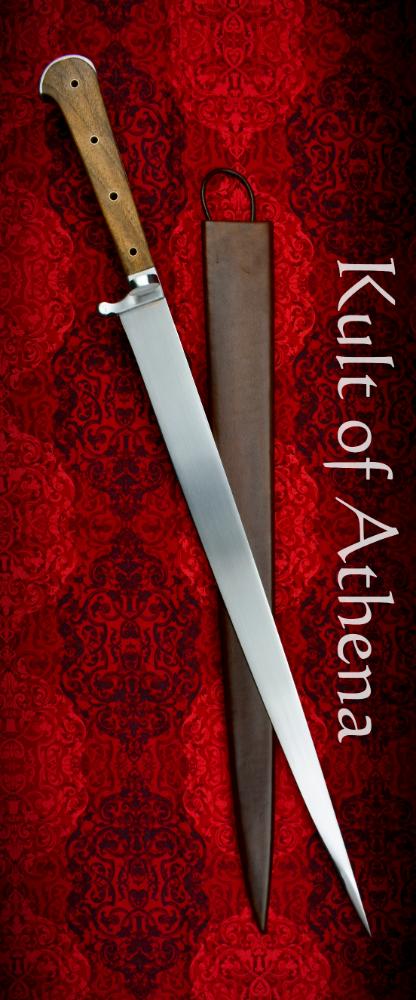
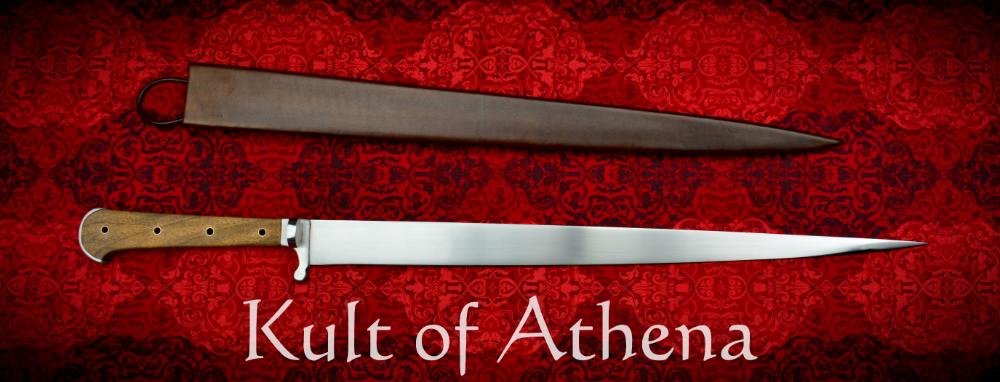
Adam Bodorics - Rugger Landsknecht Messer / Short Sword with Long Grip and Scabbard
This German Rugger is part of a very limited supply of these short swords we have from artisan Ádám Bodorics of Landsknecht Emporium. These are some of his high quality project pieces he creates for exploring the tools of defense and war of the 16th century. His scholastic approach in researching woodcuts, illuminations and museum examples coupled with his skill brings historically informed pieces to life that are rarely seen as production pieces.
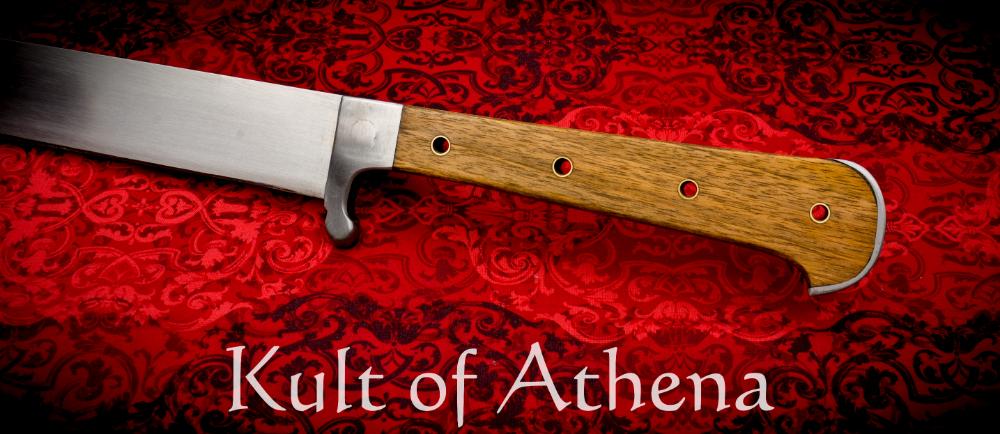
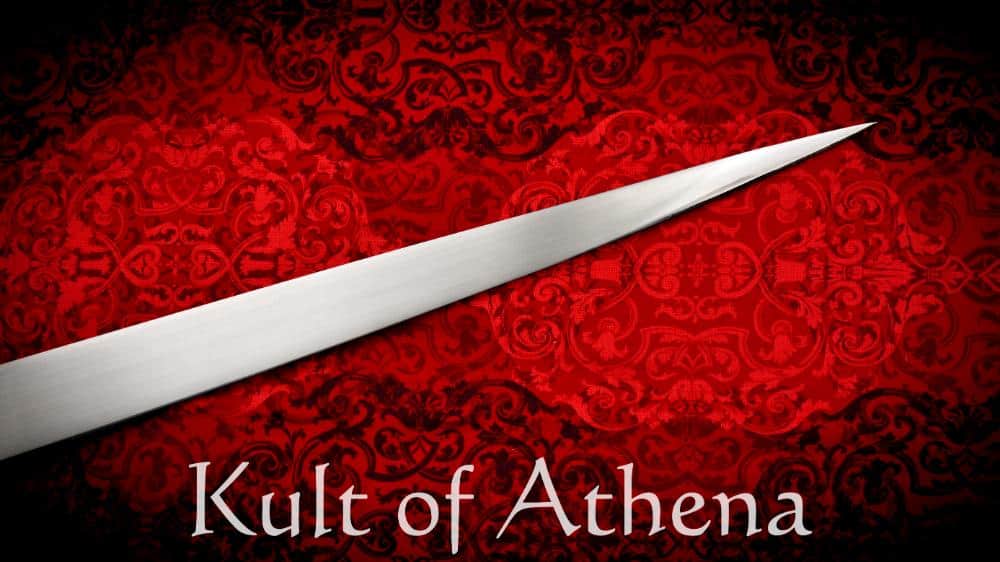
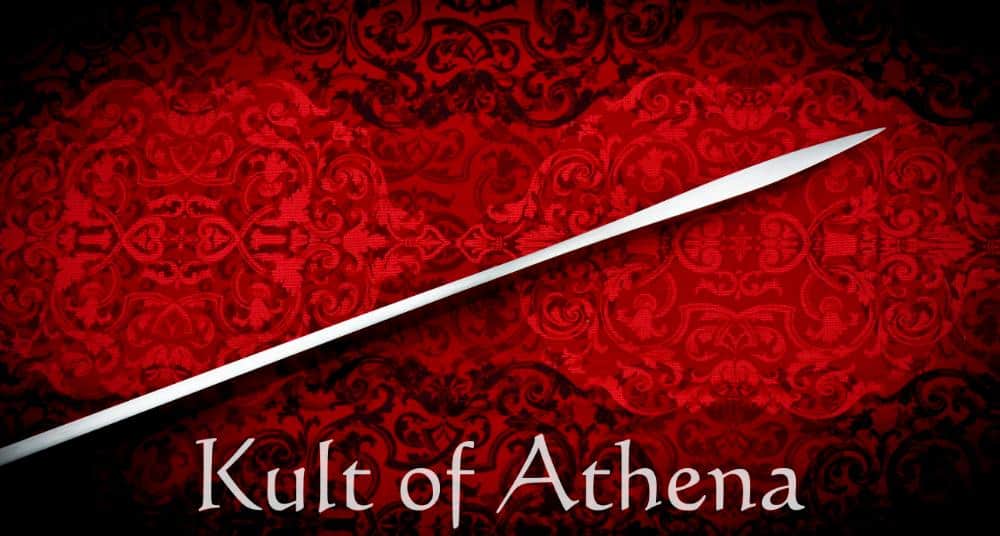
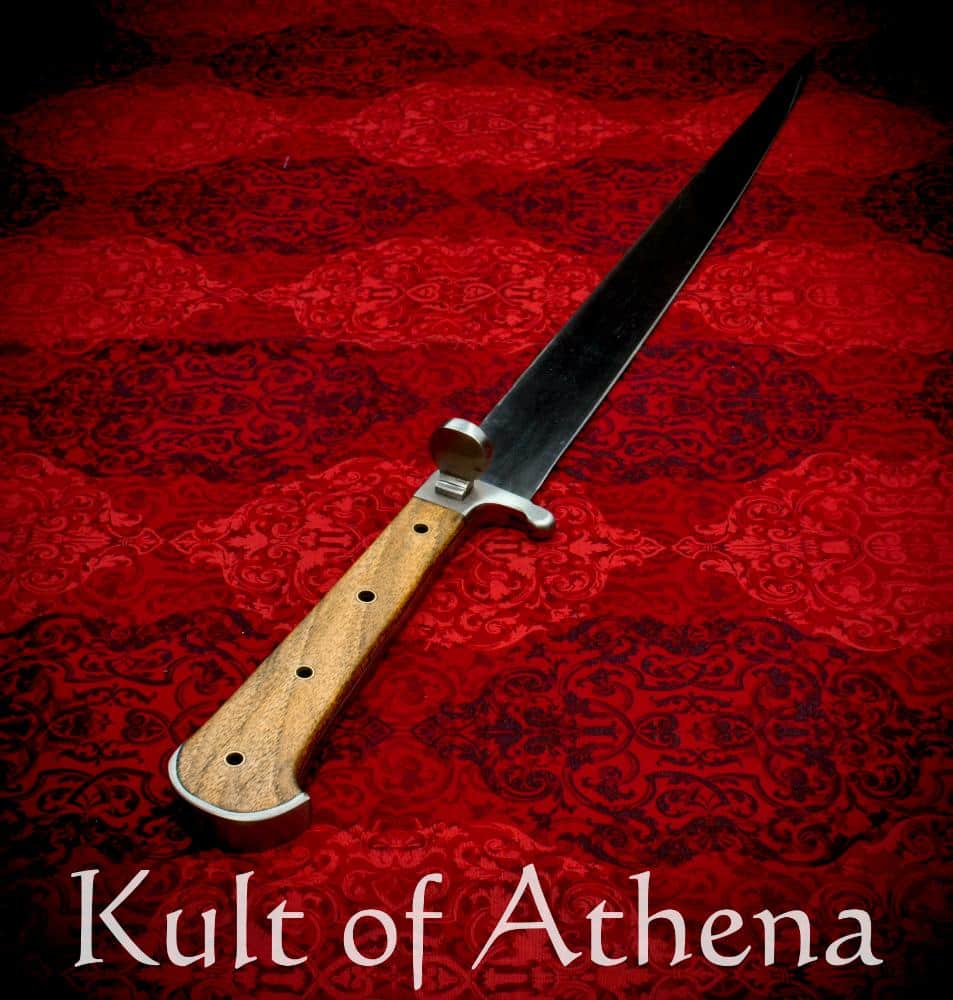
A first impression of this German Rugger may give one the idea that it is just a large knife, but when held in the hand it becomes immediately apparent that this Messer is no tool, but comparable to a short sword in size and a weapon solely dedicated for war and self defense. The blade is very thick at its spine and the blade is entirely rigid - it is clearly an absolutely vicious puncturing weapon with respectable cutting abilities. The blade has a feature not often seen on reproduction pieces in that the tip of the blade flares out considerably to give it greater width and mass before terminating in a chisel-shaped tip. This form gives the tip substantial reinforcement to both prevent damage when being thrust with great force into a target and to substantially widen the puncture to rather lethal dimensions.
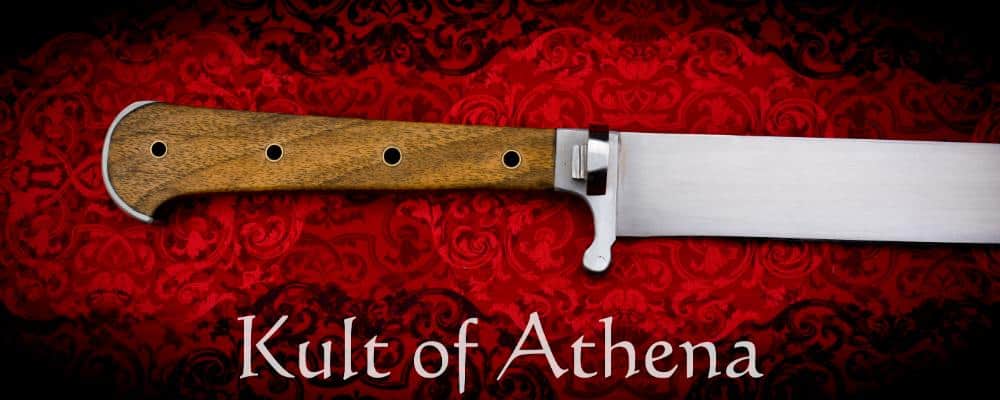
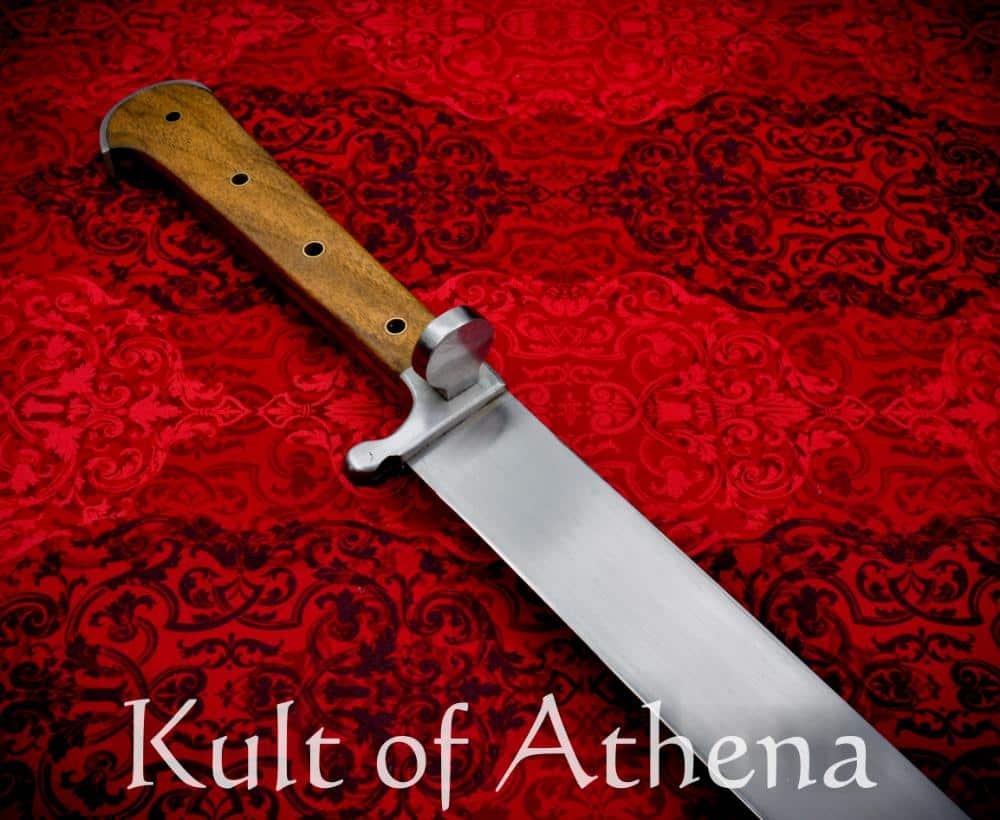
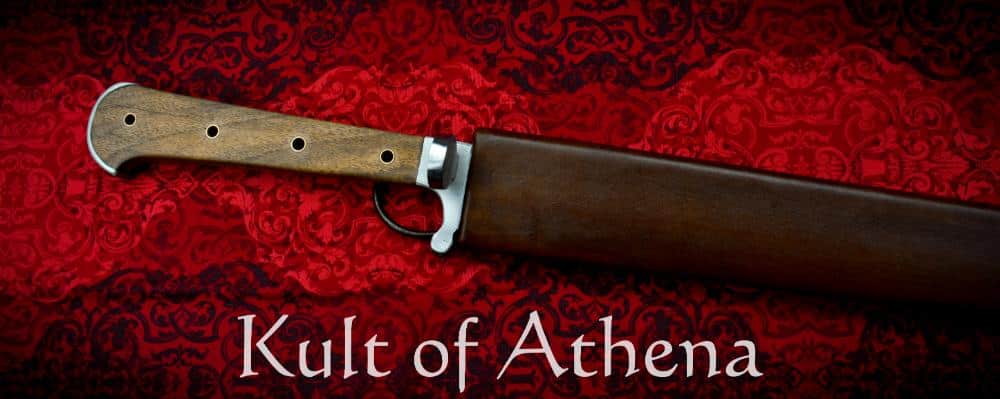
It certainly has an authoritative heft in the hand, but still feels agile and capable and its elongated grip is intended to give the entire weapon a favorable balance that feels agile in the hand. This short sword could easily penetrate thick clothing and split mail rings and its thick, stiff blade with reinforced tip and is a ready lever for rending apart the weaker points in an armored defense. Its nagel gives it defense for the hand and some parrying / bind ability and the hand feels comfortably seated in the contoured grip.
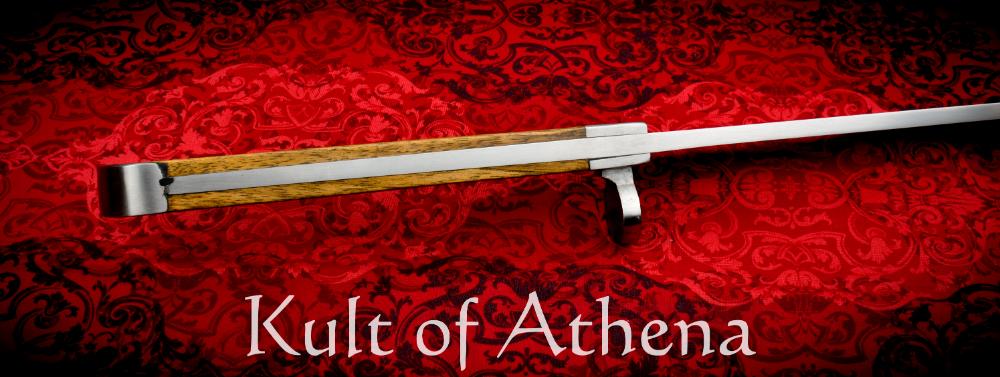
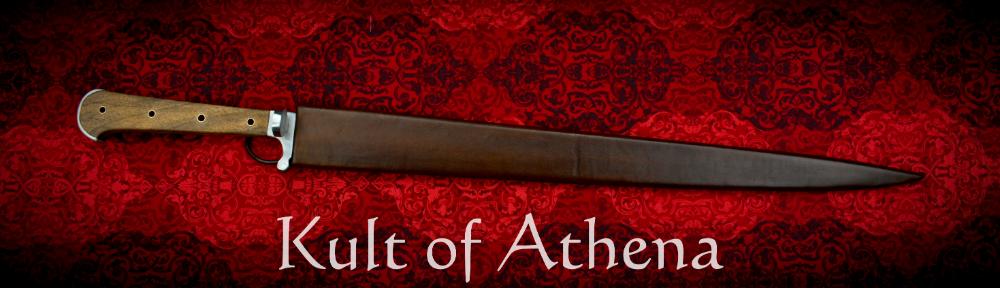
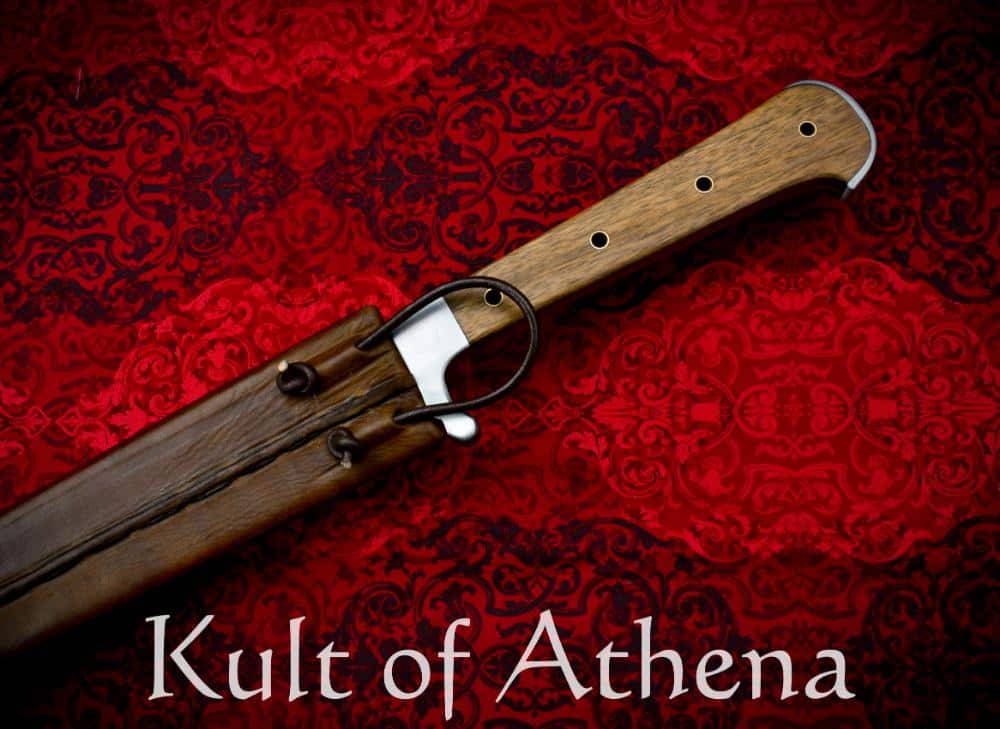
The blade is crafted of well tempered 6150 high carbon steel which has a final tempered HRc hardness of 52-54 HRc. The grip is a composite of steel and brass-riveted walnut all stoutly riveted to a very thick tang. A robust peen over the pommel gives the hilt an altogether rock solid construction. Included with the sword is a handcrafted wood-core scabbard of birch plywood which is bound in stitched and form-fitted leather and completed with a hanging belt loop.
Here are some notes on this Rugger from the craftsman who created it - Adam Bodorics:
"Rugger" is a mostly modern term with no officially established definition. A few makers, including me, use the term to denote "a generally but not exclusively dagger-sized sidearm with a hilt construction emulating that of table cutlery from the same period, without a crossguard, with a strong emphasis on the thrust". While the majority of originals are indeed dagger-sized, the largest surviving specimens can reach around 900mm overall length. At least in the Carpathian Basin, they are one of the most common sidearms in 15th-16th century archaeological finds, and I know of several more both to the west and east from here.
As they are underrepresented and often misunderstood on the modern market, I was drawn to them for years now. I handled several and documented a few originals, which further reinforced my love for the type. The blades are always extremely stiff, often with thick spines and minimal distal taper. Cross-sections vary a lot from asymmetric chisel edges through flat, beefy triangles to straight-razor-like hollow grinds. Ruggers with longer grips are less common in the extant illustrations, but they do exist. It has a stout and actively reinforced tip, meaning that the spine thickness increases several millimeters in the last section. The grip cross-section is trapezoidal, based on a few original Ruggers and a lot of original Messers. The tang under the grip panels tapers in two directions, toward the pommel plate and towards the edge, plus it's fullered on one side to further decrease weight. While it's a lot of work, almost all originals exhibit this feature.
Specifications
Every measurement that matters
- Brand
- Ádám Bodorics
- Culture
- German
- Era
- Medieval
- Pommel
- Peened
- Overall Length
- 28 5/8"
- Blade Length
- 21"
- Weight
- 1 lb 11 oz
- Edge
- Sharp
- P.O.B.
- 3 1/2"
- Thickness
- 7.1 mm - 4 mm - 8 mm (Reinforced Tip Max Thickness)
- Width
- 39 mm
- Grip Length
- 6 1/4"
- Class
- Battle Ready
- Country of Origin
- Hungary
Reviews
What collectors are saying
Q&A
Questions from the community
No questions yet — be the first to ask.
The Maker
Ádám Bodorics
Ádám Bodorics is a artisan from Landsknecht Emporium who also creates his own separate swords, daggers and other pieces. He takes great care not only in the craftsmanship of the pieces, but strives to give them a great balance and practical useability. He does a great deal of research for many of his pieces and his scholarly take when combined with his handworked craftsmanship creates pieces of unique character. Many of these pieces from him also come with scabbards or sheaths which are often crafted by fellow Landsknecht Emporium craftsman András Mezősi . As artisanal pieces quantity is limited, but when we have some you can find them here. Below you can read more about bladesmith Adam Bodorics in his own words:
“I started trying to make bladed tools and weapons when I was about 11, and just didn’t stop. Beyond grinding most of Landsknecht Emporium’s blades during regular work hours, I started making more and more custom and unique pieces in my free time. Right now my personal business serves as an outlet for these projects and for the occasional custom order the main company couldn’t fit into a sane schedule. I’m mainly focused on Messers and related pieces, slowly working my way up to tackling a Sumersperger-inspired piece or a dozen. One of my main aspirations is to get good enough to be able to create pieces in the Mannerist style.” – Ádám Bodorics
Often paired together

No reviews yet. Only logged in customers who have purchased this product may leave a review.