


Feltwell 5th Century Spatha – Deepeeka
In stock
$164.99
- Shipping estimated at checkout
- Every blade inspected before shipping
- 30-day returns
- Blade
- C60 High Carbon Steel
- Overall Length
- 34 7/8''
- Weight
- 2 lb 6.1 oz
- Brand
- Deepeeka
- Culture
- Roman
- Era
- Ancient
Overview
Feltwell 5th Century Spatha - Deepeeka
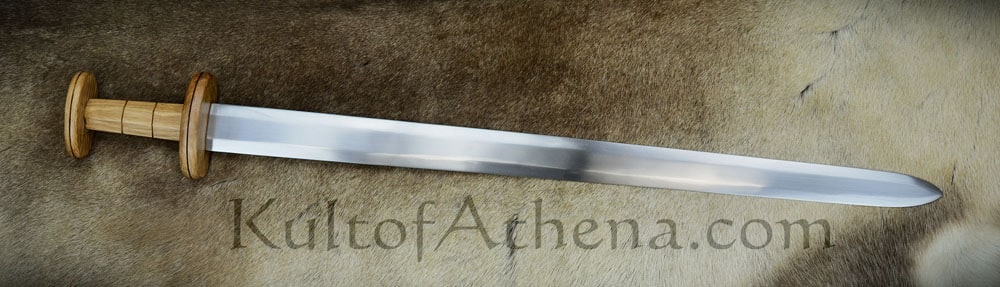
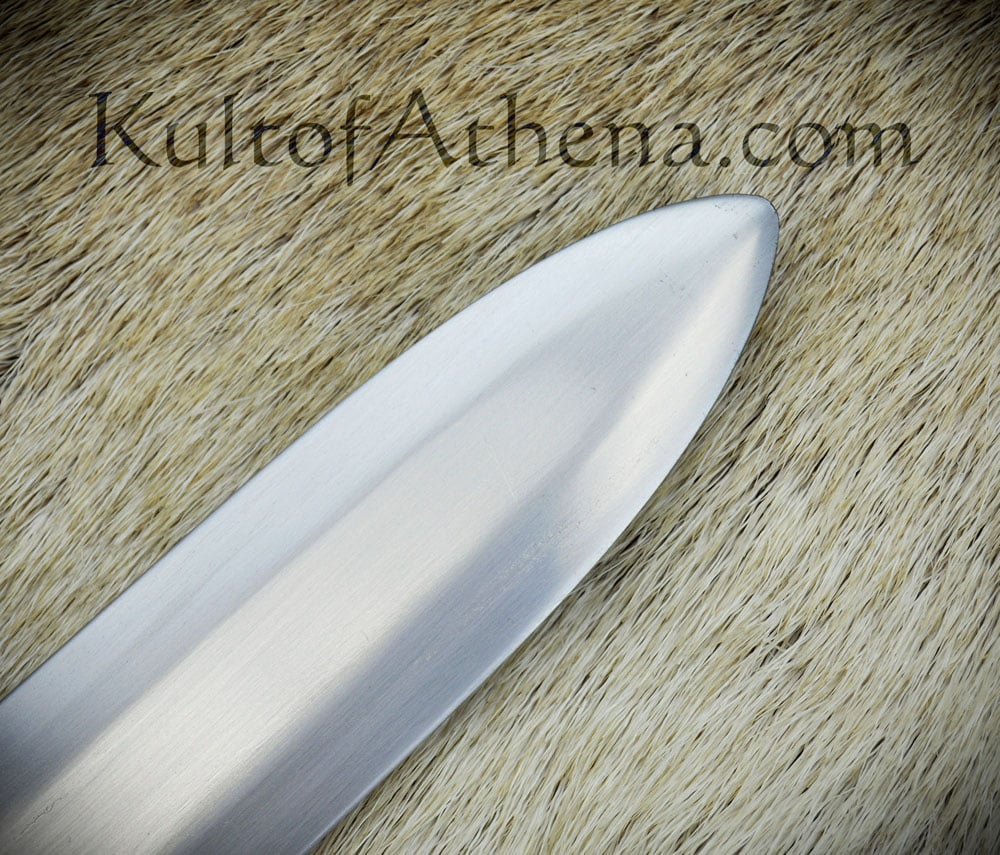
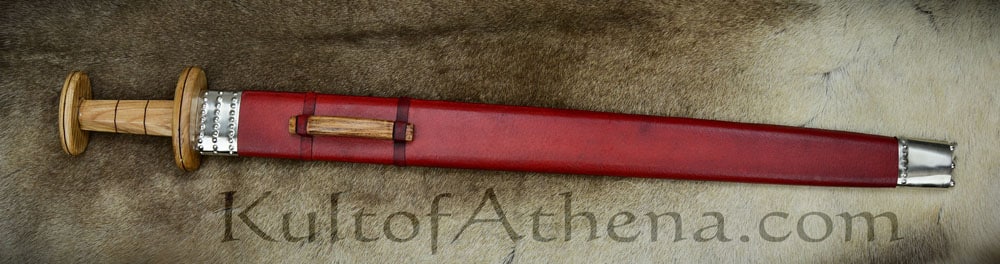
The Feltwell Spatha has a blade forged from EN45 high carbon steel; the hilt is crafted from carved wood. The sword has a companion scabbard of wood overlaid in red leather and fitted with a wooden suspension loop. The chape and locket are steel. The sword is a replica of a 5th Century Spatha found beneath the floor tiles of a Romano British villa - it was likely hidden, though its owner never returned. The blade has a hexagonal cross section common to Spatha of the period and its scabbard fittings were originally of tinned brass.
The Feltwell Spatha was unlikely to have been made in Britain and instead probably came from the continent and was of Roman origin, though very similar swords could be found in the hands of the Germanic tribesmen outside the boundaries of the Western Roman Empire. This Spatha is suitable as a sword that could be representative of many Spatha in the late 4th to 5th century.
Specifications
Every measurement that matters
- Brand
- Deepeeka
- Culture
- Roman
- Era
- Ancient
- Edge
- Unsharpened
- Pommel
- Nut
- Overall Length
- 34 7/8''
- Blade Length
- 29 1/4''
- Blade
- C60 High Carbon Steel
- Weight
- 2 lb 6.1 oz
- P.O.B.
- 9 1/2''
- Thickness
- 4.8 mm - 4.1 mm
- Width
- 48.7 mm
- Grip Length
- 4 3/8''
- Country of Origin
- India
- Type
- Spatha
Reviews
What collectors are saying
Q&A
Questions from the community
Q What steel is the blade made from, and how durable is it? Common Question
The blade is forged from C60 high carbon steel, a tough alloy that holds up well to the batter of reenactment handling and takes a good edge if you ever choose to have it sharpened. It will rust if neglected, so a light coat of oil after handling keeps it in good condition.
Q Does this sword come sharp, and what is it meant for? Common Question
This Spatha ships unsharpened, which makes it well suited to display, historical reenactment, and handling practice where you want the weight and balance of a real period sword without a live edge. It is built Battle Ready, meaning it is constructed to take the stresses of reenactment use, not that the edge is sharpened.
Q Is the tang full length, running all the way to the pommel? Common Question
The pommel on this Spatha is a nut type, which means the tang runs the full length of the grip and is secured by threading the pommel nut onto the end of it. That is a sturdy, battle-ready construction method that keeps the blade and hilt as one solid unit under use.
Q What does the point of balance mean for how this sword handles? Common Question
The point of balance sits 9 1/2 inches out from the guard, keeping the weight concentrated closer to the hand. That makes for a Spatha that responds quickly and stays controllable through both cutting and thrusting motions, matching how these swords were actually used in the 5th century.
Q How heavy and long is this sword overall? Common Question
The Feltwell Spatha weighs 2 lb 6.1 oz and measures 34 7/8 inches overall, with a 29 1/4 inch blade. That puts it comfortably in one-handed sword territory, light enough to wield through drills and demonstrations without fatigue.
Q What is the scabbard made of, and how should I care for the sword long term? Common Question
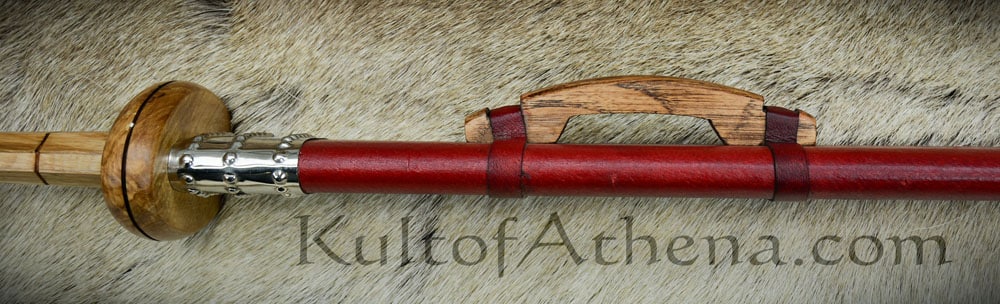
The scabbard has a wood core overlaid in red leather, with a steel chape and locket and a wooden suspension loop for the belt. Wipe the blade down after handling, keep a light coat of oil on the steel, and store the sword somewhere dry; leather and wood scabbards trap moisture over time, so the blade is better kept outside the scabbard for long-term storage.
Q What does the hilt look like, and what is it made of? Common Question
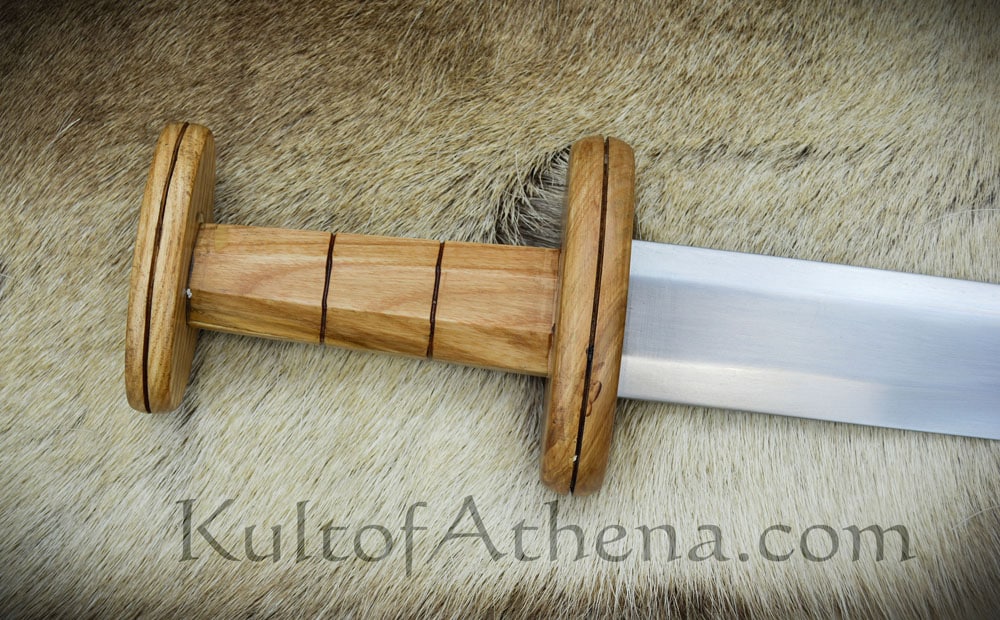
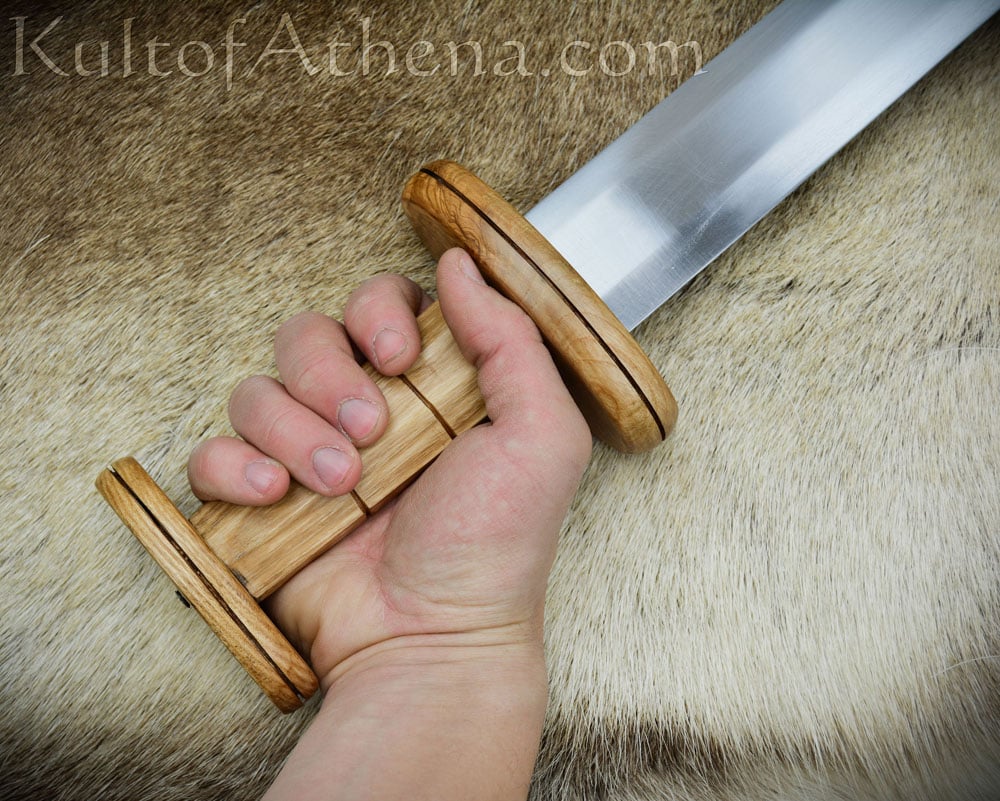
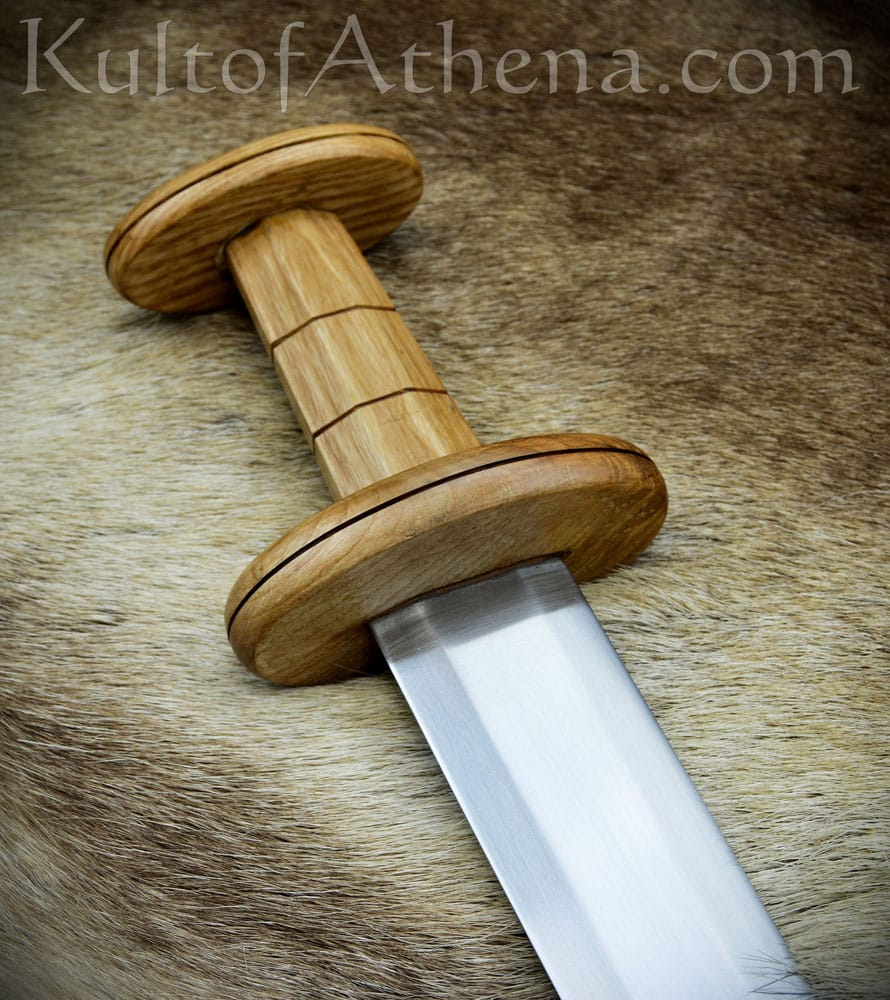
The grip is carved wood, paired with a nut-style pommel, giving the hilt a turned, segmented look with visible wood grain throughout. A light coat of oil on the wood periodically will keep it from drying out or cracking over time.
Q What historical sword is this based on? Common Question
This Spatha replicates a find from a Romano-British villa in Feltwell, dated to the 5th century, where it was apparently hidden beneath floor tiles and never recovered by its owner. Swords of this type were likely of Roman manufacture from the continent, though similar blades also turned up among Germanic tribes outside the Western Empire's borders, making this a solid representative piece for the late 4th to 5th century.
Q What shape is the blade, and is that typical for a Spatha of this era? Common Question
The blade carries a hexagonal cross section, which is the common profile found on Spatha blades of this period. It reflects the original find this sword is based on rather than a later or stylized blade shape.
The Maker
Deepeeka
Deepeeka creates an astonishing variety of replica weapons, armor, and re-enactment accessories that range from Classical Antiquity to the 20th Century. Deepeeka has been crafting replicas since the 1980s and their products are essential gear for many re-enactment groups. Many swords, daggers and other weapons made by Deepeeka are durably crafted and budget-friendly offerings. The steel is good and well-tempered and their leathercraft and woodworking are of excellent quality. Deepeeka’s products are handcrafted and (in the case of blades, hand-hammered) are a good deal for those who want a quality item at a good price.
Kult of Athena is the US distributor for Deepeeka products and we offer the largest in-stock selection you will find and we will beat any price you can find. If you are searching for a particular item or find a Deepeeka item listed elsewhere that is not seen on our site let us know and if it is available we can source it for you at a better price than seen elsewhere.
Often paired together

Decent budget beater First Deepeeka blade for me, and it’s pretty decent overall. It is a great stabber, but a slow slasher due to blade heaviness. Quality wise, there is a slight hammer dimple on the blade near the tip, and the tang reverberates slightly in the grip while slashing. The pommel will rub against the back of your fist/front of wrist, expect more of a Norse sword style grip. The scabbard is nice, but the factory oil stinks and the scabbard will reek of it for some time. KoA did a great sharpening job, and really makes this a pretty fun blade overall, decently strong and certainly not unweildy. Enjoy!
It’s rather a clumsy, heavy axe than a sword. The wooden grip is very uncomfortable. I had to cover it with leather. It has a good scabbard but overall it’s my worst purchase ever. On the other hand, it was a reportedly a standard sword during the migration period. So if you prefer autenthicity over the ease of use, it is probably a sword for you.
I understand Deepeeka makes two interpretations of this spatha, another including brass plates to sandwich upper and lower guards, and the washer/peen protruding a bit. This one is good, definitely a hacking blade. I ordered the Anglian Feltwell spatha from a seller in Germany, will be interesting to compare. Also, latest research suggests the Feltwell spatha was Saxon in origin, Roman in style, but I don’t see the Roman style, as upper and lower guards just don’t exhibit Roman form.