
Iron Tiger Forge – Raijin Thunder God – Honsanmai Laminated Katana
In stock
Price range: $449.99 through $499.99
- Shipping estimated at checkout
- Every blade inspected before shipping
- Class
- Battle Ready
- Blade
- 1095/1045 High Carbon Steel
- Overall Length
- 40 1/4''
- Weight
- 2 lb 12.3 oz
- Brand
- Iron Tiger Forge
- Culture
- Japanese
Overview
Iron Tiger Forge - Raijin Thunder God - Honsanmai Laminated Katana
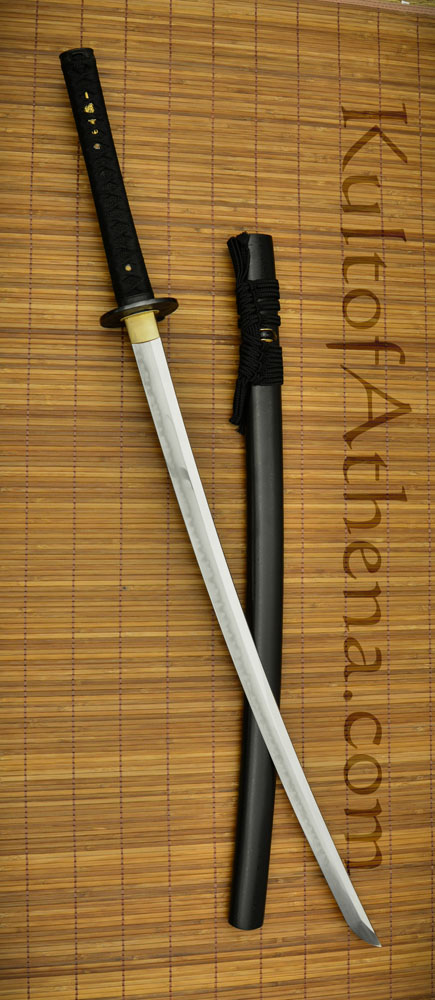
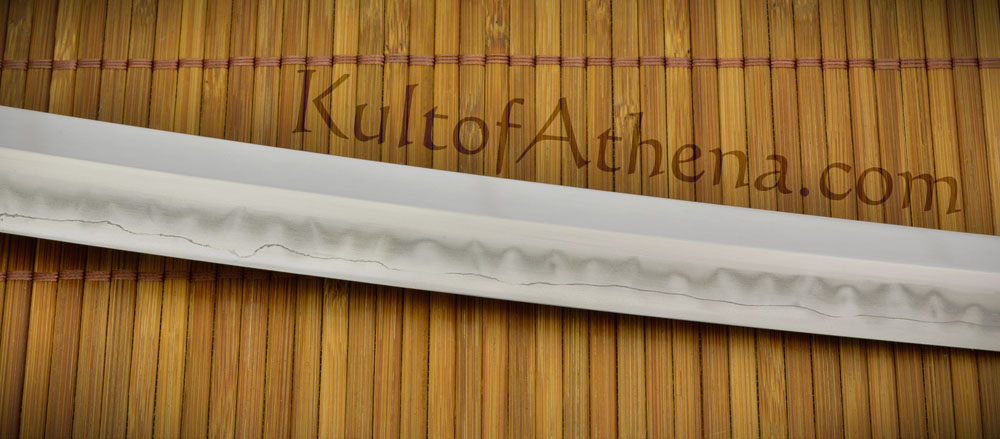
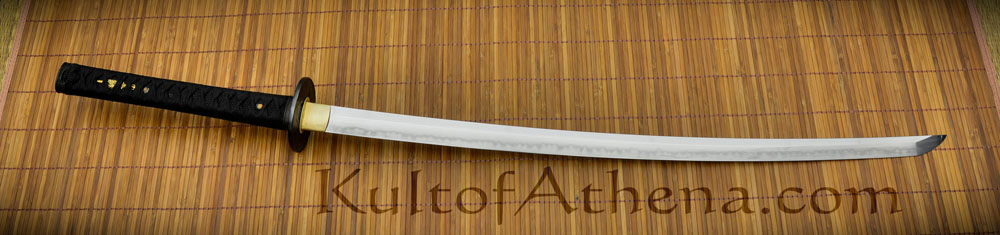
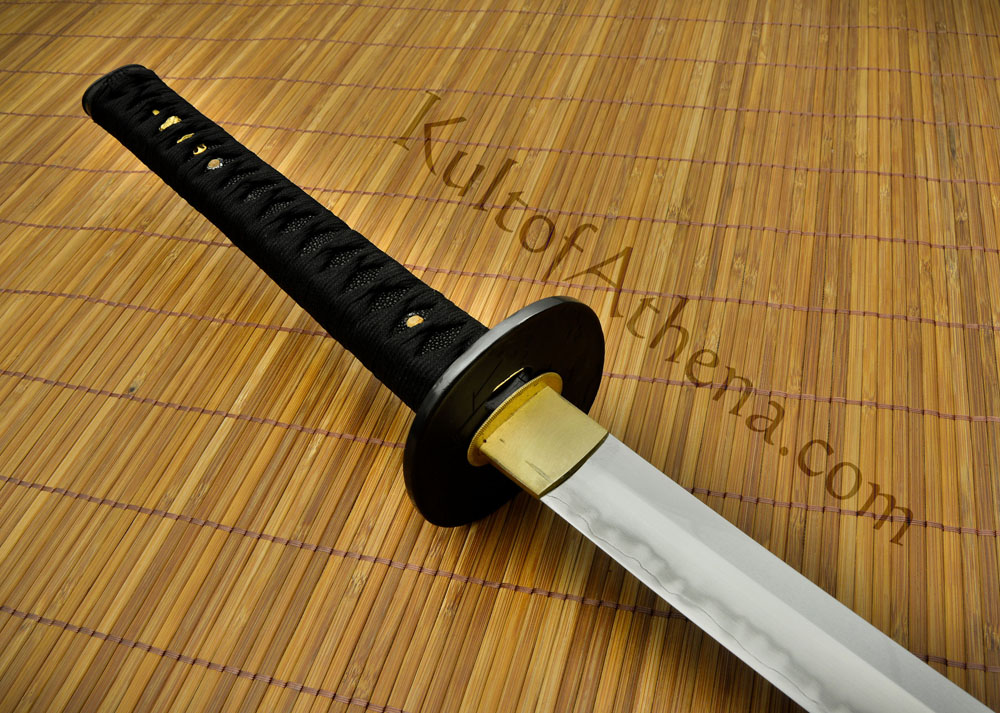
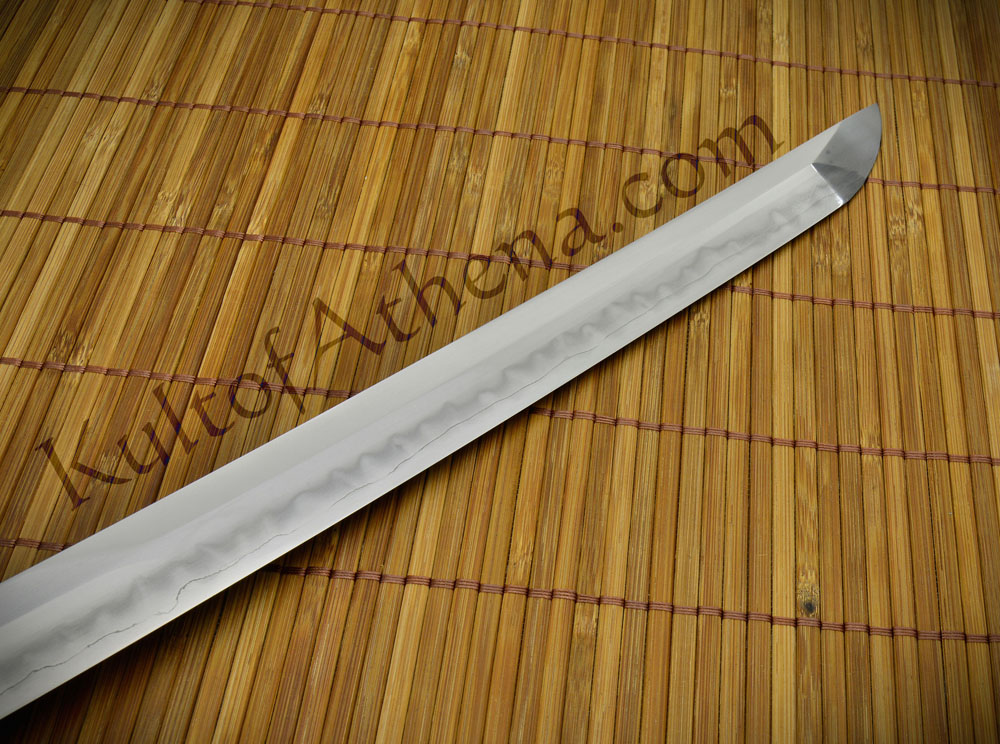
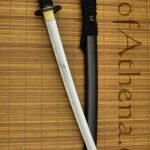
The Iron Tiger Raijin Katana has a laminated blade that was crafted in the Honsanmai style utilizing both 1095 and 1045 high carbon steels. After laminating, the edge was further hardened by being differentially-tempered using the traditional clay-tempering method. These smithing techniques have left both a vibrant hamon and visible lamination lines. The tip of the blade has a geometric yokote and was fashioned into a large, O-kissaki style tip. The blade was left without a bo-hi groove which increases its heft, yet allows to retain its full cutting power as the thicker spine powers the blade through the strike. The blade was finished with a polish that is near mirror-like.
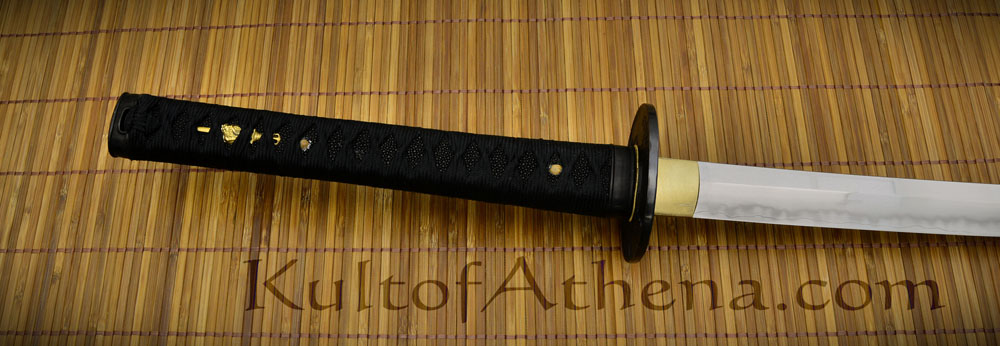
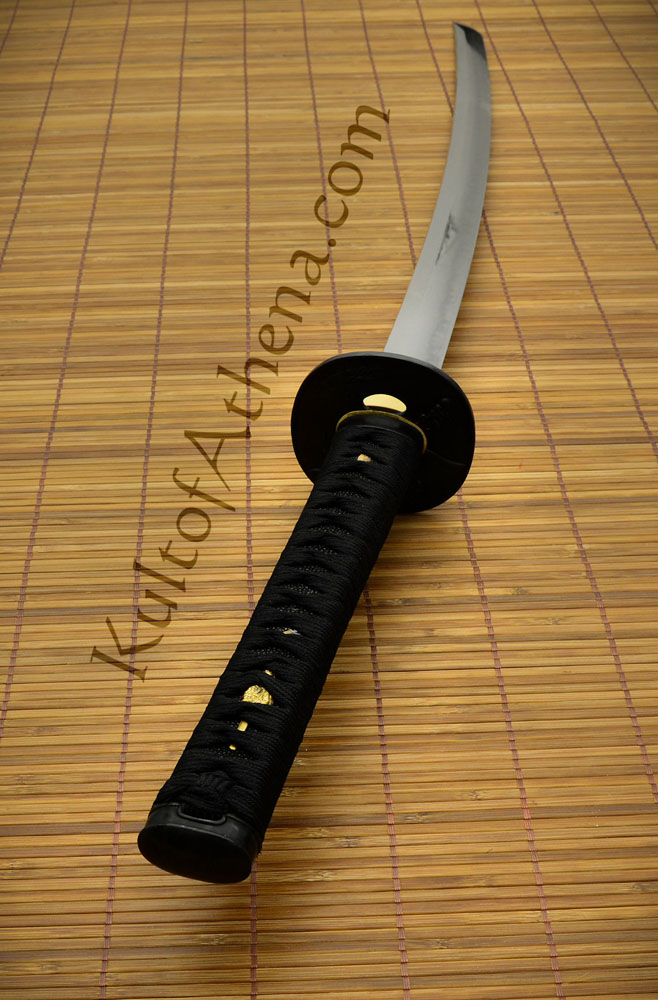
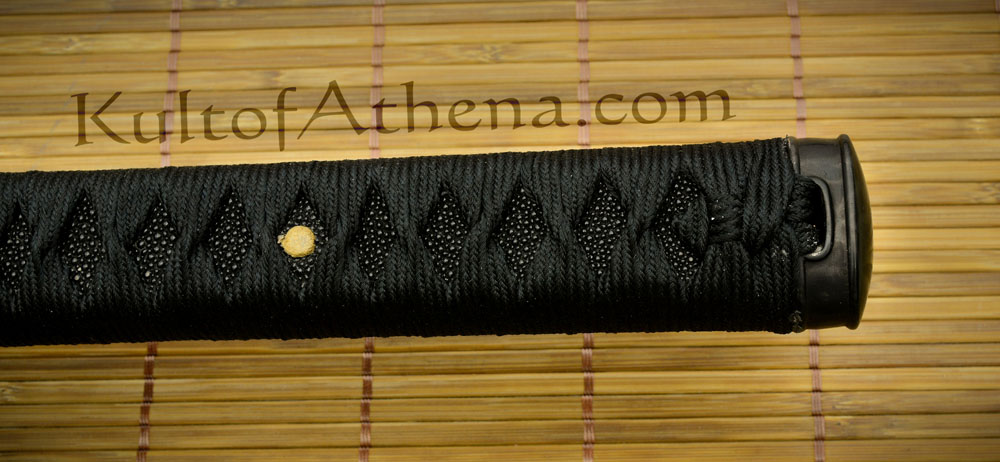
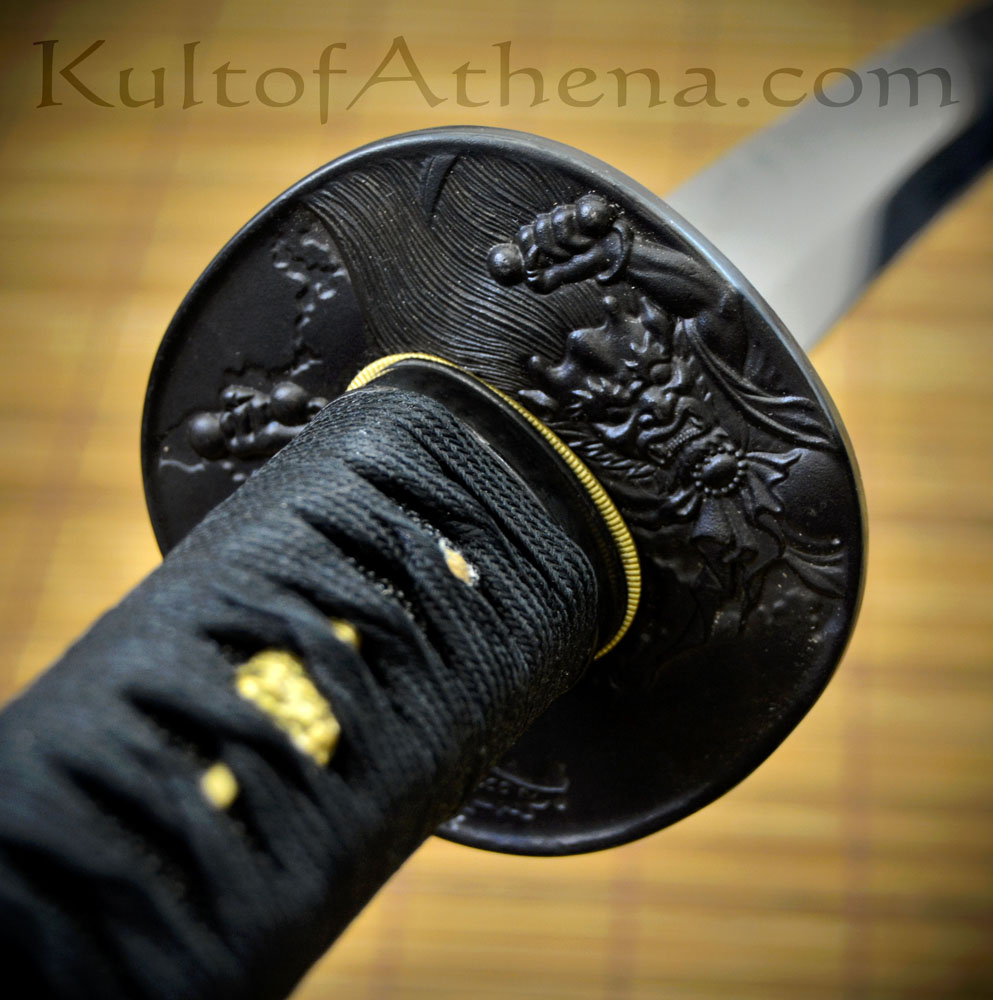
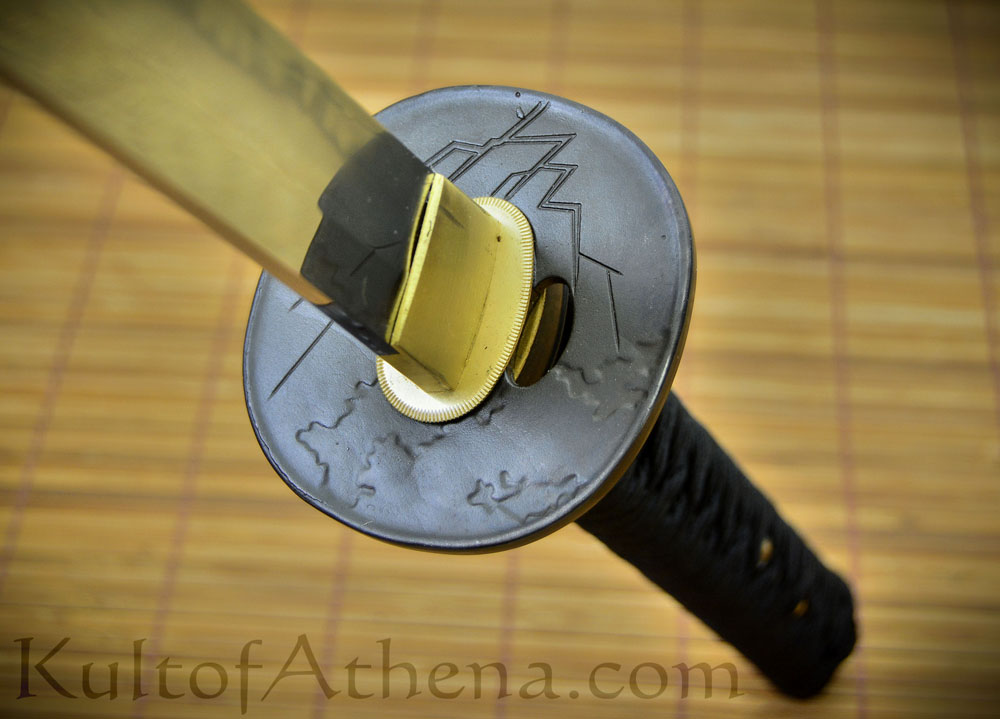
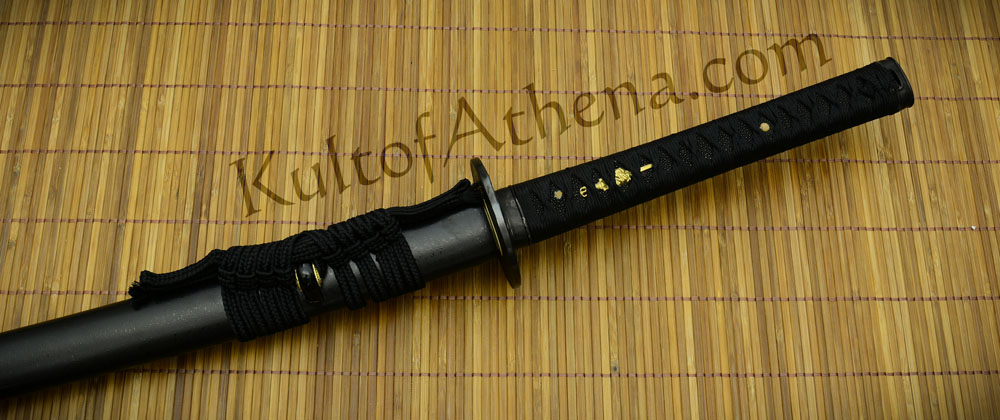
The habaki and seppa are brass and the tsuba, fuchi and kashira hilt fittings are iron. The tsuba is prominently cast in the visage of Raijin, the tempestuous Shinto god of thunder and storms. The wooden tsuka is inset with panels of black lacquered rayskin; black silk ito is knotted over the tsuka to finish the grip. The ito was wrapped with the use of hishigami to aid in keeping it tight and to give it a more proper shape. The saya scabbard is of carved wood with textured black lacquer and a black sageo cord. A black cloth sword bag is included.
Though few katana are made today with lamination, it was once a common technique; the Japanese swordsmiths crafted their swords with great experience, tradition and no lack of intuition. They had no access to pure, industrial modern steel and thus had to make the best and most reliable blade that they could with the materials and techniques available. Their admirable efforts and the skill of their craftsmanship still mesmerize.
Creating a blade of several different forge-welded partitions of differing steels was not only a great way to utilize the steel of varying carbon content that was produced from an steel bloom, but it allowed the smith to fit a core of softer steel within a jacket of harder steel. The hard exterior resisted damage and kept a keen, hard edge and the softer steel counteracted the brittleness of the hard jacket by giving the core a softness that would buttress the hard steel and would be more likely to absorb shock instead of cracking under duress.
This construction also had a durability benefit; damage in one laminated section had a good chance of not spreading to other layers - thus a crack induced on the edge would be more likely to stop when it reached the core, instead of shearing through. This was clearly an important benefit in the battle-worn periods of Japans history when swords and steel were both precious and a damaged, but unbroken blade meant the difference between victory or defeat.
Todays swordsmiths have access to high-quality, pure steel at far finer prices that could have ever been envisaged in feudal Japan. This quality steel and the ability to finely-tune modern tempering methods have made the creation of high quality mono-steel swords much easier. For the Japanese swordsmith, laminating was often the best use of his material and a construction that could most reliably make a durable blade with a keen edge and strong back - so long as his client could afford it. Today, the desire to own a laminated katana is less about function and more a wish to have a sword that exemplifies the traditional sword-crafting techniques and the practical artistry of Japans famed swordsmiths. It is a desire to capture something of the soul of the original Katana.
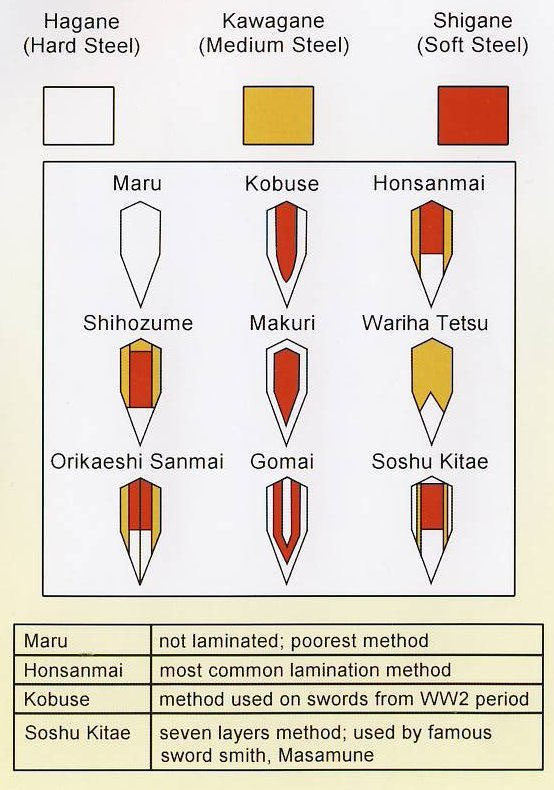
This katana is crafted in the Honsanmai method, which was the most common method used in Feudal Japan. An efficient and practical method, the softer steel core is wedged between two walls of medium-hard steel. A very hard steel is used for the edge and it is cushioned on the interior by the shock-absorbing core.
Specifications
Every measurement that matters
- Brand
- Iron Tiger Forge
- Culture
- Japanese
- Pommel
- N/A
- Overall Length
- 40 1/4''
- Blade Length
- 28 1/2''
- Blade
- 1095/1045 High Carbon Steel
- Weight
- 2 lb 12.3 oz
- Edge
- Very Sharp
- P.O.B.
- 5''
- Thickness
- 7.4 mm - 4.4 mm
- Width
- 31.2 mm
- Grip Length
- 10 3/8''
- Class
- Battle Ready
- Country of Origin
- China
- Type
- Katana
Reviews
What collectors are saying
Q&A
Questions from the community
Q What steels and construction does the blade use? Common Question
It is a Honsanmai laminated blade using 1095 and 1045 high carbon steels with a traditional clay differential temper that shows a vibrant hamon and visible lamination lines.
Q How does it handle and where is the point of balance? Common Question
It is described as having increased heft from the no bo‑hi design while retaining strong cutting power; the point of balance is about 5 inches from the tsuba.
Q Is the edge sharpened from the factory? Common Question
Yes, the edge is listed as Very Sharp.
Q What are the dimensions and weight? Common Question
Overall length 40 1/4 inches, blade length 28 1/2 inches, grip length 10 3/8 inches, blade width 31.2 mm, thickness tapers 7.4 mm to 4.4 mm, and weight is 2 lb 12.3 oz.
Q What type of tip and geometry does it have? Common Question
The blade has a geometric yokote with a large O‑kissaki tip and no bo‑hi.
Q What are the hilt and scabbard materials? Common Question
Brass habaki and seppa; iron tsuba, fuchi, and kashira; wooden tsuka with black lacquered rayskin panels and black silk ito wrapped with hishigami. The saya is carved wood with textured black lacquer and a black sageo cord.
Q What is depicted on the tsuba? Common Question
The iron tsuba is prominently cast with Raijin, the Shinto god of thunder and storms, with thunderbolt motifs.
Q Is it suitable for cutting or reenactment? Common Question
It is a battle‑ready katana with a very sharp edge intended for cutting practice by experienced users; observe all local laws and safety practices. It is not a blunt reenactment blade.
Q Where is it made and by whom? Common Question
Manufactured by Iron Tiger Forge in China.
Q How should I care for the blade and fittings? Common Question
Keep the high‑carbon steel blade clean and lightly oiled, avoid moisture on the lacquered saya, and periodically check the tsuka‑ito and mekugi for tightness.
The Maker
Iron Tiger Forge
A Kult of Athena developed line, Iron Tiger Forge focuses on high quality Chinese swords and Martial Arts weapons. By working directly with the factory we are able to provide these products at unheard of prices for the level of quality and materials.
Often paired together
I just got this sword and my first impressions are it’s the best mid range price swords I’ve had. It’s feels light but not feather weight and moves precisely where I want, The balance is damn near perfect. It’s fittings are good and tight and comfortable in the hand
I’ve got only 3 minor complaints about it, the swords hamon is not as good looking as in the pictures, it’s pretty hard to see even. When I swing the sword around I hear something creaking in the tsuka which probably is because the sword was shipped into my cold climate so I doubt it’s the makers fault. And lastly the tsuka near the top is pretty thick compared to my few other swords which I don’t like as much. But all in all very good sword well worth the money