
Roman 3rd Century Podlodow Spatha – Deepeeka
In stock
$169.99
- Shipping estimated at checkout
- Every blade inspected before shipping
- 30-day returns
- Blade
- C60 High Carbon Steel
- Overall Length
- 35 3/16''
- Weight
- 2 lbs 6.7 oz
- Brand
- Deepeeka
- Culture
- Roman
- Era
- Ancient
Overview
Roman 3rd Century Podlodow Spatha - Deepeeka
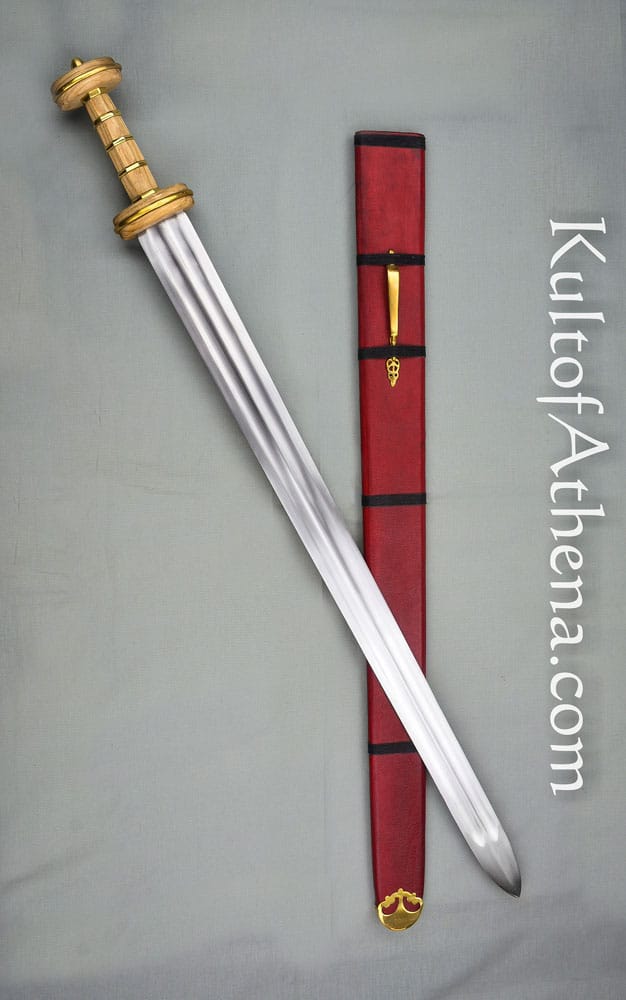
This 3rd Century Roman Spatha is based on swords found near Podlodow in Poland. Characterized by wide blades with more than a single fuller, these swords have been found in quantity beyond the Limes the borders of the Empire and several examples have also been found within the boundaries of the Roman Empire. These swords may have been a common sight in the frontier forces of the Empire, but perhaps they were also trade or export items as well.
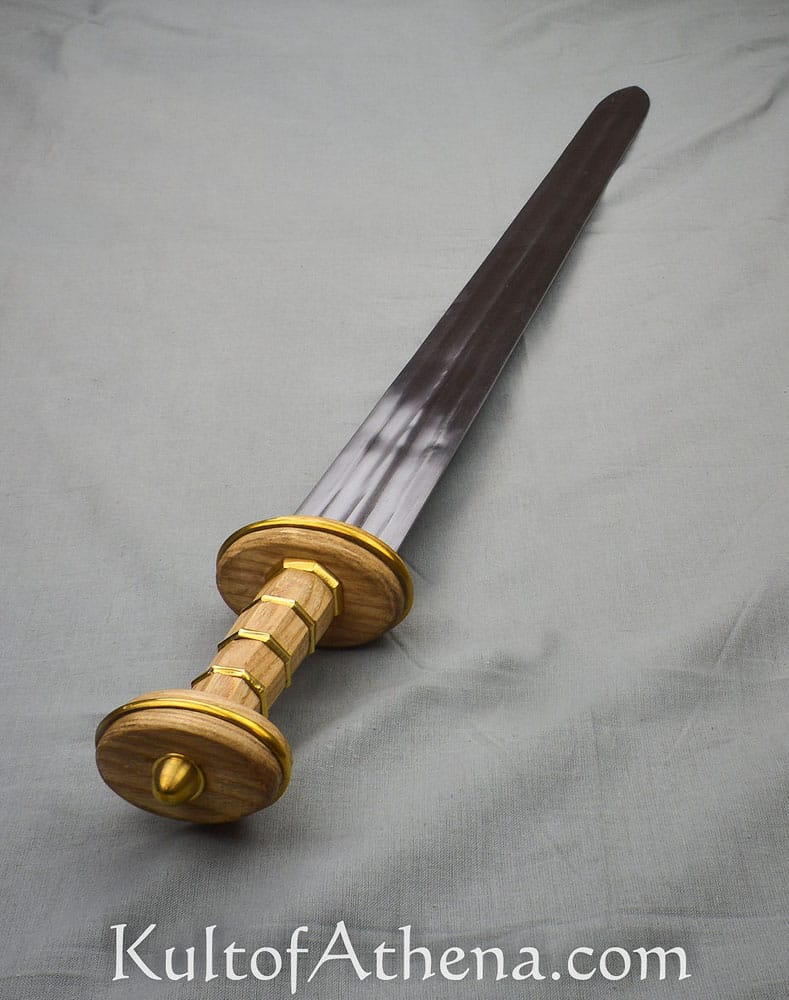
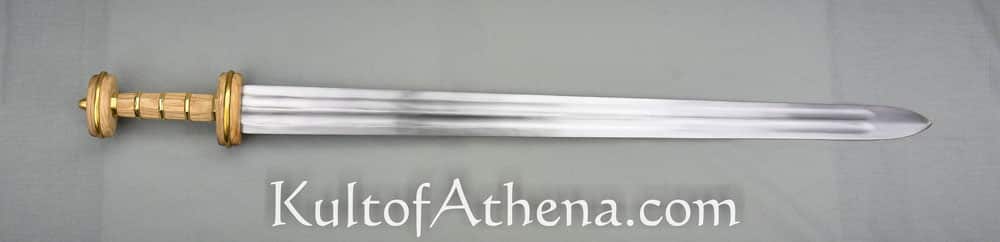
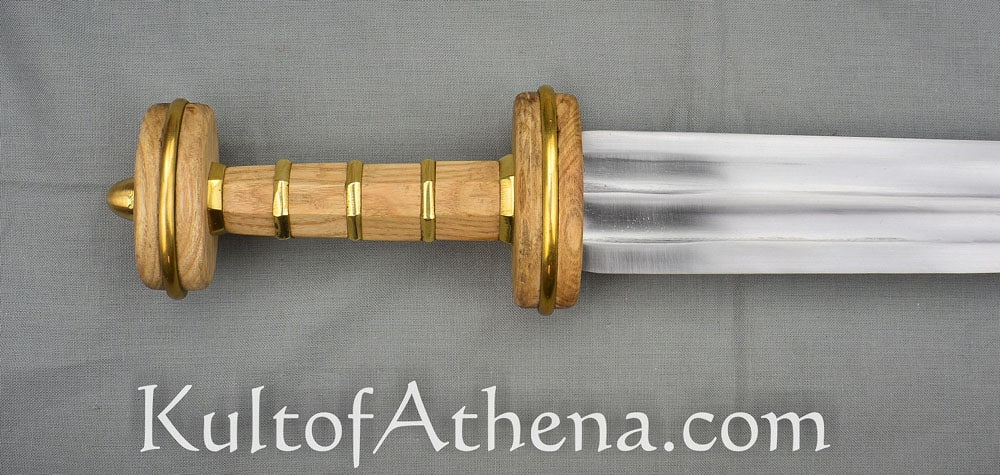
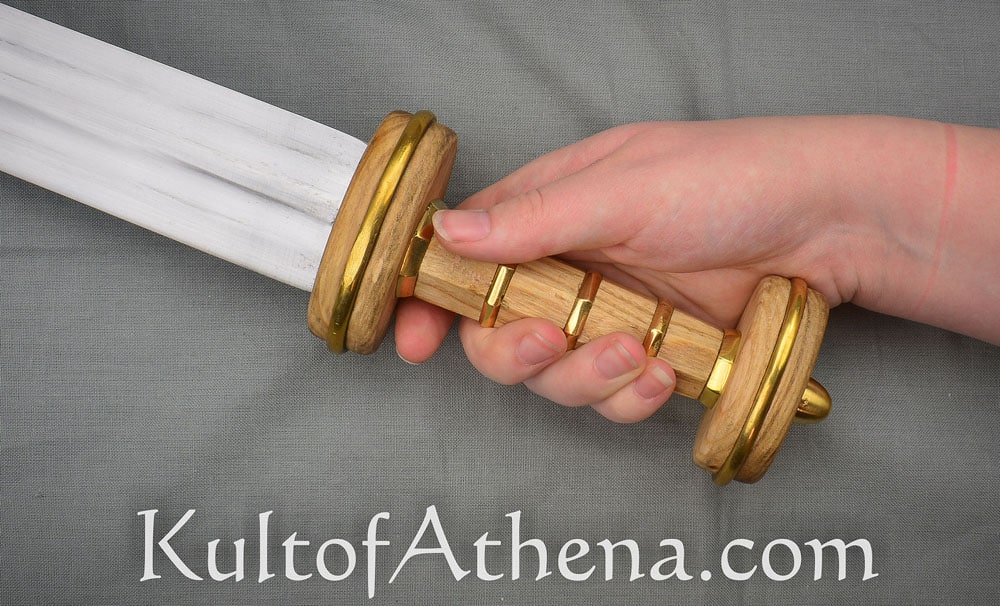
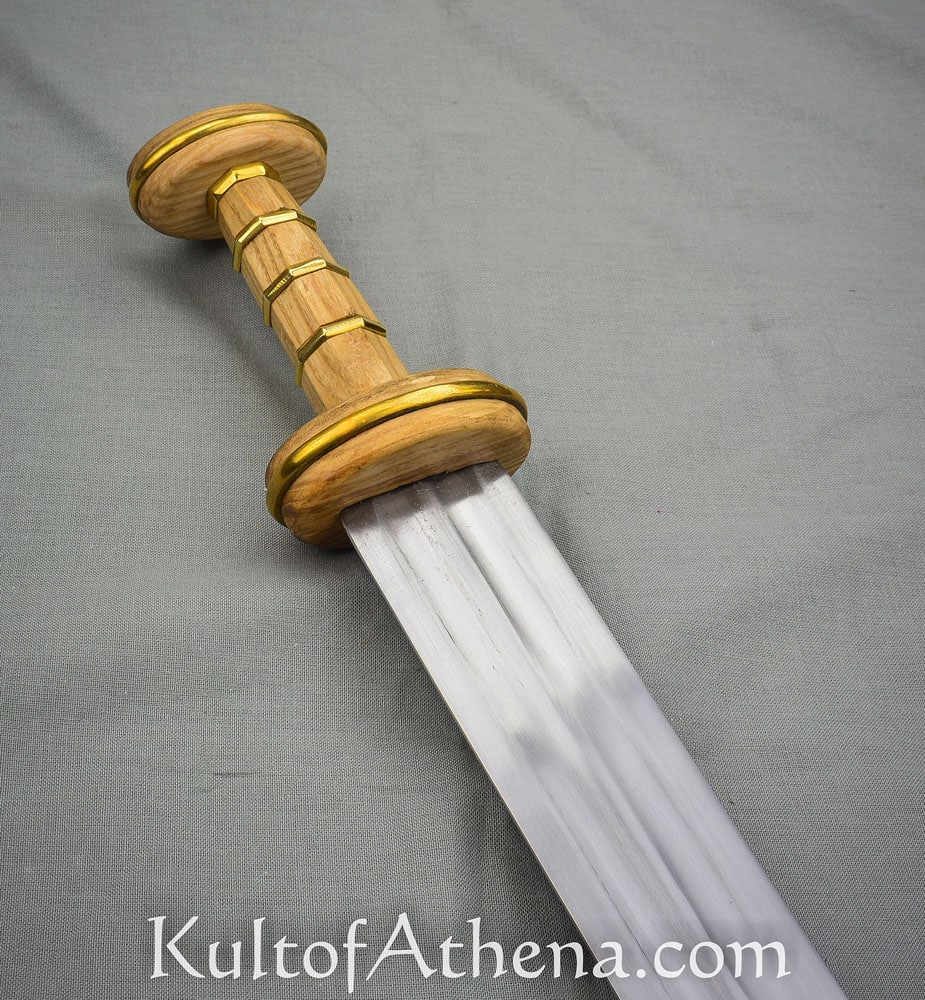
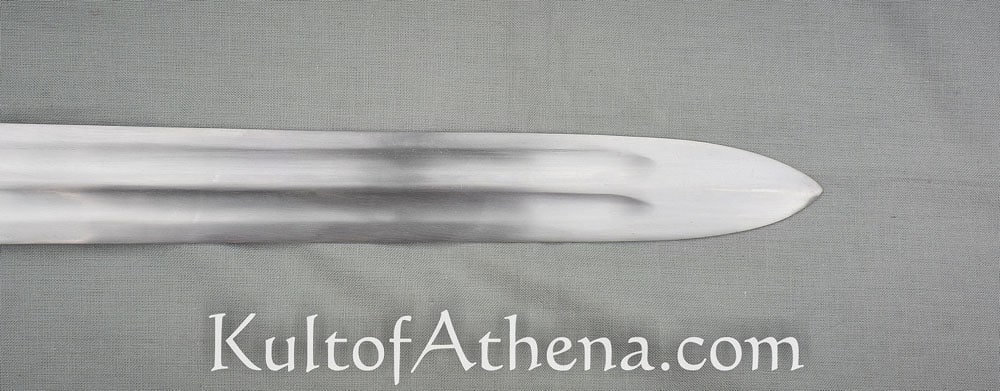
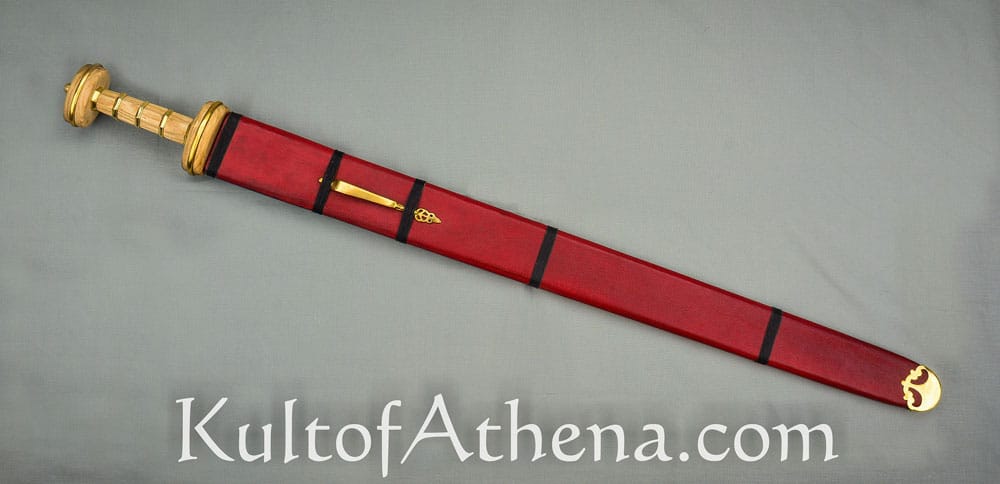
This replica has a blade of high carbon steel with long dual fullers on each side of the blade to reduce unnecessary weight to lighten the sword. The hilt is skillfully carved and polished hardwood which is embellished with brass banding. The sword is paired with a companion scabbard which is crafted from wood and bound in stitched red leather. The chape and suspension sling are crafted from brass and bands of tight black cord complete the scabbard.
Specifications
Every measurement that matters
- Brand
- Deepeeka
- Culture
- Roman
- Era
- Ancient
- Edge
- Unsharpened
- Pommel
- Nut
- Overall Length
- 35 3/16''
- Blade Length
- 28 15/16''
- Blade
- C60 High Carbon Steel
- Weight
- 2 lbs 6.7 oz
- P.O.B.
- 6 1/2''
- Thickness
- 4.5 mm - 4.3 mm
- Width
- 49.3 mm
- Grip Length
- 3 7/8''
- Country of Origin
- India
- Type
- Spatha
Reviews
What collectors are saying
Q&A
Questions from the community
Q What is this sword based on historically? Common Question
This spatha is patterned after swords found near Podlodow, Poland, a style associated with frontier forces along the edges of the Roman Empire during the 3rd century. Its wide blade with twin fullers (the long grooves running down each face) was a hallmark of these frontier and trade examples, some of which turn up well beyond the Roman borders and some within them.
Q What is the blade made of, and how durable is the construction? Common Question
The blade is forged from C60 high carbon steel, a steel commonly used in battle-ready reproductions for its strength and resilience. The dual fullers on each face reduce weight without giving up structural integrity, keeping the blade lively in the hand rather than blade-heavy.
Q Is this sword full tang? Common Question
The tang runs the full length of the hilt and terminates at the pommel, which is secured by a threaded nut rather than hidden under a cap. This nut-pommel fastening is a mark of genuine full-length, full-width tang construction, the same approach used on durable battle-ready swords, not a decorative or partial-tang build.
Q Does this sword come sharp, and what can it be used for? Common Question
The blade ships unsharpened. This makes it well suited to display, historical study, and handling practice, though it is not set up as a cutting sword in its stock edge condition.
Q What does the point of balance mean for how this sword handles? Common Question
The point of balance sits 6 1/2 inches out from the guard. Combined with the overall weight of just under 2 pounds 7 ounces, that balance keeps enough mass forward for solid presence in the blade while still letting the sword move through the longer, cavalry-length reach a spatha is built for.
Q What is the hilt made of, and how is it finished? Common Question
The grip is carved and polished hardwood, ribbed for finger purchase and separated by brass spacer rings, with matching disc-shaped wooden pommel and guard pieces trimmed in brass banding. A brass stud caps the pommel end, and the overall finish has a warm, bone-like tone set off by the gold-toned metal fittings.
Q What is the scabbard made of, and how should I store the sword long-term? Common Question
The scabbard is wood-cored and wrapped in stitched red leather, with brass chape and suspension fittings and bands of black cord. For long-term storage, keep the blade lightly oiled and stored outside the scabbard, since leather and wood sheaths can trap moisture against the steel and encourage rust over time. Wipe the blade down after handling and store it somewhere dry.
Q Who is this sword best suited for? Common Question
With its unsharpened high carbon steel blade, full-length tang, and wood-and-leather scabbard, this spatha is built for collectors, reenactors, and display, standing up to handling and historical presentation rather than being set up as a cutting weapon out of the box.
The Maker
Deepeeka
Deepeeka creates an astonishing variety of replica weapons, armor, and re-enactment accessories that range from Classical Antiquity to the 20th Century. Deepeeka has been crafting replicas since the 1980s and their products are essential gear for many re-enactment groups. Many swords, daggers and other weapons made by Deepeeka are durably crafted and budget-friendly offerings. The steel is good and well-tempered and their leathercraft and woodworking are of excellent quality. Deepeeka’s products are handcrafted and (in the case of blades, hand-hammered) are a good deal for those who want a quality item at a good price.
Kult of Athena is the US distributor for Deepeeka products and we offer the largest in-stock selection you will find and we will beat any price you can find. If you are searching for a particular item or find a Deepeeka item listed elsewhere that is not seen on our site let us know and if it is available we can source it for you at a better price than seen elsewhere.
Often paired together

Very beautiful spatha, a bit on the heavy side. The guard and brass fittings are tight and well built, with a few imperfections that give it a bit of character. The blade itself was surprisingly uniform, and the KoA sharpening service added a nice touch. The scabbard is made of red leather and brass fittings, which pair nicely with the blade, however the wood core inside can be a bit rattly. The sword fits very snug into the scabbard, which makes it a little challenging to remove.
Overall, I highly recommend this blade if you are looking for a beautiful late roman or migration era sword for decoration, costume, or light handling. Due to the heft of the blade it would be somewhat unwieldy for heavy use and blade-work, but it would likely hold up in most of these situations. For the price, this sword is well-built and aesthetically pleasing.