
Bushcraft Tracker Sword – Ex Gurkha Khukuri House
In stock
$199.95
- Shipping estimated at checkout
- Every blade inspected before shipping
- 30-day returns
- Overall Length
- 26 3/4"
- Weight
- 3 lbs 7 oz
- Brand
- EGKH
Overview
Bushcraft Tracker Sword - Ex Gurkha Khukuri House
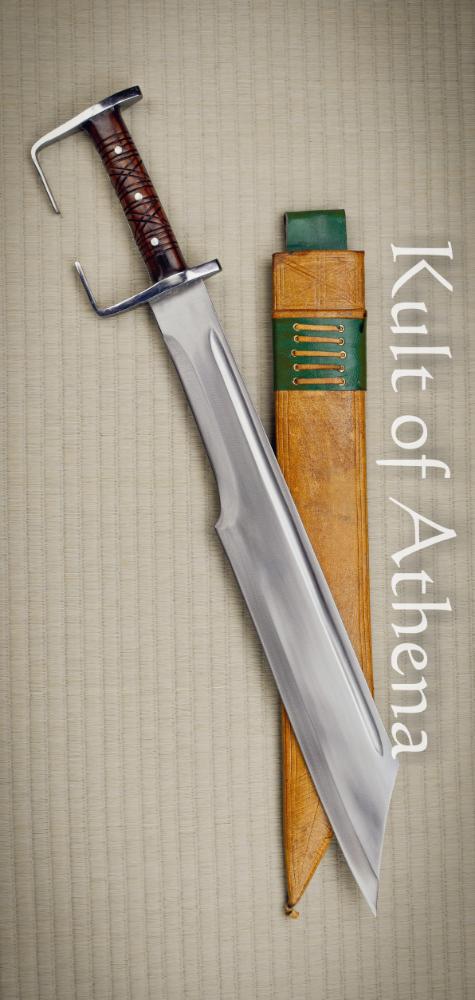
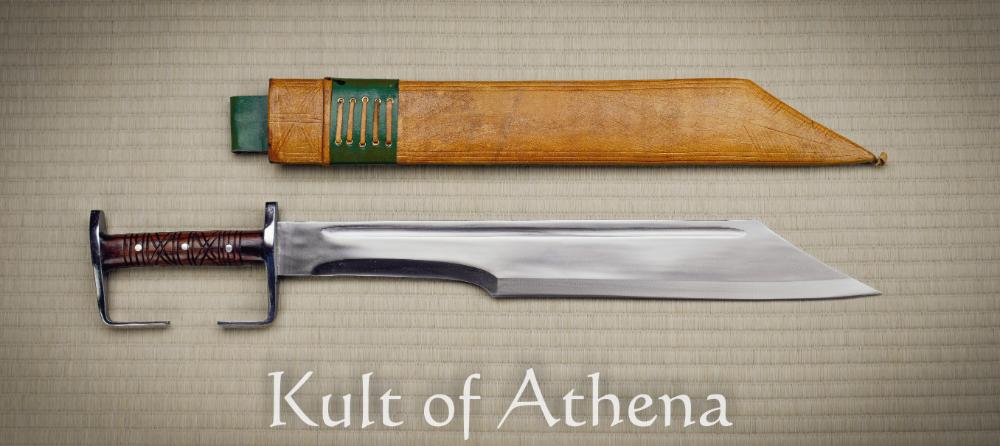
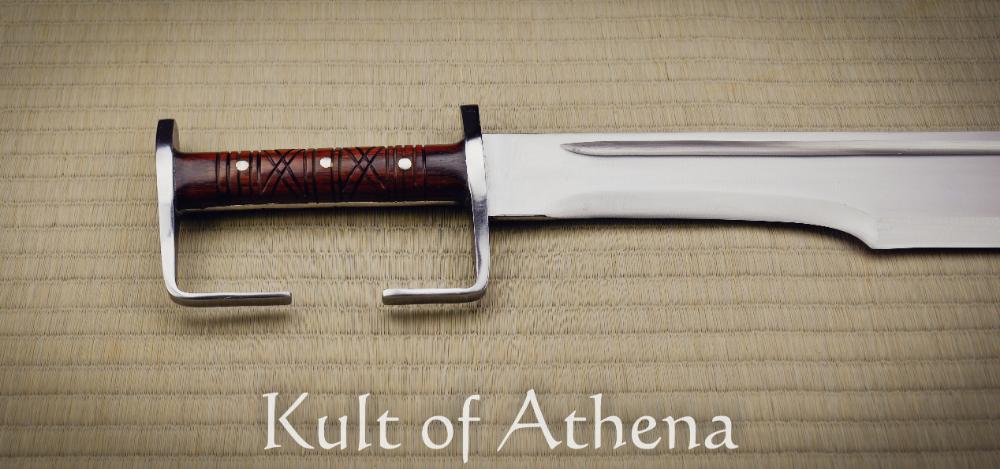
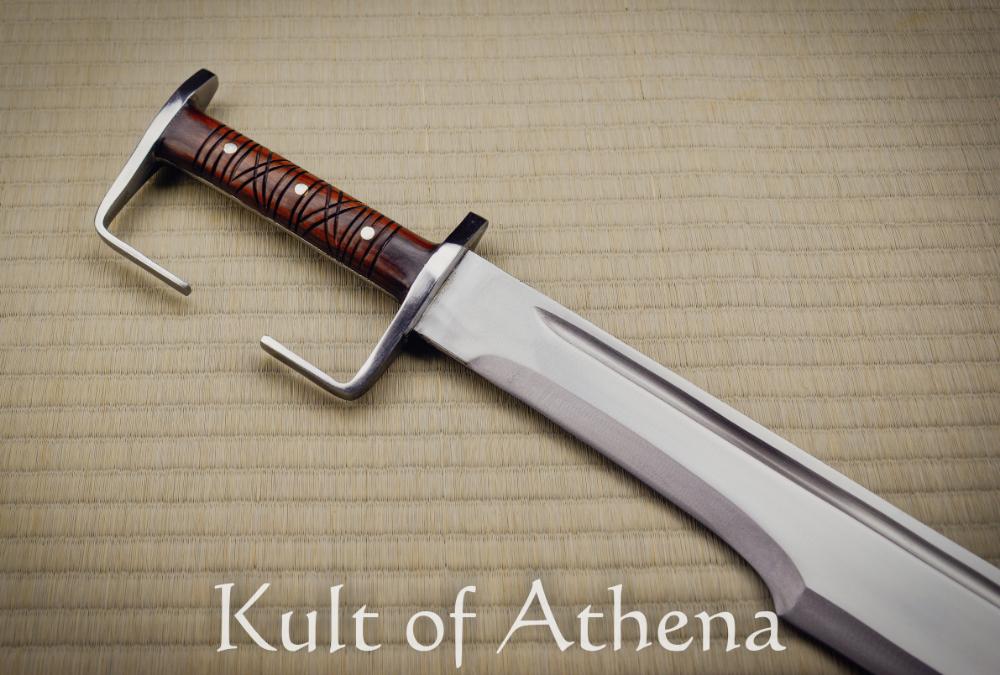
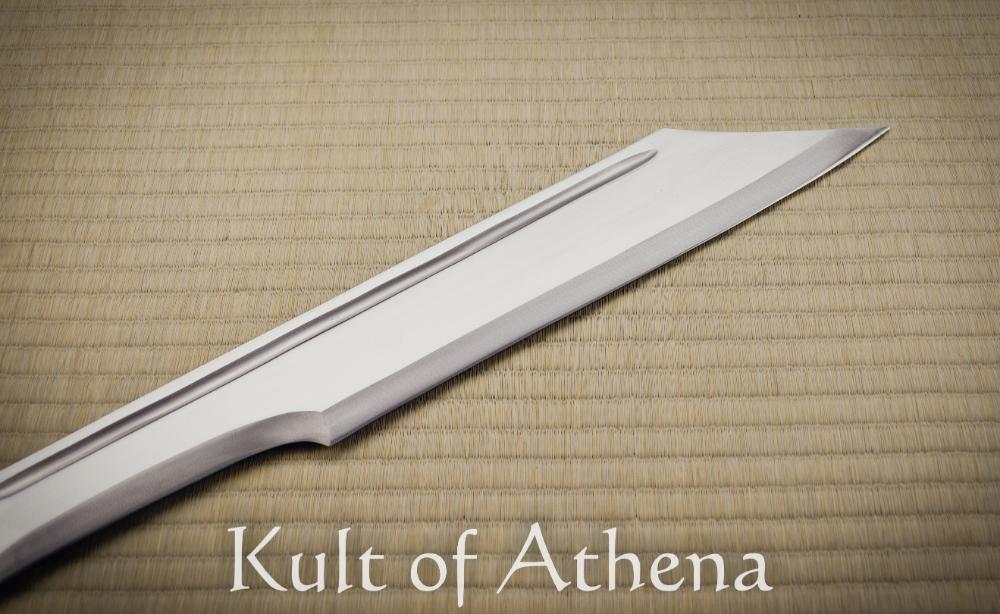
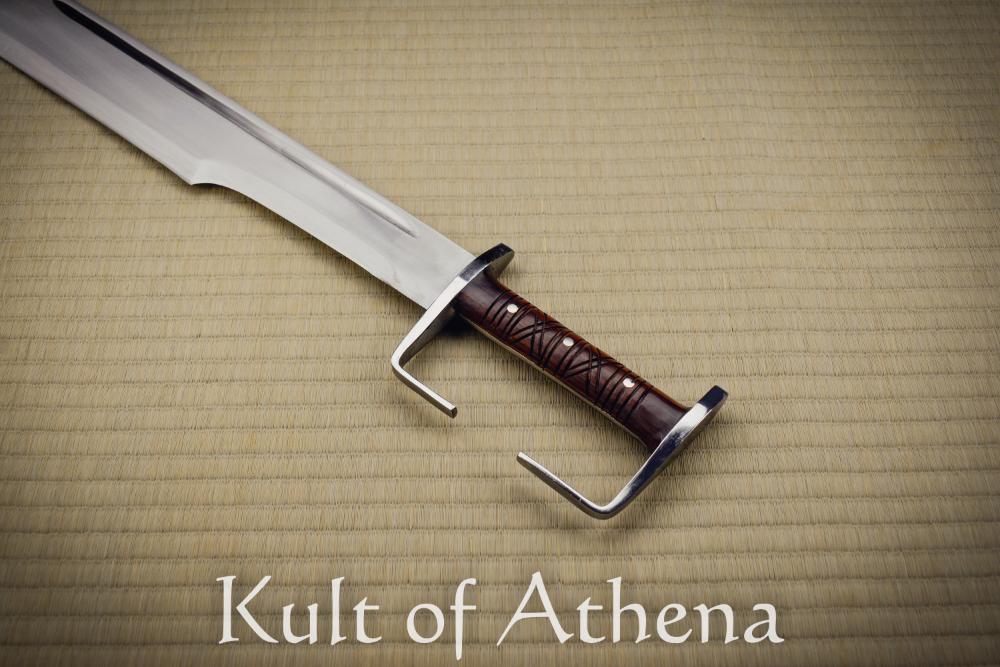
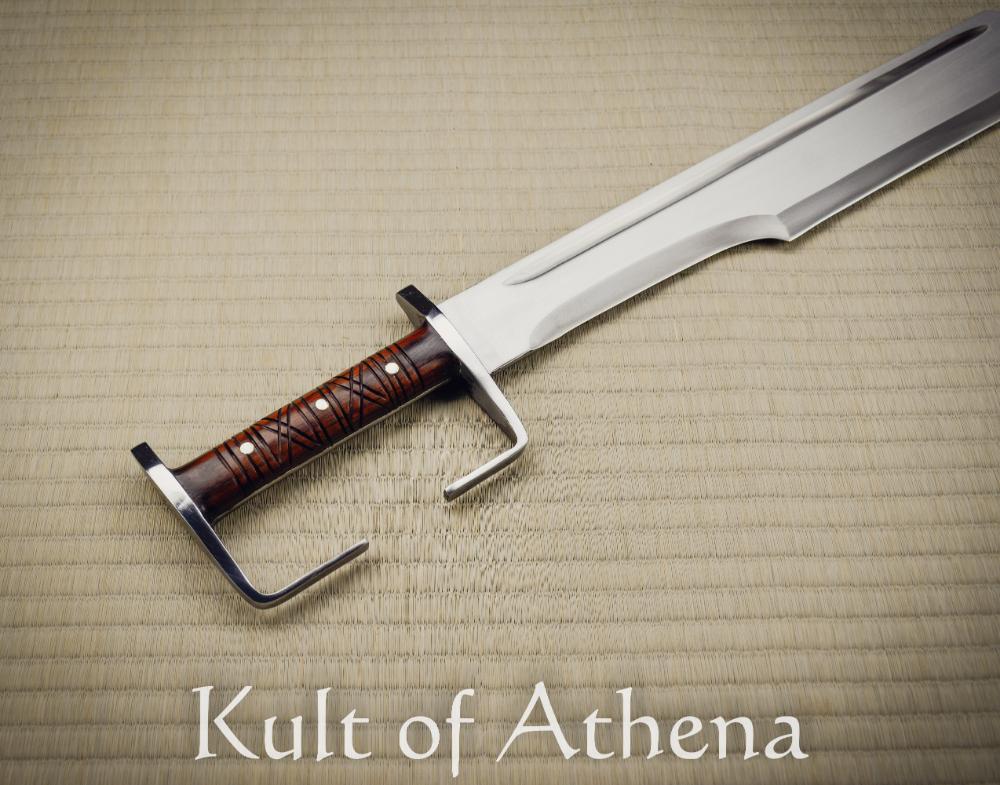
This rough, ready and robust Bushcraft sword is purpose-built for power chopping through brush while also functioning as an imposing and hard-hitting tool of self defense. The thick spine of the blade powers it through camp and clearing duties and its sharp blade is forged from tempered and tough 5160 high carbon steel. The blade was differentially-tempered to possess a dull-resistant 58-60 HRc, a body of 45-46 HRc and a shock absorbing spine of 22-25 HRc. The short sword is crafted as durably and tough as possible with a full tang construction consisting of polished scales of rosewood which are triple-riveted to the thick blade tang. The guard and pommel are steel and their elongated ends for a semi-knucklebar.
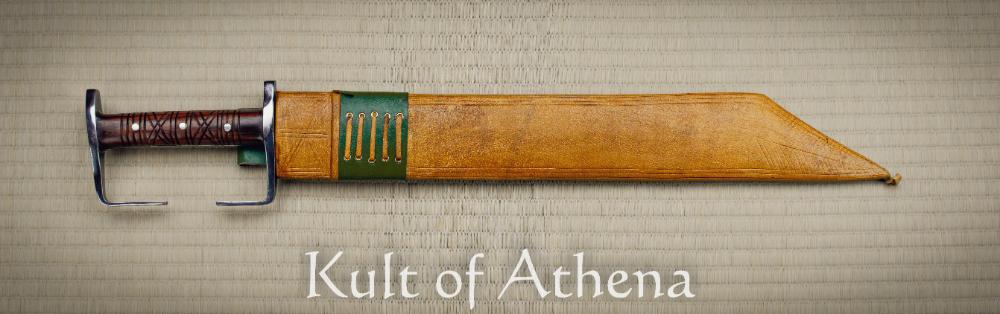
The high quality scabbard is crafted from wood which is bound in leather and completed with a faux leather belt frog and belt loop so that the sword can be worn vertically
Specifications
Every measurement that matters
- Brand
- EGKH
- Edge
- Very Sharp
- Pommel
- Integrated
- Overall Length
- 26 3/4"
- Blade Length
- 20 7/16"
- Weight
- 3 lbs 7 oz
- P.O.B.
- 6 1/4"
- Thickness
- 7.2 mm - 3.1 mm
- Width
- 46 mm - 66.5 mm
- Grip Length
- 5"
- Country of Origin
- Nepal
Reviews
What collectors are saying
Q&A
Questions from the community
Q What is this sword designed to be used for? Common Question
This is a bushcraft-style short sword built for camp and clearing work, such as chopping through brush, and it also serves as a hard-hitting self-defense tool. The thick spine gives it the mass and leverage to power through repeated chopping tasks rather than fine blade work.
Q What steel is the blade made from, and how is it heat treated? Common Question
The blade is forged from 5160 high carbon steel and differentially tempered: the edge runs 58-60 HRC for a dull-resistant cutting line, the body sits at 45-46 HRC, and the spine is left softer at 22-25 HRC to absorb shock. That combination is meant to keep the edge holding up under hard chopping while the spine flexes instead of cracking.
Q Is this a full-tang sword? Common Question
Yes, the tang runs the full length of the blade in the same 5160 steel, with rosewood grip scales triple-riveted to it. That construction is built for durability under hard use rather than being a lighter decorative fitting.
Q Does it ship sharp, and is it ready to use? Common Question
The edge ships Very Sharp, and this sword is classified Battle Ready, meaning it's built with the steel, heat treat, and tang construction to hold up to real chopping work. It is not a trainer or sparring weapon, so treat it as a live-edged tool rather than something for partnered drills.
Q What is the point of balance, and what does it mean for handling? Common Question
The point of balance sits 6 1/4" out from the guard, putting weight forward in the blade. That forward balance is what gives this sword its chopping power for camp and clearing tasks, rather than a quick, blade-light feel.
Q What's the grip made of, and how is it attached? Common Question
The grip is polished rosewood, 5" long, with scales triple-riveted through the full-width tang. That's a solid, traditional attachment meant to stay tight under heavy chopping.
Q What are the guard and pommel made of? Common Question
The guard and pommel are steel and built as a single integrated piece, with elongated ends that form a semi-knucklebar for extra hand protection during hard use.
Q What's the scabbard made of, and how should I store the blade long-term? Common Question
The scabbard is wood bound in leather, with a faux leather belt frog and loop for vertical carry. For long-term storage, keep the blade lightly oiled and store it outside the scabbard in a dry place, since any sheath can trap moisture against the steel over time.
Q What targets is this sword suited for if I want to test cut? Common Question
This sword's forward balance and thick spine make it well suited to chopping through test targets like tatami or water bottles. That same mass is what carries it through heavier camp and clearing tasks.
The Maker
EGKH
EGKH, based in Nepal, manufactures high quality kukris (or Khukuris) and other fighting knives. As the official supplier of kukris to the British Gurkha Unit, Marine Corps, Nepal Army, Nepal Police and Indian Gurkhas, EGKH is well versed in providing a good blade. All products are hand forged from high grade carbon steel.
Often paired together

I’ve had this sword for a couple months now. It’s a beautiful beast of a blade!
Pros:
-wicked sharp edge and extremely sturdy, piercing tip—do not drop this thing tip-first on your foot…it comes down like a razor-pointed anvil
-impressive construction that feels almost impossible to damage, much less to break; I’ve chopped and slashed an array of objects without even making a scratch
-beautiful grip that holds comfortably in your hand with the added protection of the folded guards
Cons:
-it’s heavy if you don’t have a relatively strong hand and arm—more like a massive machete than a true sword
-the sheath is a bit tight getting the blade back in past its widest point, but you won’t dull the edge if you enter at a slight angle
Overall: a practical but pretty addition to any belt or wall.