




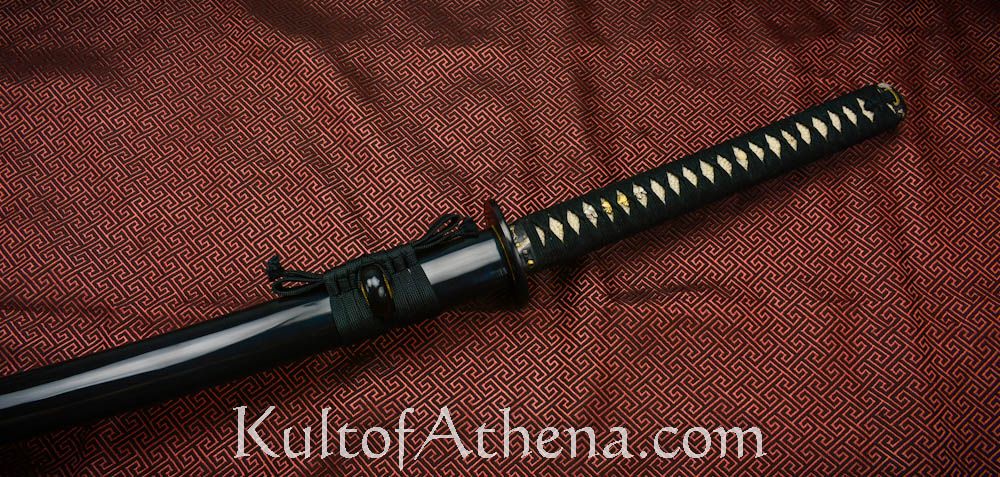

Hanwei Toyotomi Hideyoshi Katana – Blemished Grade
In stock
$699.99
- Shipping estimated at checkout
- 30-day returns for standard grade
- Blade
- T10 High Carbon Steel
- Overall Length
- 40 3/16"
- Weight
- 2 lbs 2 oz
- Brand
- Hanwei
- Culture
- Japanese
Overview
Hanwei Toyotomi Hideyoshi Katana - Blemished Grade
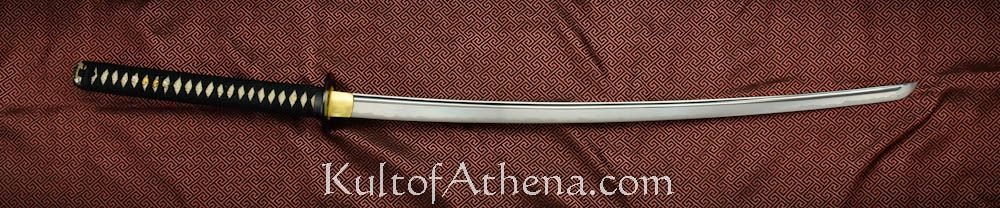
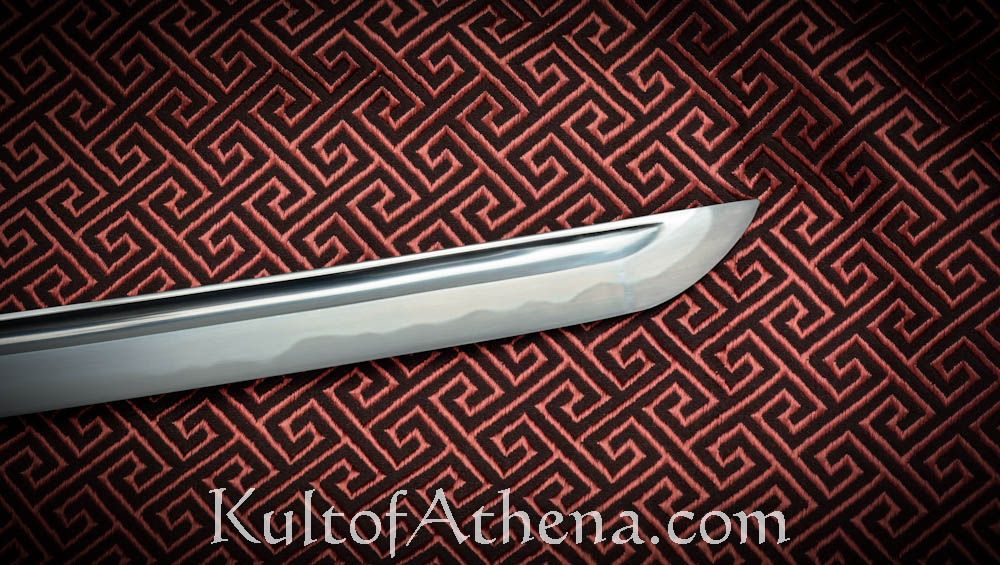
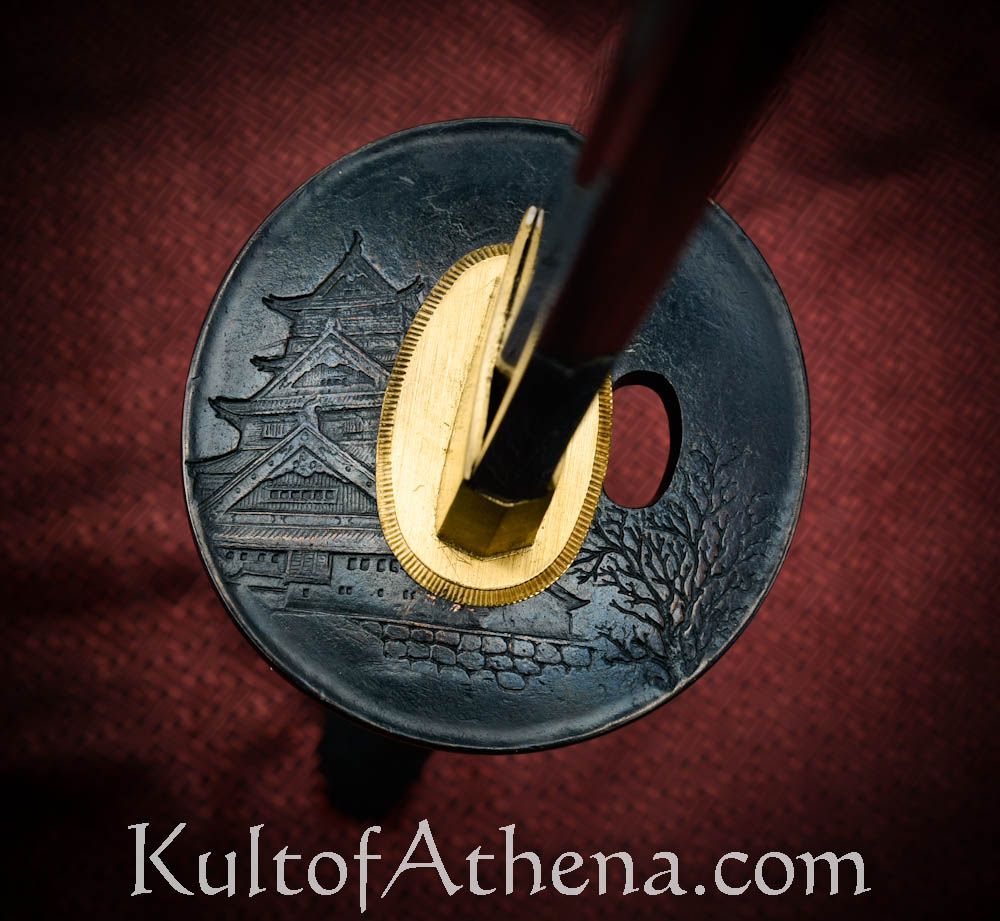
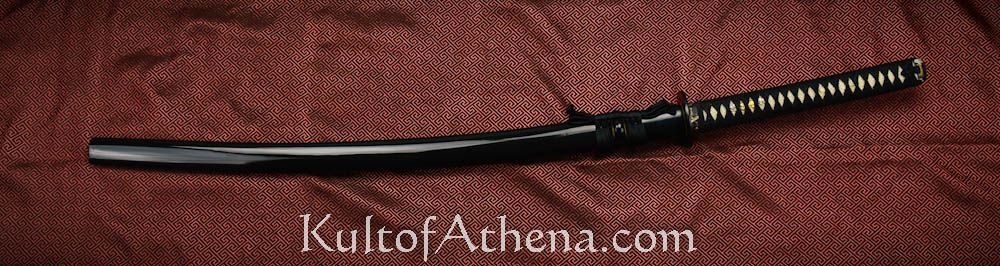
The Hanwei Toyotomi Hideyoshi Katana is a finely balanced katana that is lighter and quicker than most Katana. The sweeping blade narrows to a fine tip, yet retains enough width to ensure that it can cut and slice decisively and its long bohi groove reduces much of the blade weight. The sword is artfully themed with its depictions of Osaka Castle and daimyo Hideyoshi Katana in excellent detailing on the tsuba and hilt fittings. Its keenly sharp and finely polished blade of T10 high carbon steel brings out the genuine hamon line which denotes the clay-hardened edge of 60 HRc steel and the shock-absorbing body of the blade which is 40 HRc.
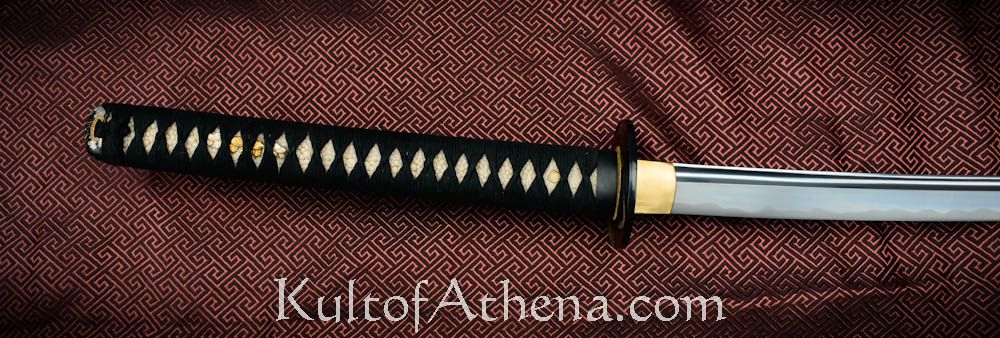
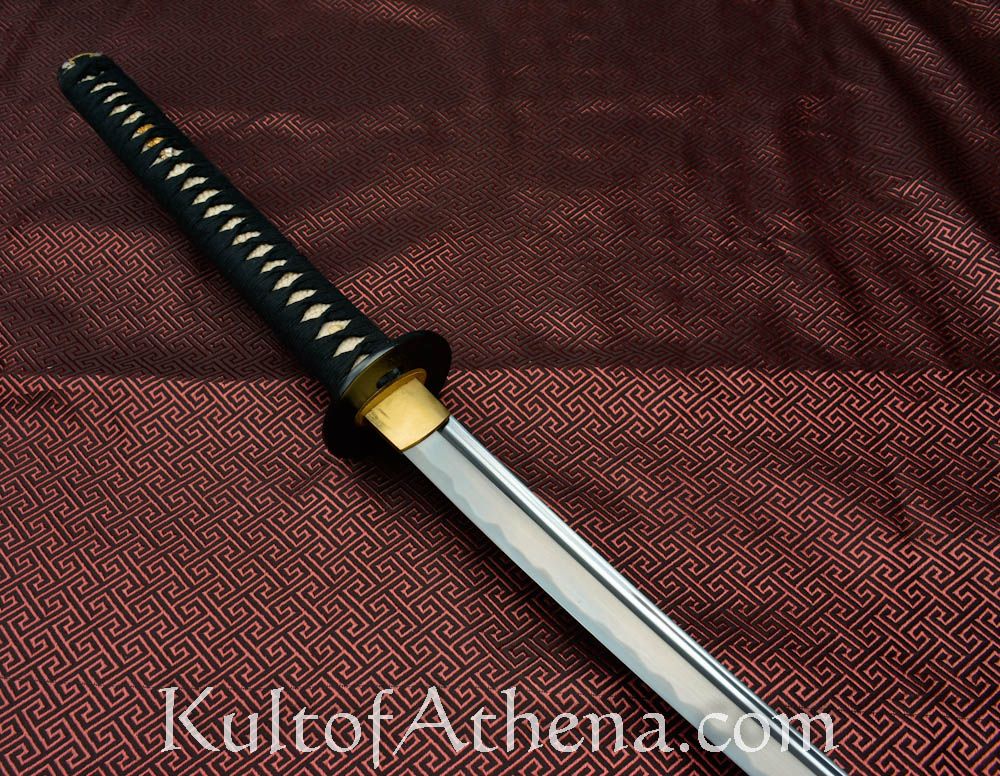
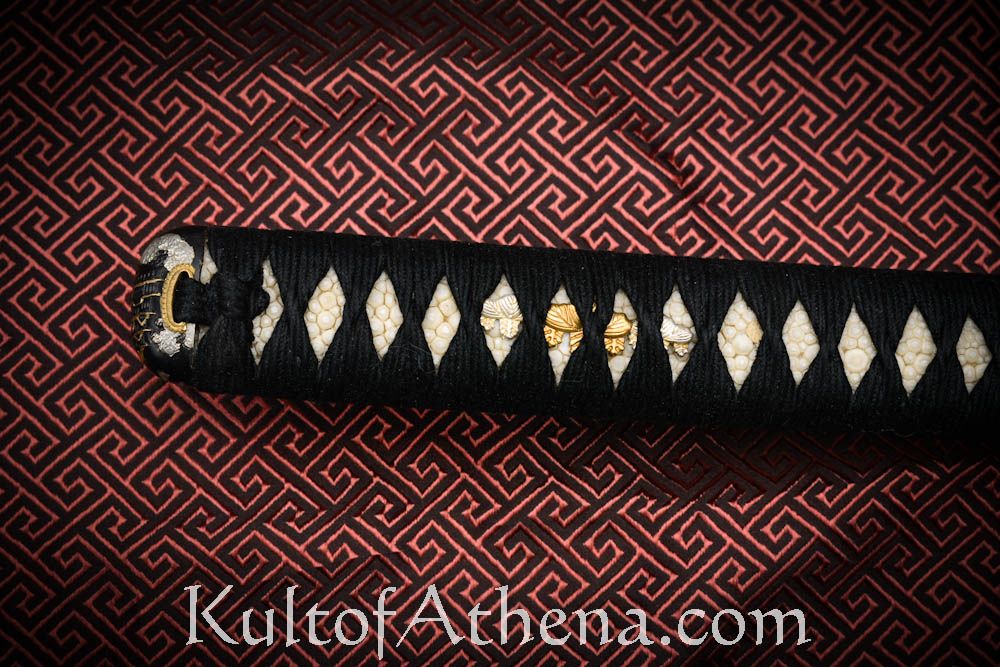
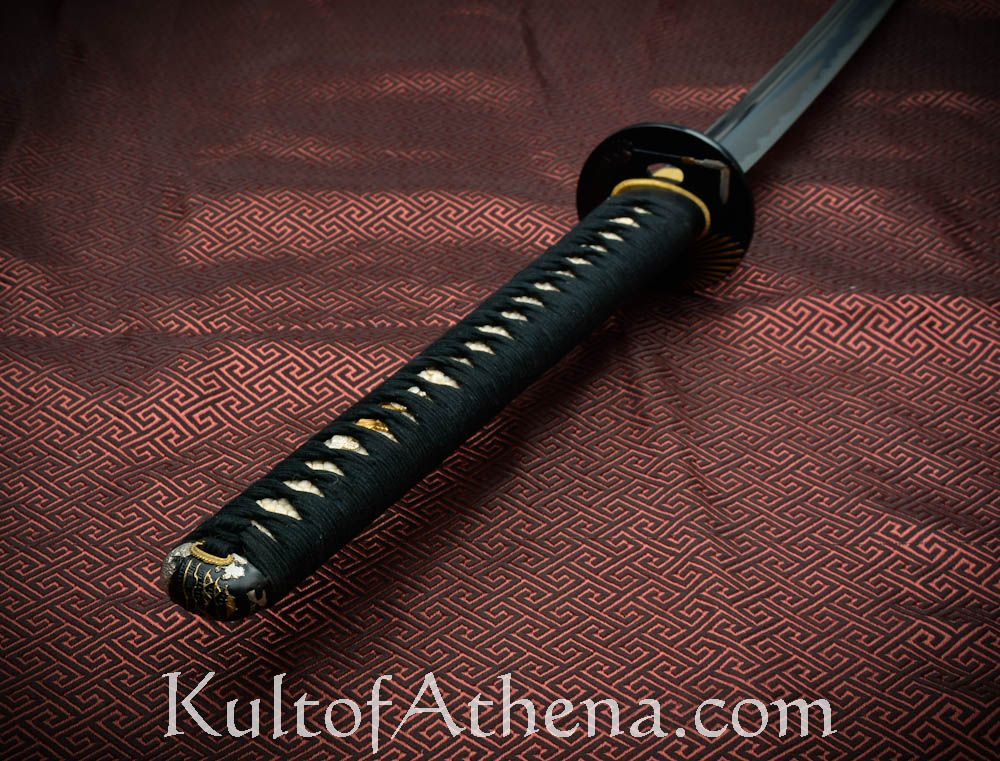
The tsuba, fuchi and kashira are all crafted from antiqued brass with detailing picked out in silver and gold. In addition to Osaka Castle and Toyotomi Hideyoshi on the tsbua, the fuchi regally features the Japanese Tea Ceremony and Osaka castle on its kashira. The wooden tsuka grip is inlaid with high quality genuine rayskin which is overlaid with tightly bound black cotton tsuka ito of high quality to complete the sword. The sword is matched with a scabbard of carved wood which is finished with a glossy black lacquer and a black cotton sageo cord. Included is a cloth sword bag and a Hanwei sword maintenance kit with care instructions. Please Note: The exacting design and color of the sword bag can vary
Toyotomi Hideyoshi, born Hiyoshimaru in 1536, rose from peasant status to chief minister of the emperor in 1585 in attempt to complete the goal of unification of Japan by his fallen leader Oda Nobunaga. In 1568 when Nobunaga began his siege of central Japan Hideyoshi fought in many of those important battles. His judicious behavior, positive countenance and intelligence helped him rise through the ranks. Though his lowly origins bely the latter of those traits, Hideyoshi was the architect of many reforms of feudalism in Japan as well as becoming a master of the tea ceremony and educated himself in secret. In 1577 Nobunaga charged Hideyoshi with the subjugation of western Japan. After the betrayal of Nobunaga's retainer, Akechi Mitsuhide, and Nobunaga's suicide, Hideyoshi sought immediate revenge on his leader’s traitor and defeated him at the Battle of Yamazaki.
Hideyoshi followed by securing the line of succession by Nobunaga's grandson. After subduing one the powerful vassals supporting Nobunaga's third son, Hideyoshi began fortifying the country by securing all the strongholds and building Osaka castle. Soon after he started the unification process of Japan to complete his mentor's work. After battling Tokugawa Ieyasu which led to a draw, they ended their conflict with an alliance. In 1585 Hideyoshi was appointed kampuku (chancellor to the emperor) and was given the family name of Toyotomi. After subduing the last of the resistance with his new ally, Ieyasu, they went about securing power and stability for Japan by disarming the population, reducing the number of castles and strongholds within the country and freezing the social classes. Hideyoshi abolished road checkpoints to encourage travel and trade. He also conducted large land surveys to develop mineral resources for the formation of coinage to also assist with economic growth.
In 1590, Hideyoshi was the head of daimyo alliance the formed the government of national unification. Soon after Hideyoshi passed on his position of kampuku to his nephew, Toyotomi Hidetsugu. In 1592 Hideyoshi began an invasion of Korea which ended in failure but tried again in 1597 and failed. Hideyoshi died in 1601 at the age of 62 where he spent his latter years burdened by his defeat in Korea. Two years after Toyotomi Hideyoshi's death, Ieyasu took control of the government and founded the Tokugawa shogunate. Ieyasu continued Hideyoshi's policies of unification which led into a time of peace in the Tokugawa era.
Specifications
Every measurement that matters
- Brand
- Hanwei
- Culture
- Japanese
- Edge
- Very Sharp
- Pommel
- N/A
- Overall Length
- 40 3/16"
- Blade Length
- 27 13/16"
- Blade
- T10 High Carbon Steel
- Weight
- 2 lbs 2 oz
- P.O.B.
- 3 1/4"
- Thickness
- 6.5 mm - 3.5 mm
- Width
- 29.6 mm
- Grip Length
- 11"
- Country of Origin
- China
Reviews
What collectors are saying
Q&A
Questions from the community
Q What does the "Blemished Grade" on this katana mean? Common Question
Blemished Grade means this is a second-quality piece with minor to moderate flaws in its appearance, such as surface marks or small imperfections in the fittings or lacquer. Construction, durability, and full functionality of the sword are not affected, so it performs the same as a standard example of this model.
Q What is the blade steel and how is it heat treated? Common Question
The blade is T10 high carbon steel, clay-hardened in the traditional manner so the edge reaches 60 HRc for cutting performance while the body of the blade stays at a softer 40 HRc to absorb shock. This differential hardening is what produces the genuine hamon line visible along the blade.
Q Is this katana full tang? Common Question
This sword carries the Battle Ready classification, which means it is built with a full-length tang made from the same T10 steel as the blade, running the length of the grip for the strength needed in target cutting. That construction is what separates a Battle Ready sword like this one from decorative pieces built around a stub or rat-tail tang.
Q What is this sword meant to be used for? Common Question
This is a Battle Ready katana with a Very Sharp edge, so it is built and finished for target cutting of materials like tatami and water bottles, while its detailed tsuba, fuchi, and kashira fittings also make it a strong display piece. Battle Ready swords like this one are built for cutting, not for blade-on-blade sparring or stage combat.
Q How does the balance of this katana handle? Common Question
The point of balance sits 3 1/4" from the guard, close enough to the hilt that the sword feels lighter and quicker in the hand than many katana, which matches its narrowing blade profile and bohi groove that trims blade weight. This nimble balance suits fast, controlled cuts rather than a blade-heavy, chopping feel.
Q What comes with the sword? Common Question
The katana ships with its carved wood scabbard finished in glossy black lacquer, a black cotton sageo cord, a cloth sword bag, and a Hanwei maintenance kit with care instructions. The sword bag's exact design and color can vary between units.
Q How should I care for the blade, grip, and scabbard? Common Question
Wipe the blade down after handling and apply a light coat of oil to prevent rust on the T10 steel, using the choji oil included in the Hanwei maintenance kit. Keep the rayskin-wrapped tsuka dry and store the sword outside its lacquered wood saya for the long term, since a scabbard traps moisture against the blade.
Q What can I cut with this sword? Common Question
With its Very Sharp edge, this katana is suited to cutting tatami and water bottles, standard targets for testing a sharp blade's edge and cutting line.
Q What artwork is on the tsuba and other fittings? Common Question
The tsuba, fuchi, and kashira are antiqued brass with gold and silver detailing. The tsuba depicts a samurai figure with gilt rising-sun style accents on one face and an engraved scene of Osaka Castle on the reverse, while the fuchi carries a Japanese tea ceremony motif, themes tied to Toyotomi Hideyoshi's life.
The Maker
Hanwei
Shop Hanwei Swords, Armor & More
Master sword smith Paul Chen created Hanwei Swords and led the early industry by creating authentic handmade swords of the highest grade steel over the last several decades. A favorite amongst the industry, the original Hanwei factory suffered from a fire and ownership changes. In 2025, the factory closed and original collaborator Frenchie Jin’s forge (Dragon King / Kingston Arms) has taken over, improving and reintroducing past models. The reinvented Hanwei focuses primarily on Japanese and Chinese models, including the Performance Series Katana. Many of the original European models are now adopted as part of the Kingston Arms line.
Often paired together

No reviews yet. Only logged in customers who have purchased this product may leave a review.