
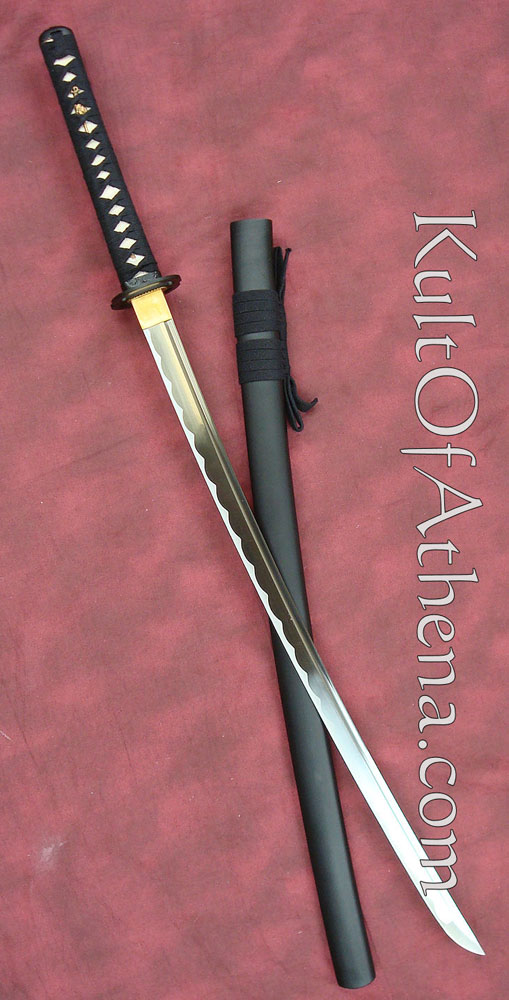
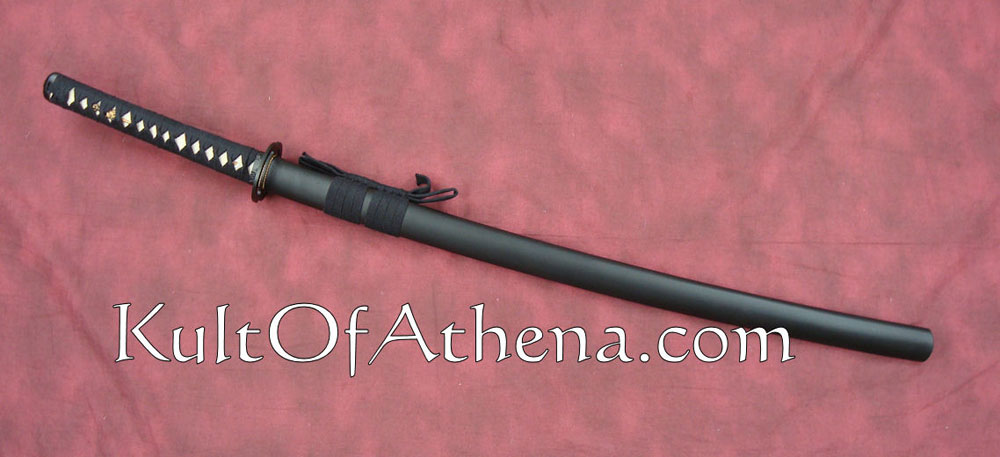
Musha Musashi Miyamoto Iaito
In stock
$89.99
- Shipping estimated at checkout
- Every blade inspected before shipping
- 30-day returns
- Blade
- 1040-to-1045-high-carbon-steel
- Overall Length
- 39 1/4''
- Weight
- 2 lb 1.8 oz
- Brand
- Musha
- Culture
- Japanese
Overview
Musha Musashi Miyamoto Iaito
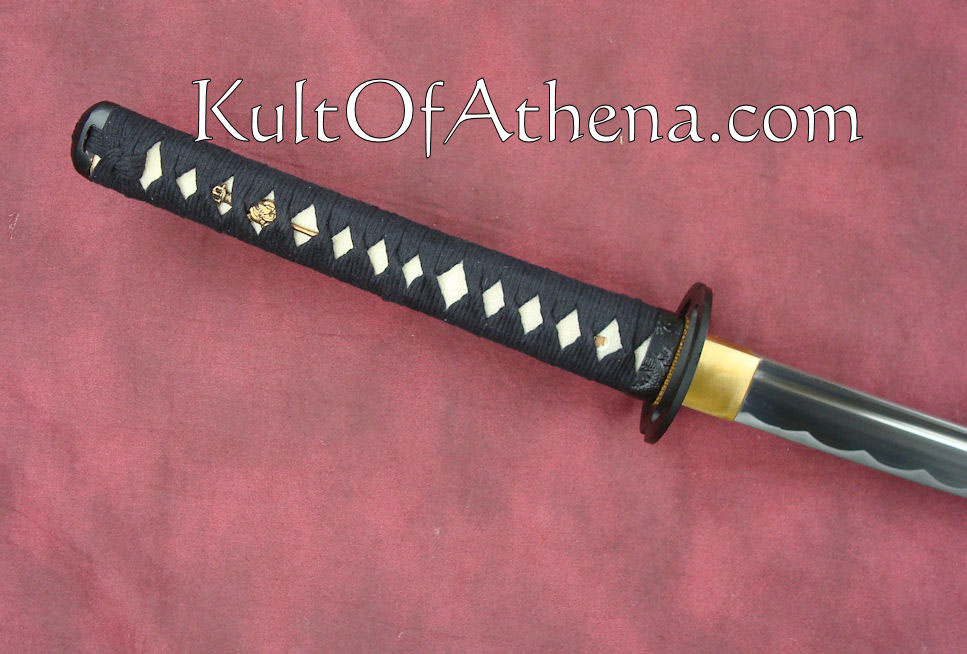
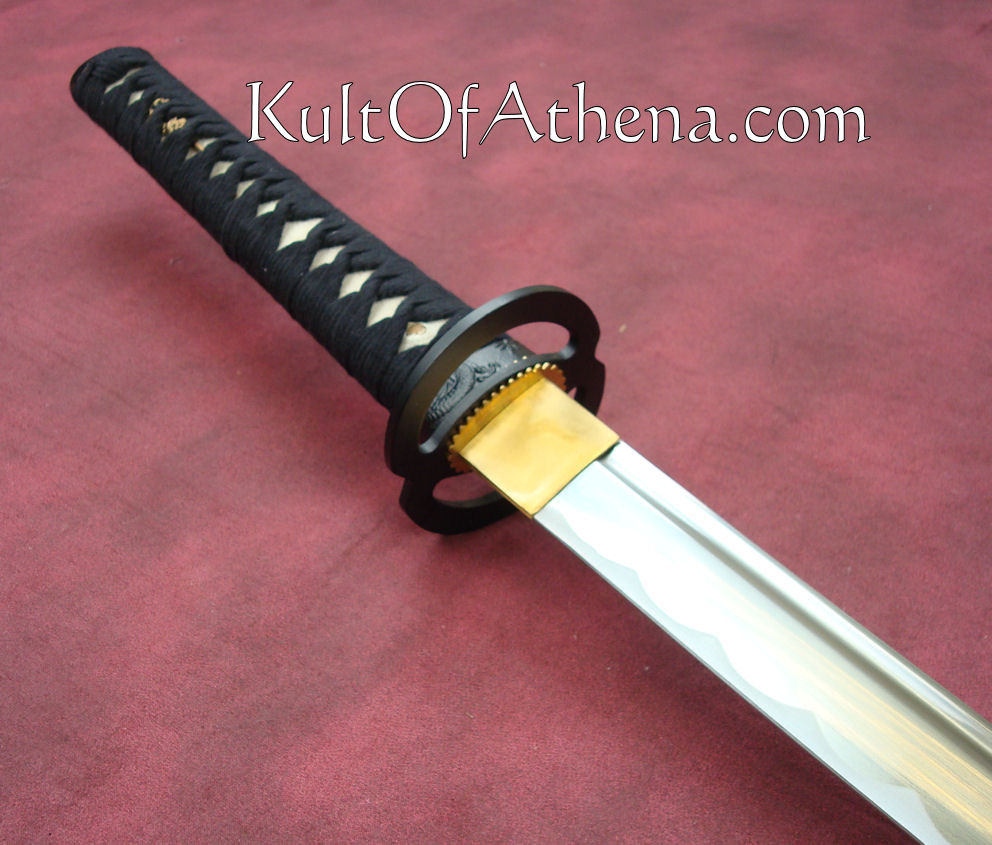
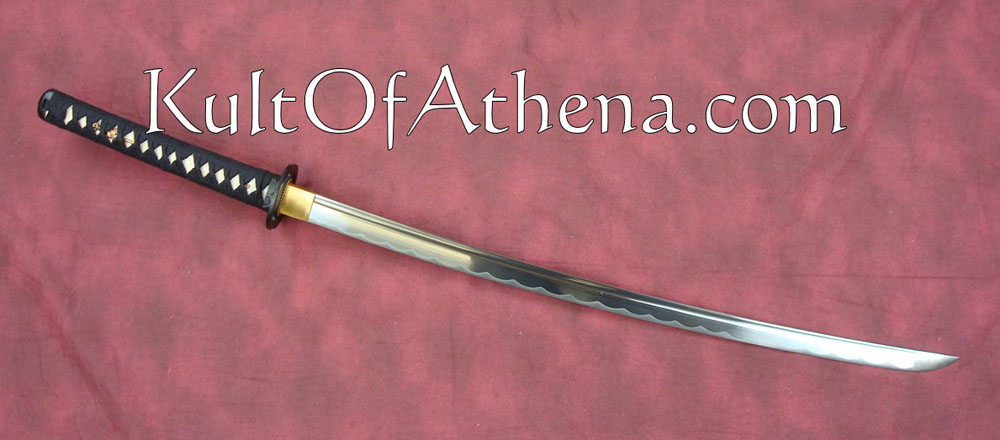
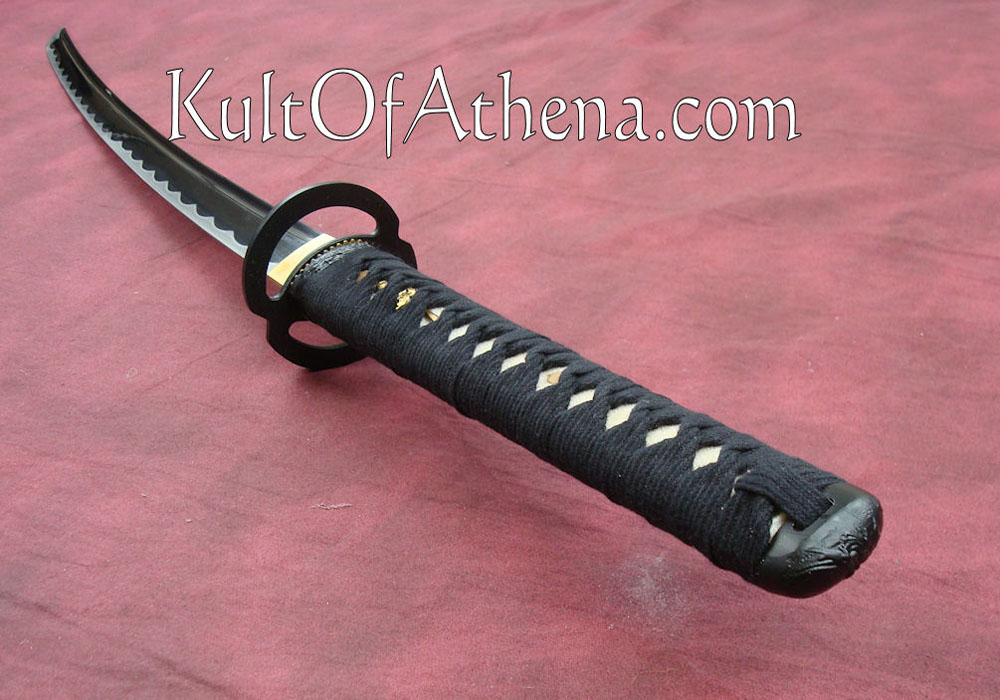
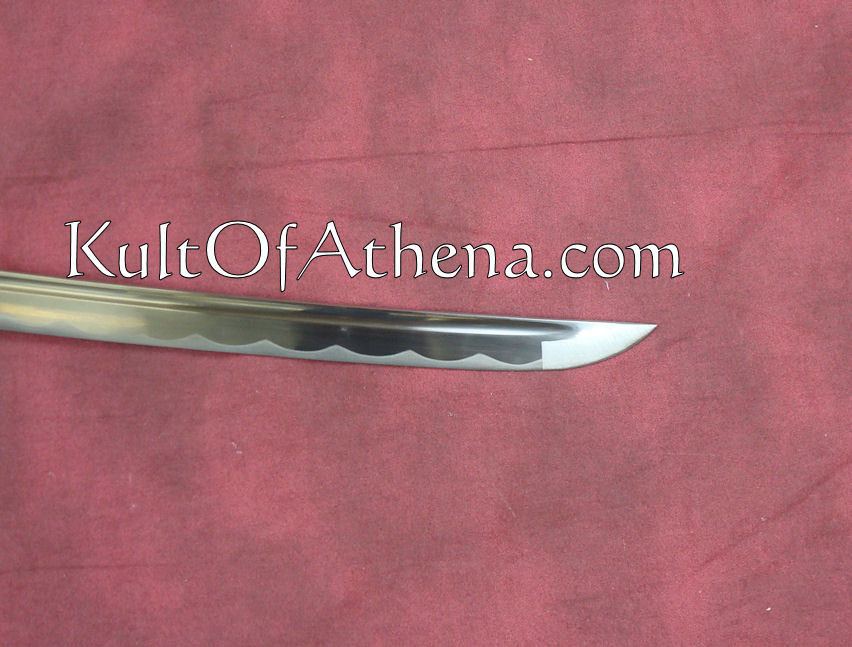
The Musha Miyamoto Iaito features a blunt carbon steel blade with etched hamon and a bo-hi groove. The tsuba is made of blackened steel in the familiar Musashi dual ring style. The grip is wood wrapped in ray skin and black cotton cord. The handle is double pegged to the blade tang allowing the sword to be disassembled. The included saya is made of wood with a matte black finish. Includes a black sword bag.
Specifications
Every measurement that matters
- Brand
- Musha
- Culture
- Japanese
- Edge
- Blunt
- Pommel
- N/A
- Overall Length
- 39 1/4''
- Blade Length
- 28 1/4''
- Blade
- 1040-to-1045-high-carbon-steel
- Weight
- 2 lb 1.8 oz
- P.O.B.
- 6 1/16''
- Thickness
- 6.6 mm - 4.3 mm
- Width
- 31.2 mm
- Grip Length
- 9 7/8''
- Country of Origin
- China
- Type
- Iaito
Reviews
What collectors are saying
Q&A
Questions from the community
Q What is this iaito designed for? Common Question
This is an iaito, built for the solo forms and draws practiced in iaido rather than for cutting or sparring. The blade ships blunt, so it's suited to kata practice where the focus is on movement, technique, and correct handling rather than contact with a target.
Q What steel is the blade made from, and does it have an edge? Common Question
The blade is forged from 1040-to-1045 high-carbon steel and carries an etched hamon and bo-hi groove for the traditional look of a differentially hardened blade. It ships with a blunt edge, consistent with its role as a practice sword for iaido forms rather than a cutting weapon.
Q Does this sword have a full tang like a Western sword? Common Question
Japanese swords use a different construction than Western full-tang blades: the tang (nakago) extends into the handle and is secured by pegs (mekugi) rather than running to a pommel. This iaito's handle is double-pegged to the tang, which is the traditional, durable way these swords are built and also allows the handle to be removed for maintenance.
Q What is the point of balance good for? Common Question
The point of balance sits 6 1/16'' from the guard, placing the weight close to the hilt. That balance supports the quick, controlled draws and precise handling that iaido kata call for, rather than a blade-heavy feel meant for powering through cuts.
Q What are the handle and fittings made from? Common Question
The grip is wood wrapped in ray skin and black cotton cord in the traditional diamond pattern, with a blackened steel tsuba in the dual-ring Musashi style. The photographs show pale diamond-shaped menuki at the wrap's crossing points and a brass-toned habaki collar at the blade's base.
Q How should I care for the blade and saya? Common Question
Wipe the blade down after handling and apply a light coat of oil to the carbon steel to keep rust from forming, especially since it's high-carbon rather than stainless. The saya is wood with a matte black finish and looks great for display and transport, but for long-term storage keep the blade out of it, since any sheath can trap moisture against the steel.
Q Can I use this sword to cut targets like tatami? Common Question
This iaito ships with a blunt edge and is built for the solo forms and draws of iaido practice, not for cutting. If cutting tatami or water bottles is the goal, a sharpened cutting-oriented sword would be the right tool rather than this practice iaito.
Q Can the sword be taken apart for maintenance? Common Question
Yes, the handle is double-pegged to the blade tang, which lets the sword be disassembled for cleaning and upkeep. This is standard, traditional katana construction and keeps the fit secure during regular iaido practice.
The Maker
Musha
Musha swords offer a variety of functional, battle ready blades made using 1045 carbon steel.
Often paired together
I love it I got one from another site and its a fine training sword can take hits like a champ, its a good price for what you get !
Fantastic product! If you are getting into Iaido, or picking it back up, this iaito is the perfect starter for your new martial pursuit. It is balanced, has the right amount of weight, and is built like a tank. For the price, you will not settle for anything with this one–you are getting a lot of sword for your money. Prompt service and delivery by the fine folks at KoA round up this deal in the exceptional category. Bravo!
Nice sword Got this sword for my 7 year old. He loves it. For the price it’s a very nice sword.
Great buy, but requires work.
Out of the box I found an issue. The mouth of the saya isn’t made of horn, so the brass habaki wore down the wood and made it a loose fit. This is easily fixable by gluing paper to the inside of the mouth.
The next problem I faced is taking it apart. You’re able to, but everything is glued together. If you’re wanting to take it appart make sure to keep a block of wood or cardboard and a hammer (Hit the wood with the hammer with the tsuba behind it)
The cotton ito wrapping started to get loose along the spine of the grip, so to keep in place I just used wood glue again.
And then the end of the cotton wrap came loose and is just flopping about. Also easily fixed with wood glue.
As for how good it is: I love it!
You’re not supposed to abuse iaito, but I was able to hit it against my pell with only slight bending that was fixable by just stabbing it into a root and bending it back (Don’t do that, I’m just dumb and bored)
There’s only two problems with the sword I think should be fixed:
-Very pointy. It’s blunt, but it is able to stab easily into stuff. I think the tip should be more rounded.
-Very quiet. When I swing this sword it isn’t able to make a loud enough swoosh. I’m not able to hear it when i’m outside, so it’s hard to tell if my edge alignment is good.
Overall It’s good. If you wanna get into Iaido for cheap this is a great trainer. Just keep a good glue and paper shims on hand to fix any problems you may find.
Heavy, well built, and simply beautiful all around. Obviously this isn’t made to cut anything, but for what it is, $70 is a steal. Magnificent piece!
I bought a munitions-grade Miyamoto Musashi iaito to practice iaido, so I knew that it was going to be imperfect. It arrived today (after about a week), and tried it out. Overall, I’m very happy with it.
The Bad (keeping in mind that it’s munitions-grade):
The kashira (pommel cap) came loose after a few minutes, and it looks like the ito (wrap) at that end of the tsuka (hilt) wasn’t connected or tied properly. I took a few minutes and figured out how to tuck it under the wrap for now, and this weekend I may glue it down. Speaking of the ito, it was not tied very tightly. I mean, it wasn’t horrible, and is definitely usable as-is, but it could and should be tighter (although if it wasn’t, I wouldn’t have been able to tuck in the loose end that keeps the kashira in place). In some areas I could see the edges of the rayskin panels showing in the corners of the diamonds. The saya is coated in a matte black paint, and it looks nice, but it does scratch easily. The Musashi-style tsuba look like it was painted black originally, but at some point got dinged up and someone covered the dings or paint chips with black permanent marker. Again, definitely not a dealbreaker, because I wasn’t expecting a museum piece. This is meant to be a functional tool for me to practice swordsmanship at home.
The Good:
It’s a steel sword, and it’s very affordable. The weight feels a lot more evenly distributed than my bokuto (which I’ve been practicing with up until this point), and the point of balance is about 5″ in front of the tsuba. The geometry is very nice, and the blade finish feels really smooth. Since it’s an iaito, there’s no edge on the blade, but you can tell that it’ll take one pretty easily. I mentioned the tsukaito was not very tight, and that’s actually a good thing. I’ve been wanting to learn how to do tsukamaki (the art of wrapping the sword hilt) on my own, but I didn’t want to take the ito off of my shinken to do it. This is a perfect alternative. Not only will I be able to add all of the fittings (tsuba, menuki, fusha, and kashira) that I want for a customized sword, I can also wrap it in the colour of my choosing. That said, the black cotton ito that comes with the sword is soft and very comfortable.
If you decide to get this iaito in this condition, just know what you’re going to get. If you’re looking for a project piece to learn how to refit a katana or learn tsukamaki like me, or if you’re just looking for a beater, this is a great option. If it turns out to be more of a hassle than its worth, I’m only out $55.
You get what you pay for.
Picked this up because I needed an Iaito quick to start classes… And Tozando takes 6-8 weeks.
The good:
It’s cheap(ish). $75 isn’t nothing but for a temporary or back up tool it’s ok. A bit on the heavy side for an Iaito, feels more like a shinken (it is carbon steel so…) That said I’d rather use my Shinken, it feels better.
Tsuka was tight and free from cracks.
The bad:
The ito is horrible. The knots aren’t done anything close to correct and the wrapping is unacceptably loose. Sageo feels like shoestring. Saya is lacking any horn parts. Tsuba has sharp edges. Kurigata is too far away from the Koiguchi (common in Chinese replicas)
All things considered would I buy it again? Sadly, no. I think there are better options and given it to do again I’d buy a Japanese made Iaito used even at a significantly higher price.
I just received this, and there’s a gap between the habaki and the right side of the blade. It makes sheathing harder because it catches on the rim of the saya, and if it was a real sword it would create a weak point that would break easier. Other than that I have no complaints, and looking at the other reviews it seems this isn’t a common occurrence. I bought standard grade, not munitions grade.