


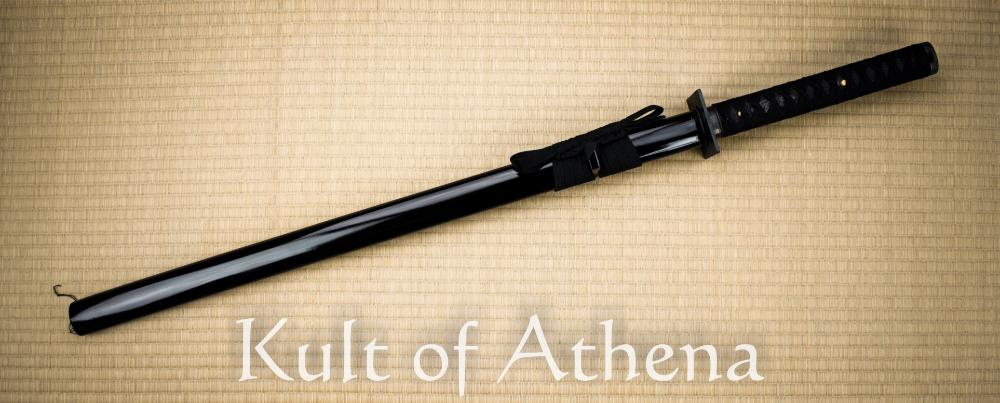


Musha Shinobi Ninja Sword with Black Blade
In stock
$89.99
- Shipping estimated at checkout
- Every blade inspected before shipping
- 30-day returns
- Blade
- 1040-to-1045-high-carbon-steel
- Overall Length
- 39 1/2''
- Weight
- 2 lb 6 oz
- Brand
- Musha
- Culture
- Japanese
Overview
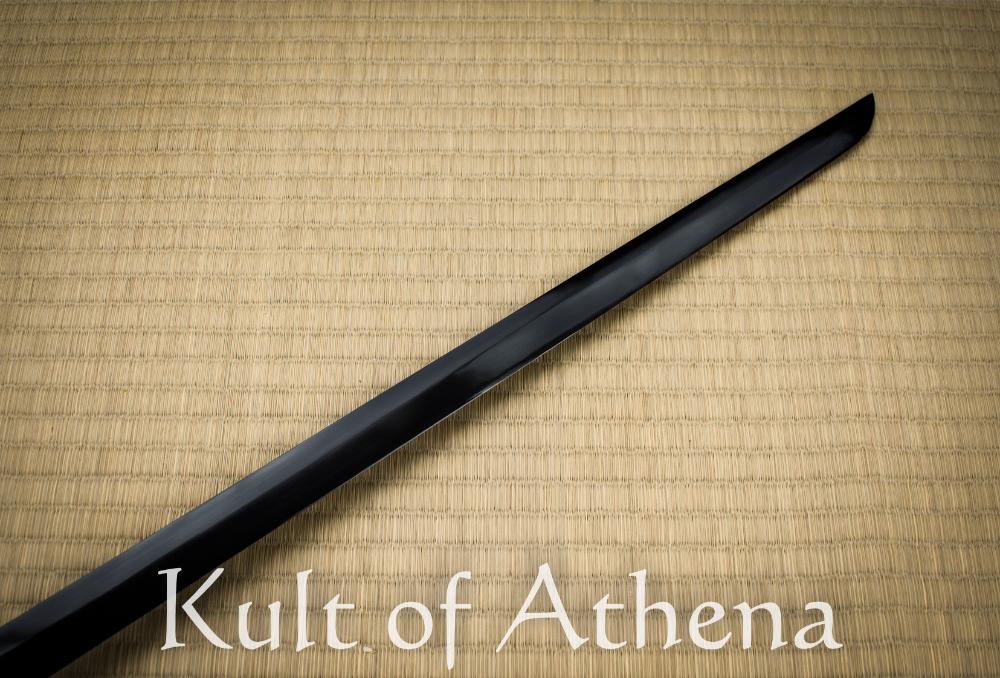
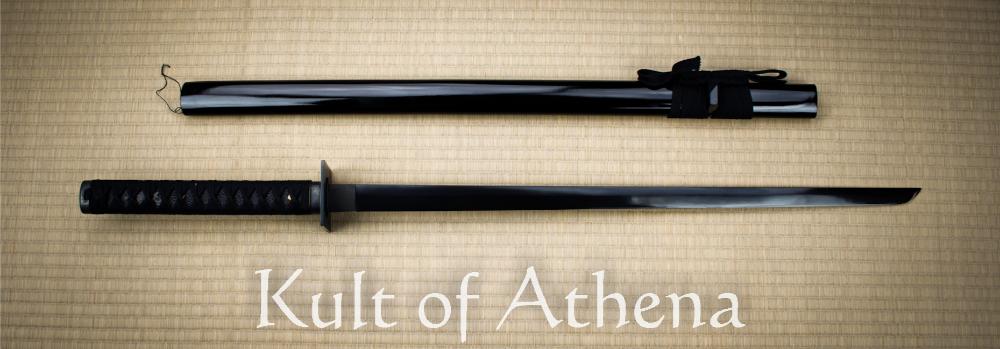
Musha Shinobi Ninja Sword with Black Blade
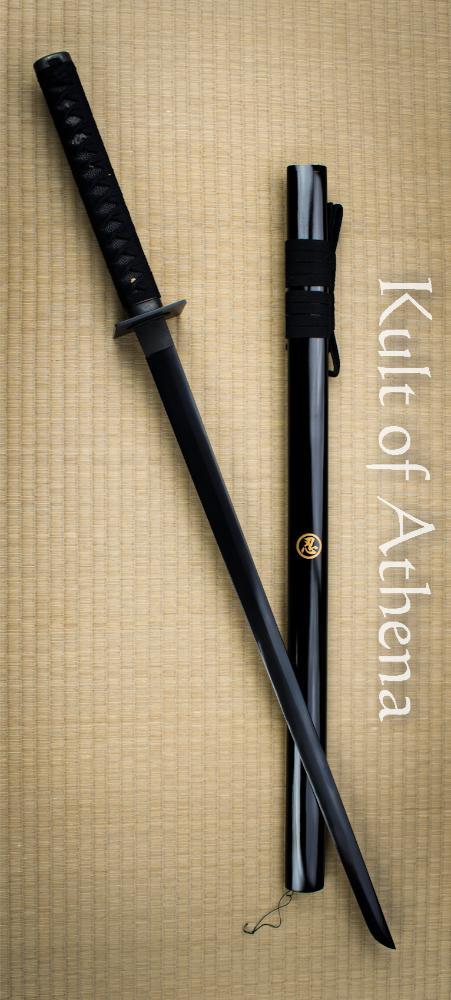
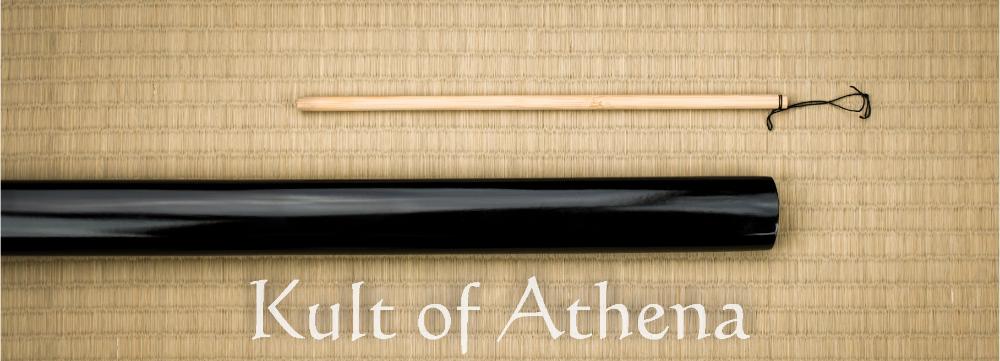
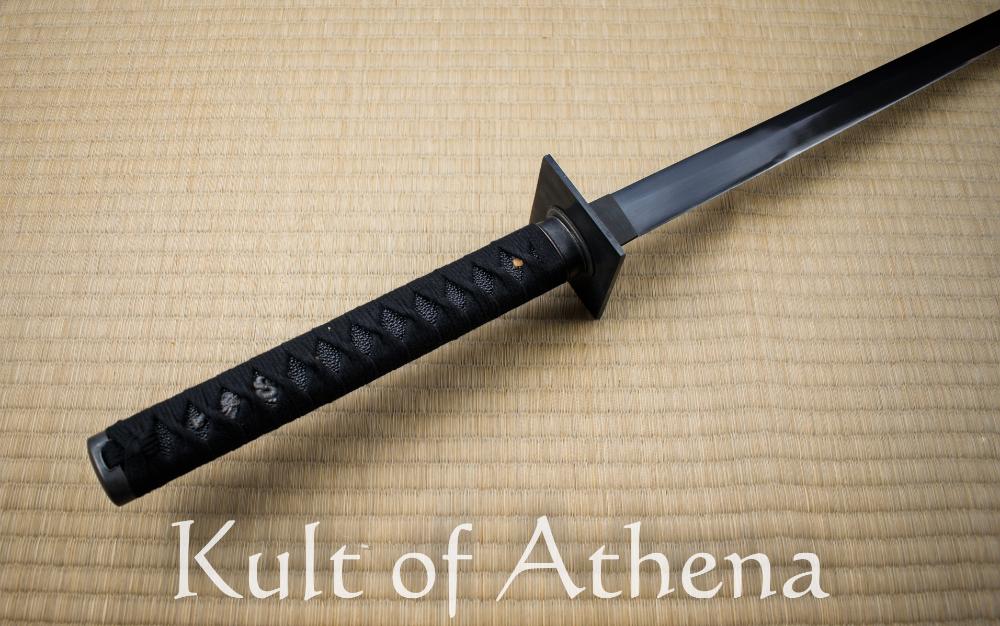
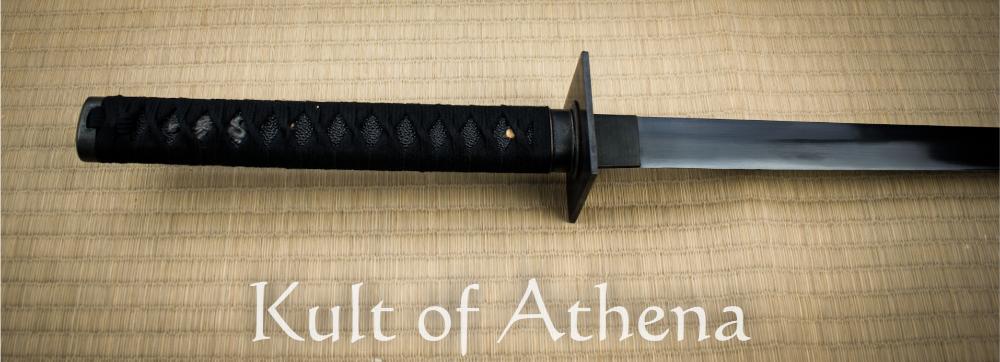
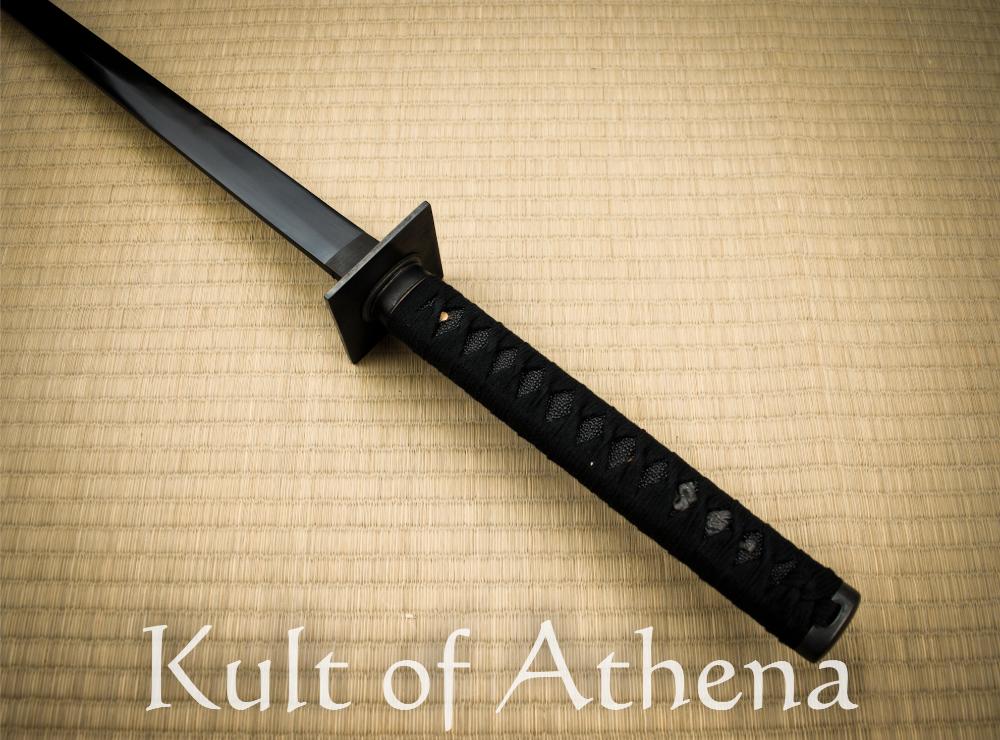
The Musha Shinobi Ninja Sword features a sharpened carbon steel blade with black finish. The blade has been through tempered to provide a good sword for light cutting at an affordable price. The tsuba is made of steel in a rustic charcoal black finish. The grip is wood wrapped in imitation ray skin and black cord. The handle is double pegged to the blade tang allowing the sword to be disassembled. The included saya is made of wood with a black lacquered finish and features a small ninja breathing tube housed inside.
Specifications
Every measurement that matters
- Brand
- Musha
- Culture
- Japanese
- Edge
- Very Sharp
- Pommel
- N/A
- Overall Length
- 39 1/2''
- Blade Length
- 28 1/4''
- Blade
- 1040-to-1045-high-carbon-steel
- Weight
- 2 lb 6 oz
- P.O.B.
- 5 9/16''
- Thickness
- 7.3 mm - 5.6 mm
- Width
- 31.4 mm
- Grip Length
- 9 3/4''
- Country of Origin
- China
- Type
- Ninja-to
Reviews
What collectors are saying
Q&A
Questions from the community
Q What is the blade made of, and is it durable enough for actual use? Common Question
The blade is forged from 1040-1045 high carbon steel and is through tempered, which gives it the toughness needed for a battle ready sword rather than a display-only piece. This combination holds up well to repeated light cutting while resisting chipping along the edge.
Q Does this sword come sharp, and what can I cut with it? Common Question
Yes, this sword ships with a very sharp edge. It's suited to light cutting work on tatami mats or water bottles, in keeping with its through-tempered carbon steel construction.
Q Is the tang full length, or is this a bolted-together modern build? Common Question
The tang runs the full length of the wood grip and is secured with two pegs (mekugi) passing through both tang and handle, which is traditional Japanese sword construction. This double-pegged design also lets you disassemble the handle for maintenance or to inspect the tang, rather than being a tactical bolt-on tang.
Q What is the handle made of? Common Question
The grip is wood, wrapped first in imitation ray skin and then in black cord in the traditional diamond wrap pattern. The photographs show this wrap carried cleanly over a squared tsuba (guard) and black kashira (pommel cap), giving a monochrome, tactical look to the fittings.
Q What's included with the saya (scabbard), and is there anything unusual about it? Common Question
The saya is wood with a black lacquered finish, and it houses a small ninja breathing tube inside, a traditional touch for this ninja-to style sword. A black sageo cord is fitted near the mouth of the saya for carry or tie-down, as shown in the photographs.
Q How should I care for this sword to keep it from rusting? Common Question
Wipe the carbon steel blade down after handling and apply a light coat of sword oil to prevent rust, since high carbon steel will corrode if left damp or bare. The wood saya with its black lacquer finish is well suited for display and transport, but for long-term storage keep the blade out of the saya, since any sheath can trap moisture against the steel.
Q Where is this sword made? Common Question
This sword is made in China.
Q Is this sword good for cutting practice, display, or both? Common Question
With its very sharp edge and through-tempered 1040-1045 carbon steel blade, this ninja-to is built for light cutting work on targets like tatami or water bottles. Its blackened blade and monochrome fittings also make it a striking piece for display when not in use.
Q Can I use this for sparring or stage combat? Common Question
This sword carries a live, very sharp edge, so it is not built or suited for sparring, stage combat, or any contact use where it would strike another person or prop. It's intended for light cutting on appropriate targets and for display.
Video
See it in motion
Kult of Athena Musha Shinobi Ninja To Sword
The Maker
Musha
Musha swords offer a variety of functional, battle ready blades made using 1045 carbon steel.
Often paired together

Great Sword For The Money Even though to date there is no documented historical evidence in any museum or elsewhere supporting claims that the Ninja, a.k.a., Shinobi, ever used a sword with a straight blade and a square Tsuba, the Musashi “Koga Ninja Sword” is, in my opinion, one of the most affordable, fully functional and accurate reproductions on the market that adheres to the public’s uneducated perception of what the ever so popular Ninja sword looks like and one of the reasons I wanted one for my collection.
While the descriptions abound regarding the length of the Ninjato vary from some that are as short as a Wakizashi to some that are as long as a Katana, I chose one that was lengthy, similar to a Katana because of my Tameshigiri training. I also wanted one that was basic in design, not ornate or having any special extra’s as is typical with many production Ninjato’s. In that regard, the Musashi Koga Ninja Sword is as bare boned as they come without sacrificing its designed purpose as a weapon for cutting. Simplicity and effectiveness all played a role in choosing a my Ninjato example. Since I never buy swords that aren’t fully functional and I did intend on cutting with it, safety was a key factor, as well. I could have skimped out and bought a cheap stainless steel wall hanger as an example for my collection, but anyone who knows anything about swords will agree that stainless steel swords are never meant to be swung and by no means ever safe to be used for cutting purposes.
Another reason I wanted one was to compare its cutting and thrusting capabilities to that of the Samurai’s Katana and Wakizashi design, which have been effective throughout hundreds of years of battle proven practicality.
Upon first handling this sword out of the box, it was a little awkward, since I’ve had very little experience with a straight bladed Japanese style sword. However, after familiarizing myself further with how it feels and developing muscle memory from handling it, I found it to be quite comfortable. Its fit and finish are impressive considering its minimal cost, everything was nice and tight. The blade also tappers both in width and thickness from the Habaki to the Kissaki. The Ito is well wrapped and tight. The Tsuka is consistant in shape throughout its length without the hourglass shape so commonly seen in Japanese style swords.
The Samegawa is black and has a slight rubbery feel on the fingetnails. The Kashira, Fuchi, Menuki, two Seppa and Habaki appear to be made of the same surface darkened metal material which I’m assuming is a zinc alloy. The Tsuba on mine is not blackened solid copper as advertised, it is steel, since a magnet sticks to it and in my opinion, more ideal than copper. Also, the blade is not anodized as advertised, rather, it is chemically blued similar to so many firearms. The Saya came nicely finished in glossy black and the Sageo came tightly tied in a common presentation knot, which I have untied for traditional use. The Kurigata is a bit boxy, lacking the traditional round edge and the Shito-Dome appear to be painted metal. This sword did not come with a protective sword bag.
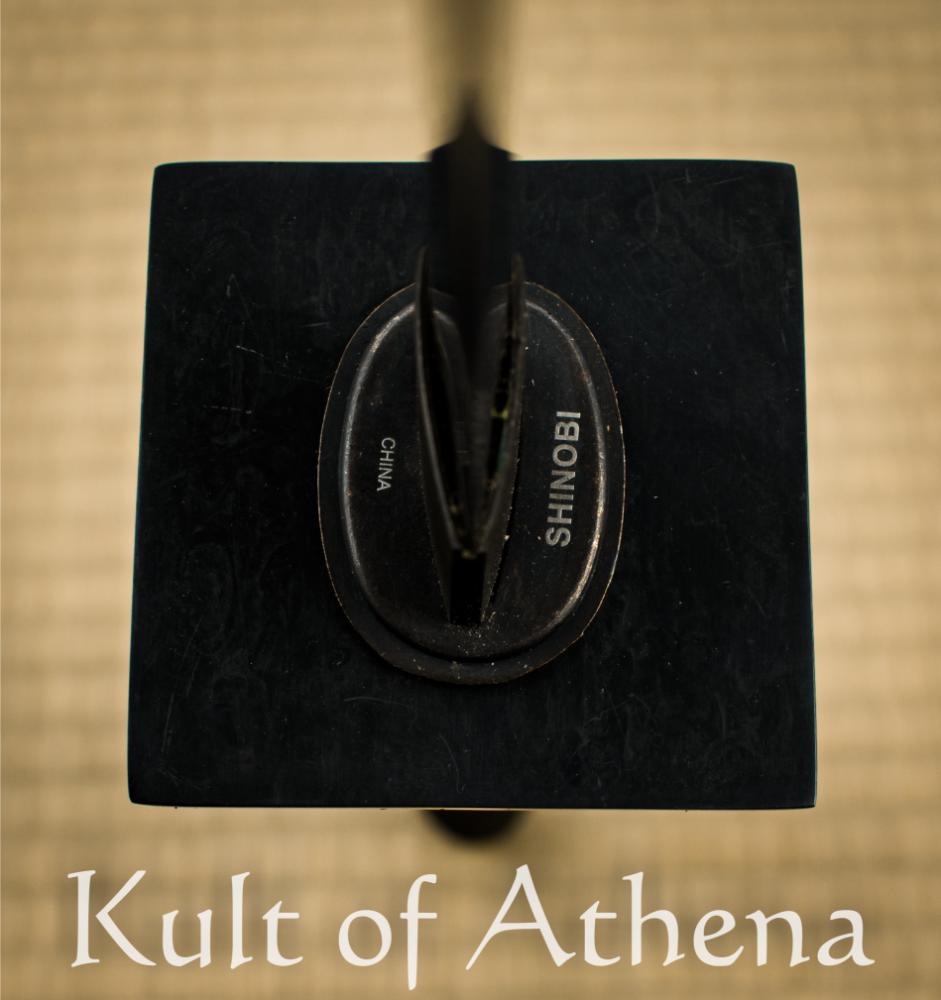
I disassembled the entire sword for inspection before attempting to cut with it (as I do with all my Japanese style swords). I ended up cleaning off a few burs from the Nakago, which to my surprise is 2/3’s the length of the Tsuka, making the sword truly “full tang”. Stamped into one side of the Nakago between the two Mekugi ana is the word “SHINOBI” In uppercase American lettering and the Musashi kanji is engraved into the other side with what appears to have been some sort of rotary tool. I reamed out a few burs on the Mekugi ana , replaced the Mekugi and all around fine tuned the entire piece. Upon close inspection, there wasn’t any noticeable internal cracking within the Tsuka, which was actually hardwood as advertised. I also put a razor’s edge on the blade by stropping it on leather with a bit of Mother’s Mag & Aluminum Polish.
After fine tunning and polishing the edge, I found that it cuts very well with minimal movement to the target, which is ideal. Overall, it’s a solidly built sword and fully capable of performing the demanding cutting techniques of Tameshigiri. The blade is very stiff, giving me the impression that it is thoroughly tempered as advertized and I wouldn’t hesitate to try it out on bamboo or Tatami rolled around a wood dowel. Despite it having no Bo-hi, it’s not as unbalanced as I originally thought it would be.
As a Tameshigiri practitioner, retired Martial Artist and Japanese sword connoisseur, it is very important to me to try my hand at a variety of Japanese sword types, regardless if they are historically accurate or not. The sword now rests on a wooden vertical display stand.
Lyle D. Yates-Master Instructor.
For only ~$70, it’s a surprisingly functional weapon that feels pretty good. True to its advertisement, it’s an affordable blade that doesn’t compromise in appearance nor usability. It may not be the most ornate work of art, nor is it the most rock-solid in terms of longevity and material quality; but it is indeed a simple tool that can do its job, and that’s fine by me for $70.
The one and only true complaint I have about this piece is the saya/scabbard. This may or may not be true for everyone, but my scabbard wasn’t an entirely snug fit, which caused the sword to rattle unpleasantly when jostled around in its sheathed state. YMMV however.
This was the first item I bought the pins that hold the handle on had two or three drill holes for each pin the pins would not stay in so the handle would just fall off it was so bad I threw it away I do not recommend