





Russo-Japanese Kyu Gunto Army Sword – Universal Swords
In stock
$219.99
- Shipping estimated at checkout
- Every blade inspected before shipping
- 30-day returns
- Blade
- 1060-1065 High Carbon Steel
- Overall Length
- 32 5/8''
- Weight
- 2 lbs
- Brand
- Universal Swords
- Era
- 19th Century
Overview
Russo-Japanese Kyu Gunto Army Sword - Universal Swords
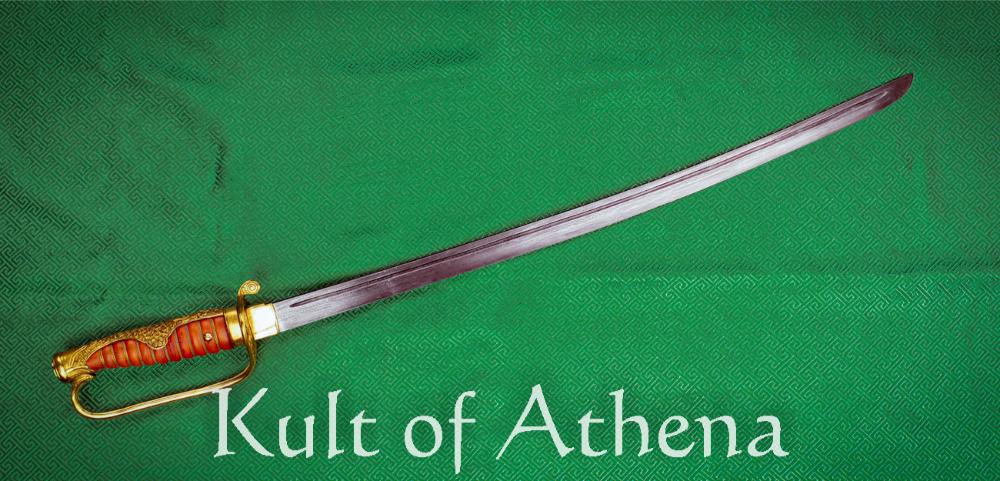
Called Kyu gunto or Russo-Japanese swords, these katana and western saber hybrid swords were used by Japanese Army and Naval officers in WWII, the earlier Russo-Japanese war and Imperial Japans colonial conflicts. They were produced from 1875 until 1934 and existed alongside the more traditional looking Shin-Gunto swords. All officers in the military were required to wear a sword as a badge of rank. The one offered here is in the style of the army Kyu-Gunto, for it has the more extensive grip backplate - the naval variants had typically slimmer backplates.
Gunto means military sword - a reference to the mass-produced swords, different than the hand-crafted artisan swords of Japans past. Kyu gunto means old military sword - as opposed to Shin gunto the new military sword. The Kyu gunto style became popular as the Japanese modernized their armies with western technologies and doctrine, wholly adopting the military practices of colonial powers while actively discouraging the feudal past. Thus the Kyu gunto style was a katana-like blade with motifs that harkened to Japans martial past while embracing the grip and overall styling of western sabers. In the years before WWII, Japans nationalism soared as it recognized its colonial ambitions and the once shunned samurai became nationalist symbols of power and martial heritage. Thus the newer Shin gunto swords emulated the samurai blades of old and were produced from 1935 to 1945.
Both types of these mass-produced military swords are called Showato to separate them from traditionally made swords. Due to their mass-manufactured nature, Showato are not considered true Japanese swords and can be confiscated within Japan.
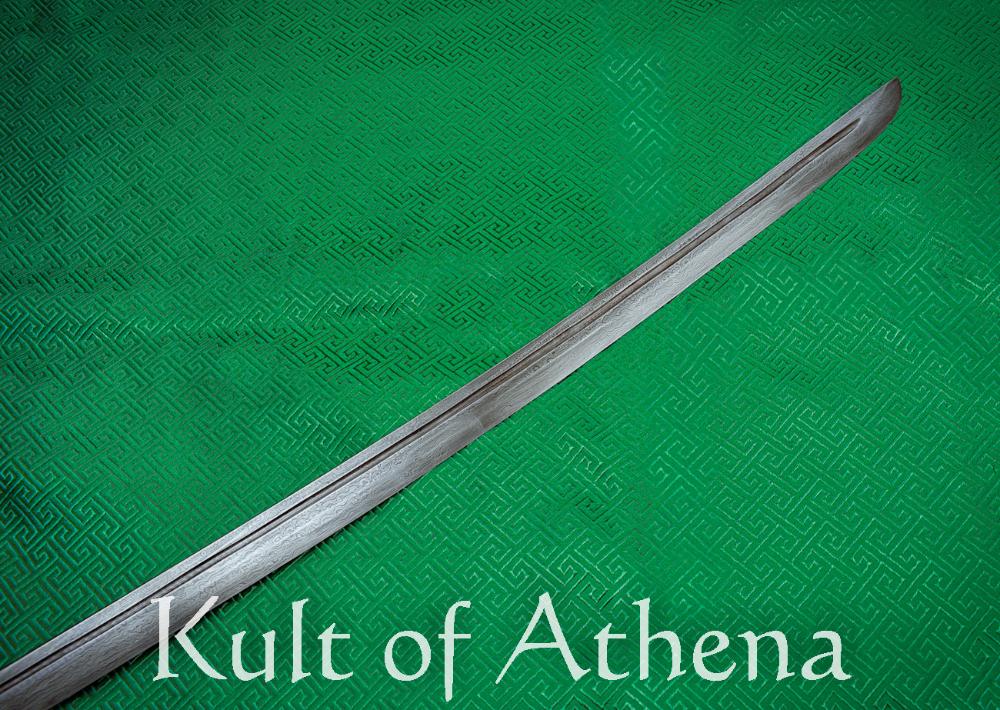
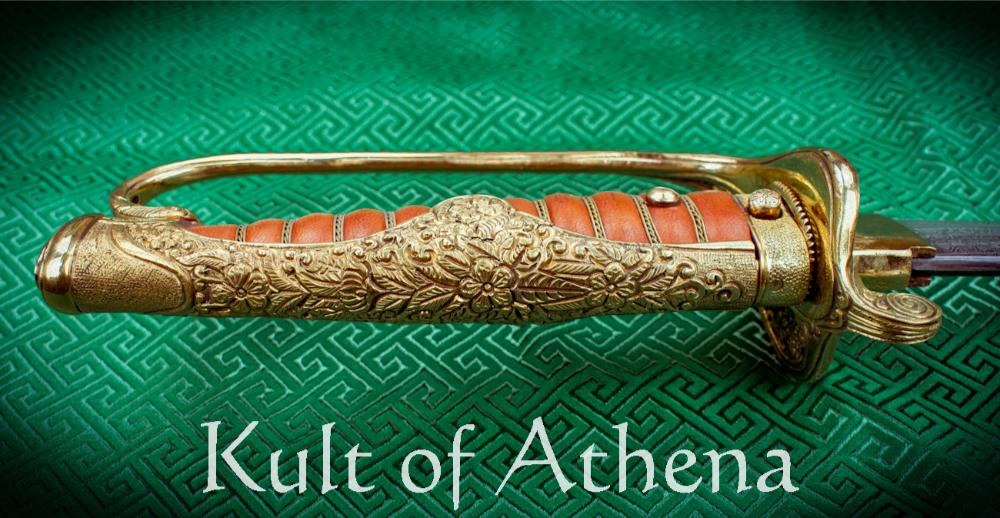
This Kyu gunto Russo-Japanese sword has a unsharpened, tempered blade of high carbon steel. The hilt is of brass lavishly adorned with cherry blossoms. The grip is of hardened brown leather with inlaid copper wire. The scabbard is of steel with a steel hanging ring. The sword has a locking mechanism that holds the scabbard to the hilt. A small cherry-blossom etched button beneath the guard releases the scabbard.
Specifications
Every measurement that matters
- Brand
- Universal Swords
- Era
- 19th Century
- Edge
- Unsharpened
- Overall Length
- 32 5/8''
- Blade Length
- 25 1/2''
- Blade
- 1060-1065 High Carbon Steel
- Weight
- 2 lbs
- P.O.B.
- 4 1/2''
- Thickness
- 6.2 mm - 5 mm
- Width
- 27.1 mm
- Grip Length
- 5''
- Country of Origin
- India
- Type
- Gunto
Reviews
What collectors are saying
Q&A
Questions from the community
Q What is the blade made of and what is this sword built for? Common Question
The blade is forged from 1060-1065 high carbon steel and tempered, with a Battle Ready construction that stands up to real handling and display. It's built to represent the historical Kyu Gunto officer's saber used by Japanese Army officers from the Russo-Japanese War era into WWII, making it well suited for collectors, reenactors, and historical display.
Q Does this sword come sharp, ready to cut? Common Question
No, the edge ships unsharpened. Battle Ready construction means the blade and fittings are built to handle real stress and movement, but sharpening is a separate matter this piece doesn't carry out of the box.
Q What does the point of balance mean for how this sword handles? Common Question
The point of balance sits 4 1/2 inches out from the guard, keeping the weight close to the hand. That gives this saber-style sword quick, controlled handling in line with its original role as an officer's sidearm rather than a heavy cutting blade.
Q How heavy is this sword, and does that fit the design? Common Question
It weighs 2 lbs, a weight that suits a one-handed officer's saber meant to be worn and carried rather than swung as a primary combat weapon. Combined with the balance near the guard, it stays light and maneuverable in hand.
Q What does the hilt and grip look like, and what are they made of? Common Question
The hilt is brass, decorated with cherry blossom motifs typical of Japanese Kyu Gunto styling, and the guard has an ornate knuckle-bow with scrollwork. The grip is hardened brown leather wrapped with inlaid copper wire, giving a secure, textured hold.
Q What kind of scabbard comes with this sword? Common Question
The scabbard is steel, fitted with a steel hanging ring for belt suspension and a locking mechanism that secures the scabbard to the hilt. A small cherry-blossom etched button beneath the guard releases the lock to draw the sword.
Q How should I care for the blade and scabbard? Common Question
Wipe the high carbon steel blade down after handling and apply a light coat of oil to prevent rust, since bare skin oils and humidity will cause corrosion over time. Store the blade outside the steel scabbard for the long term, as scabbards trap moisture against the steel even when the metal looks dry.
Q What's the historical background of this sword style? Common Question
This is a Kyu Gunto, or "old military sword," a style issued to Japanese Army and Naval officers from 1875 to 1934, spanning the Russo-Japanese War and into the WWII era. It blends a katana-like curved blade with the grip and hilt styling of Western sabers, reflecting Japan's adoption of Western military practices before the more traditionally styled Shin Gunto replaced it after 1935. This example follows the army pattern, identifiable by its more extensive grip backplate compared to the slimmer naval version.
Video
See it in motion
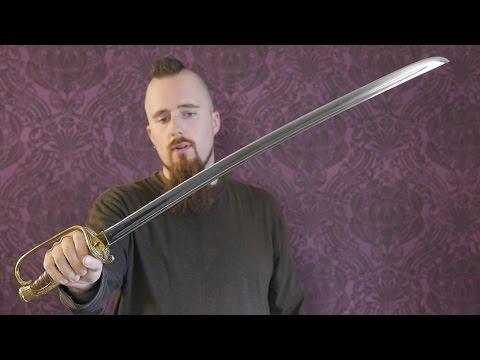
Review: Kyu Gunto (Russo-Japanese sword) by Universal Swords
The Maker
Universal Swords
With origins going back to 1960, India’s Universal Swords has been making reproduction swords for decades. With an emphasis on military sabers, universal produces a number of designs not found elsewhere. As the official US distributor of Universal Swords, KOA will be expanding to stock their entire line over time.
Often paired together

I would have to say I’d give it about 31/2 stars. The sword is a very nice looking piece. The blade is where it really let’s the sword down. There is no doubt in your mind that you are handling a replica, especially when you look at the blade. The Bohi is mostly straight and the blade is quite narrow. I have handled one or two when I was younger and remember them having rather substantial blades. The polish is passable.
I just think that Universal missed a golden opportunity to make something special if they had not gone so cheap on the blade. The fittings are not bad at all and very presentable.
It can fill a niche in your collection, but don’t get your expectations too high. I sharpened my own and it looks nice, although not razor sharp, but again presentable. The scabbard is very well done as are the handle mountings. You do get what you’re paying for. As long as you keep your expectations reasonable, you’ll be satisfied.