


Hanwei Tokugawa Katana – Discontinued
In stock
$919.99
- Shipping estimated at checkout
- Every blade inspected before shipping
- 30-day returns
- Blade
- T10 High Carbon Steel
- Overall Length
- 41 3/8"
- Weight
- 2 lbs 5.5 oz
- Brand
- Hanwei
- Culture
- Japanese
Overview
Hanwei Tokugawa Katana - Discontinued
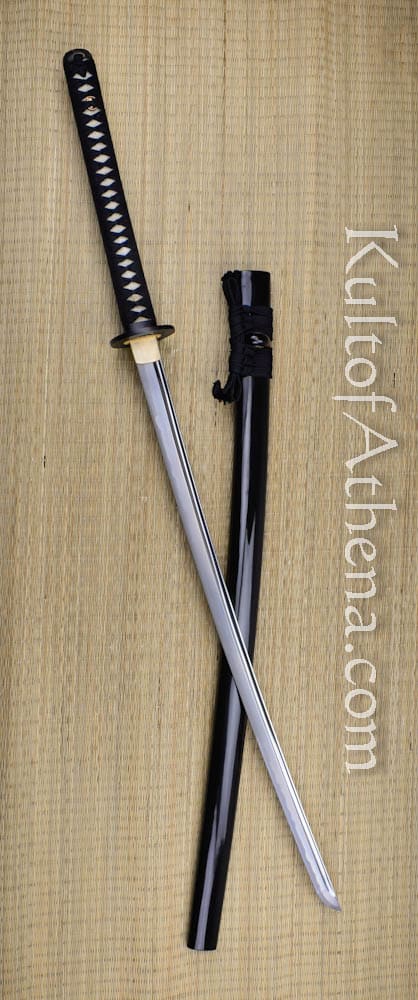
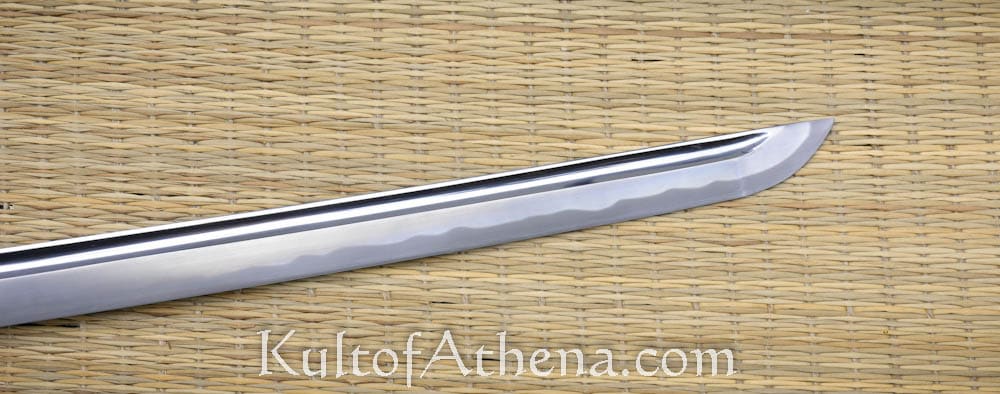
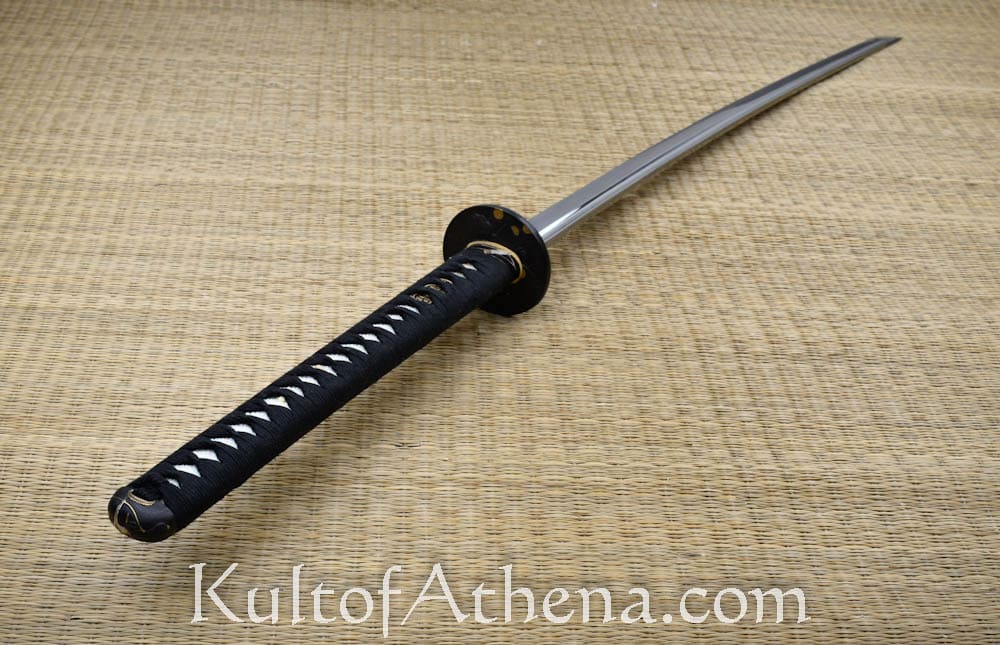
This katana from Hanwei draws its thematic inspiration from Tokugawa Ieyasu, the first Shogun of the Tokugawa Shogunate and one of the the three "Great Unifiers" of Japan alongside Oda Nobunaga and Toyotomi Hideyoshi. The blade is forged from tough T10 high carbon steel which has been clay-tempered in the traditional manner to possess a genuine hamon of hardened 60 Hrc steel and a shock absorbing spine of 40 HRc. The sword is quite responsive and quick on the strike due to its long and deep bohi groove which reduces weight with little loss of overall durability. The blade was finished with a fine quality polish which brings out and highlights the natural hamon of the blade edge.
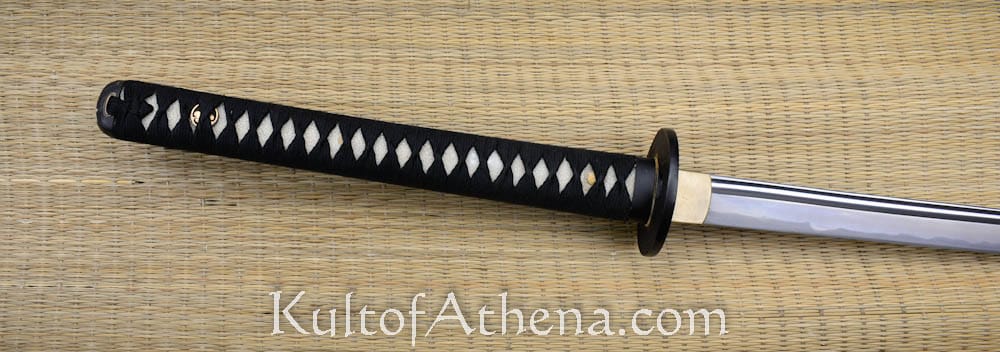
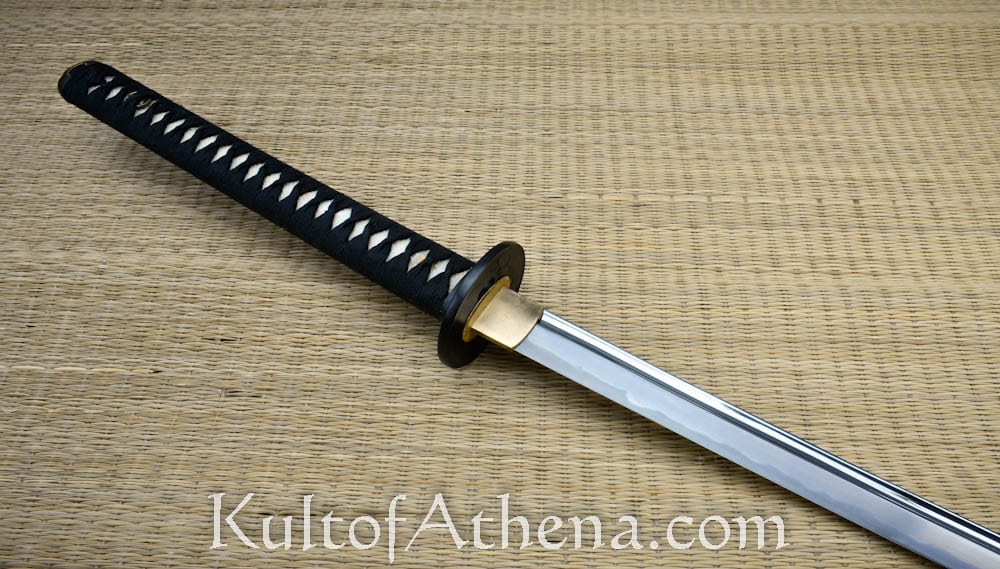
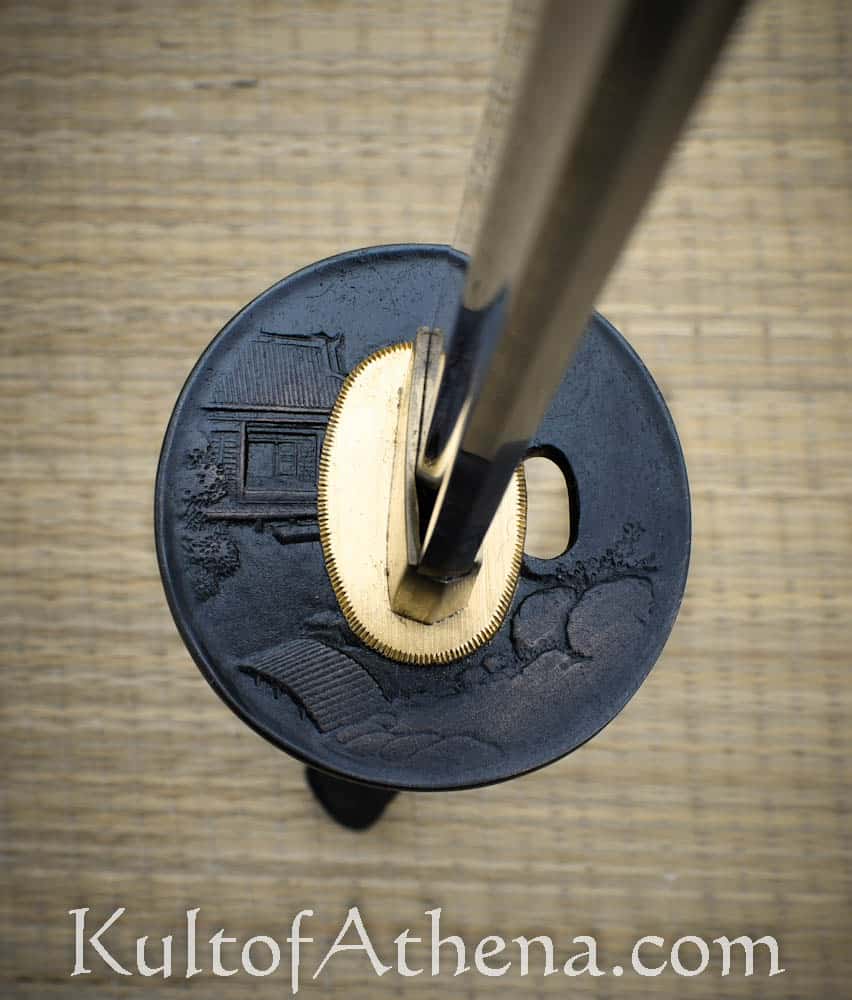
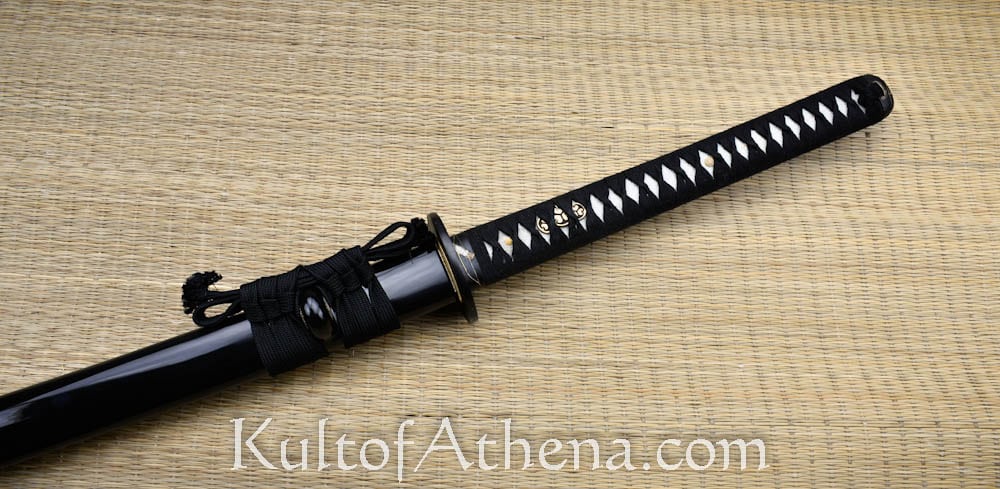
The tsuba, fuchi and kashira display Tokugawa himself with excellent detailing picked out in silver and gold. The habaki and seppa are crafted from brass and the wooden tsuka has fitted panels of geuine rayskin. The grip is bound in black cotton ito cord wrap with the Tokugawa Mon Crest in detailed tightly fitted beneath the knotted cord on both sides. The saya scabbard is well-carved from wood which is finished with a glossy black lacquer finish and a black sageo cord. Included is a wood-boxed Hanwei Japanese sword maintenance kit and an cloth sword bag. Please Note: The design and color of the cloth sword bag can vary
One of the “great unifiers” and legends of feudal Japan, Tokugawa Ieyasu, was a master tactician as well as political strategist. Much can be said of Ieysau for his bold yet prudent quick reactions to seize opportunities, but his long game tactics proved most successful. After years of clever maneuvering and military battles, Ieyasu traded his five home provinces for eight in the Kanto province after conquering them with one of his top rivals Toyotomi Hideyoshi. This ingenious move isolated him from Hideyoshi’s rule and allowed for autonomy in becoming the second most powerful daimyo in Japan. This move spawned the Japanese proverb “Ieyasu won the Empire by retreating.”
After Hideyoshi’s death, Ieyasu became one of the regents in the Council of Five Elders that would rule on behalf of his young son, Hideyori. A year later, one of the oldest and most respected regents dies creating an opportunity for control. Ieyasu takes Osaka Caste, the residence of Hideyori, and infuriates the other regents. At the Battle of Sekigahara he found himself almost outnumbered two to one. But like his deceased friend and ally, Oda Nobunaga, Ieyasu made use of firearms and had some arquebuses smuggled in for the battle along with some added behind the scenes negotiating with some of the daimyo in the Western Army. Ending in complete and total victory, Ieyasu became shogun in March of 1603 which created the Tokugawa shogunate which lasted til 1868 which is referred to as the Edo period.
Specifications
Every measurement that matters
- Brand
- Hanwei
- Culture
- Japanese
- Edge
- Very Sharp
- Pommel
- N/A
- Overall Length
- 41 3/8"
- Blade Length
- 27 7/8"
- Blade
- T10 High Carbon Steel
- Weight
- 2 lbs 5.5 oz
- P.O.B.
- 4"
- Thickness
- 6.4 mm - 5.1 mm
- Width
- 30.3 mm
- Grip Length
- 12"
- Country of Origin
- China
Reviews
What collectors are saying
Q&A
Questions from the community
Q What is this katana suited for—display or actual cutting? Common Question
This is a Battle Ready sword built on tough T10 high carbon steel with a true clay-tempered hamon, and it ships with a Very Sharp edge, so it is equipped for cutting work such as tatami or water bottles as well as study display. The long bohi groove trims weight for a fast, responsive cut while keeping the blade sound.
Q What is T10 steel and why is it clay-tempered? Common Question
T10 is a high carbon tool steel that takes a hard, durable edge well suited to sword blades. On this piece it is clay-tempered the traditional way, giving a genuine hamon with a 60 HRc edge for sharpness and a softer 40 HRc spine that flexes rather than snaps, a combination that lets the blade cut cleanly while resisting breakage.
Q How does the point of balance affect handling? Common Question
The point of balance sits 4 inches out from the guard, which keeps the mass close to the hand. That makes for a lively, maneuverable sword that is quick to bring around on the cut rather than one that feels blade-heavy.
Q Does the sword come sharp, and is it safe to handle? Common Question
Yes, the edge is Very Sharp out of the box, so this is a live blade meant for cutting practice, not a blunt trainer. It should be handled with the same care and respect as any sharpened sword, with attention to grip, footing, and target.
Q What does the fit and finish look like on the handle and guard? Common Question
The tsuka is wrapped in black cotton ito over genuine rayskin panels in a traditional diamond pattern, with the Tokugawa Mon crest worked into menuki beneath the wrap on both sides. The tsuba, fuchi, and kashira carry detailed scenes referencing Tokugawa Ieyasu picked out in silver and gold, and the habaki and seppa are brass.
Q What is the scabbard made of, and can I store the blade in it? Common Question
The saya is carved wood finished in glossy black lacquer with a black sageo cord, matching the sword's styling. For long-term storage it is better to keep the blade out of the saya, since any scabbard can trap moisture against the steel; store the sword lightly oiled in a dry place instead.
Q How do I maintain the blade over time? Common Question
Wipe the blade down after handling, apply a light coat of sword oil to the steel to prevent rust, and keep it in dry storage rather than left in the saya for extended periods. A wood-boxed Hanwei maintenance kit ships with the sword, giving you the oil, powder, and cloth needed to keep the hamon and polish looking right.
Q What comes included with the sword? Common Question
Along with the katana and its lacquered saya, you get a wood-boxed Hanwei Japanese sword maintenance kit and a cloth sword bag for storage and transport. The design and color of the included bag can vary.
Q How much does the sword weigh and how long is it overall? Common Question
The sword weighs 2 lbs 5.5 oz with a blade length of 27 7/8 inches and an overall length of 41 3/8 inches, with a 12 inch grip that accommodates a two-handed hold. That combination of length and weight suits traditional katana technique and cutting work.
The Maker
Hanwei
Shop Hanwei Swords, Armor & More
Master sword smith Paul Chen created Hanwei Swords and led the early industry by creating authentic handmade swords of the highest grade steel over the last several decades. A favorite amongst the industry, the original Hanwei factory suffered from a fire and ownership changes. In 2025, the factory closed and original collaborator Frenchie Jin’s forge (Dragon King / Kingston Arms) has taken over, improving and reintroducing past models. The reinvented Hanwei focuses primarily on Japanese and Chinese models, including the Performance Series Katana. Many of the original European models are now adopted as part of the Kingston Arms line.
Often paired together

No reviews yet. Only logged in customers who have purchased this product may leave a review.