




Thaitsuki – Dokuji Nami Sanmai Katana
In stock
$2,099.00
- Shipping estimated at checkout
- Every blade inspected before shipping
- 30-day returns
- Blade
- Folded T8 and T10 High Carbon Steel
- Weight
- 2 lb 6.2 oz
- Brand
- Thaitsuki Nihonto
- Culture
- Japanese
Overview
Thaitsuki - Dokuji Nami Sanmai Katana
Thaitsuki Nihonto specializes in melding blades of excellent quality with distinguished and elevated koshirae hilt fittings and a premium saya scabbard. Where other brands will cut corners on the finer points of fit and finish of koshirae and blade polish, Thaitsuki Nihonto follows through to create an exquisitely well crafted sword which has had the attention of a skilled craftsman hand-finishing each step to ensure an excellent fit and finish throughout. From Thaitsuki you can expect to see blades of well-tempered steel, a superb blade polish, components of higher quality metals, a well-knotted grip wrap, finely lacquered scabbard, high quality samegawa rayskin, and close attention paid to details such as a tight and flush fit between the scabbard opening and its encased koiguchi.
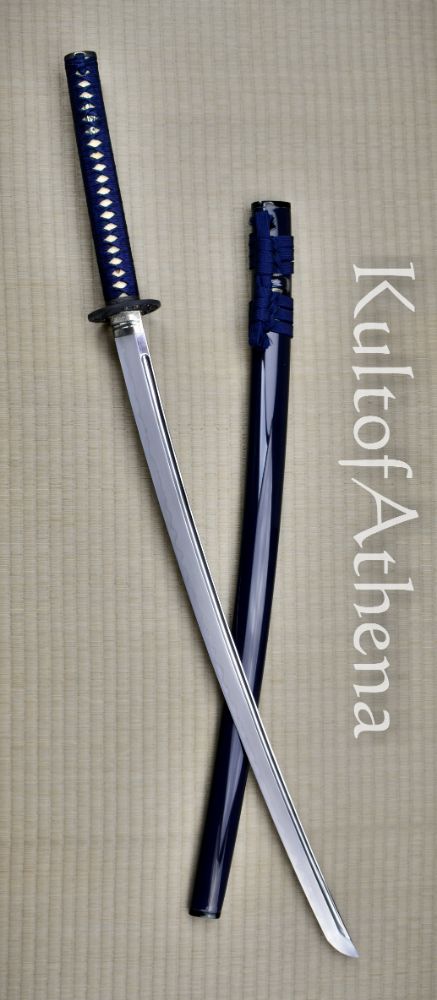
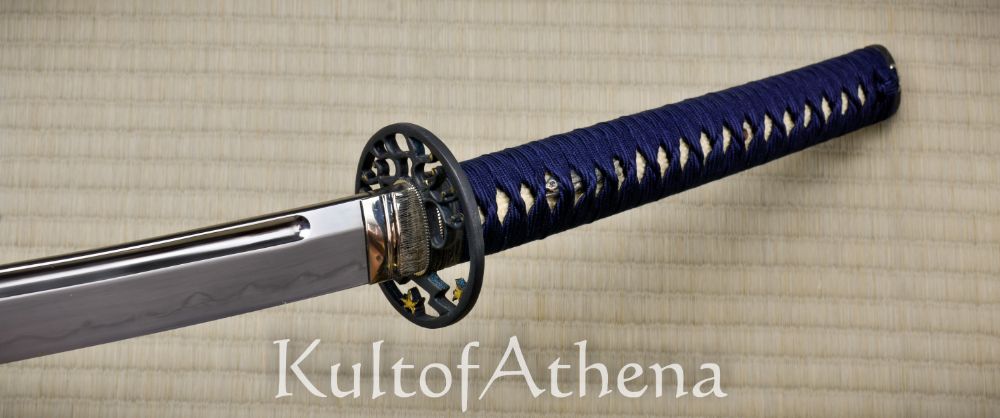
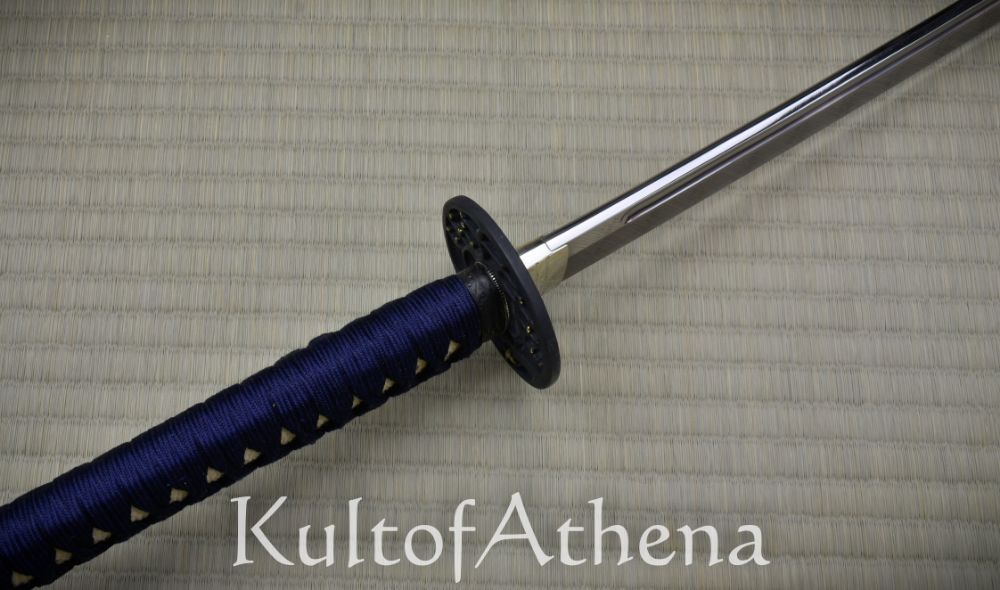
The Dokuji Nami Sanmai Katana from Thaitsuki has been skillfully hand-forged and features a traditional sanmai laminated construction which melds panels of forge-folded high carbon steel together to form a composite blade with an inner core of shock absorbing steel of 35 Hrc for resilience and an exterior of hardened 65 Hrc steel to ensure it has excellent edge retention and resistance to wear. The blade edge and its side panels are formed from folded T8 high carbon steel and this has been melded with a core and spine of folded T10 high carbon steel. After the folding process of its components the blade possesses a total of 1024 individual layers. A closer look at the blade will reveal the ripple-like patterning of the folded steel, as well as a faint line denoting where the hardened edge steel was forge-welded into form. Visible among this is also the wave-like hamon line which was created when the blade was clay tempered in the traditional manner to imbue it with a genuine hamon of hardened steel. The blade was completed with a high level of polish which was painstakingly executed to give it a fine sheen which highlights the beauty of its complex construction and its hamon.
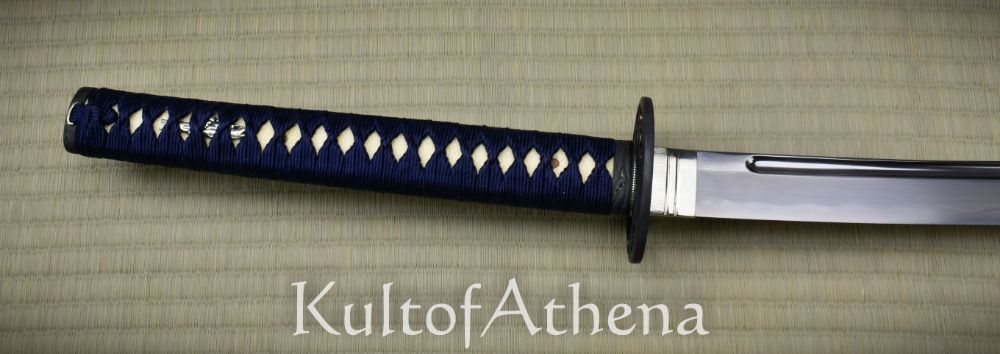
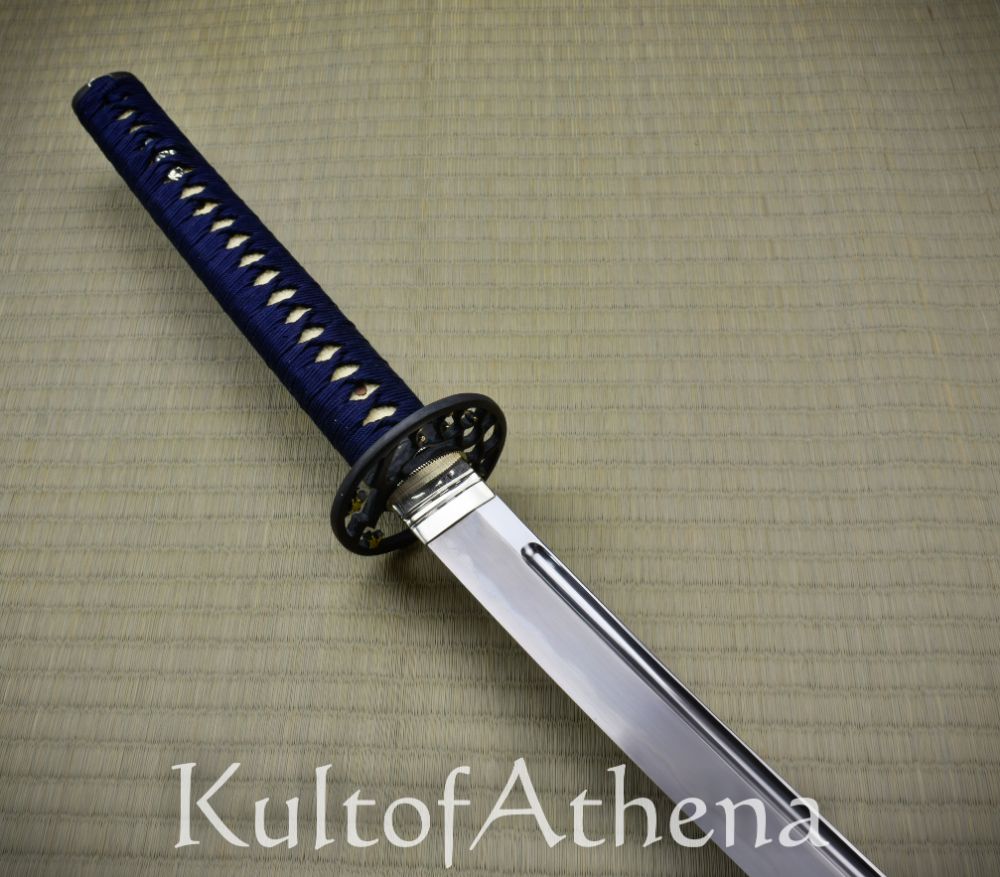
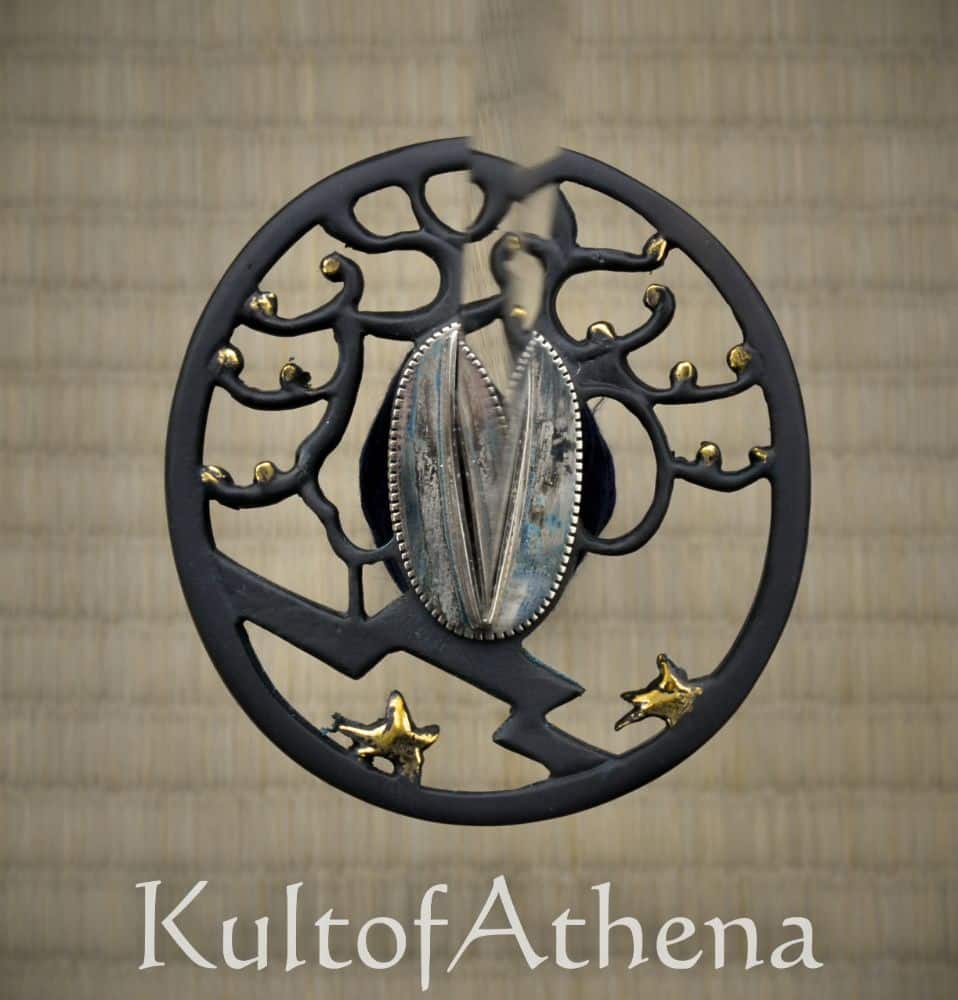
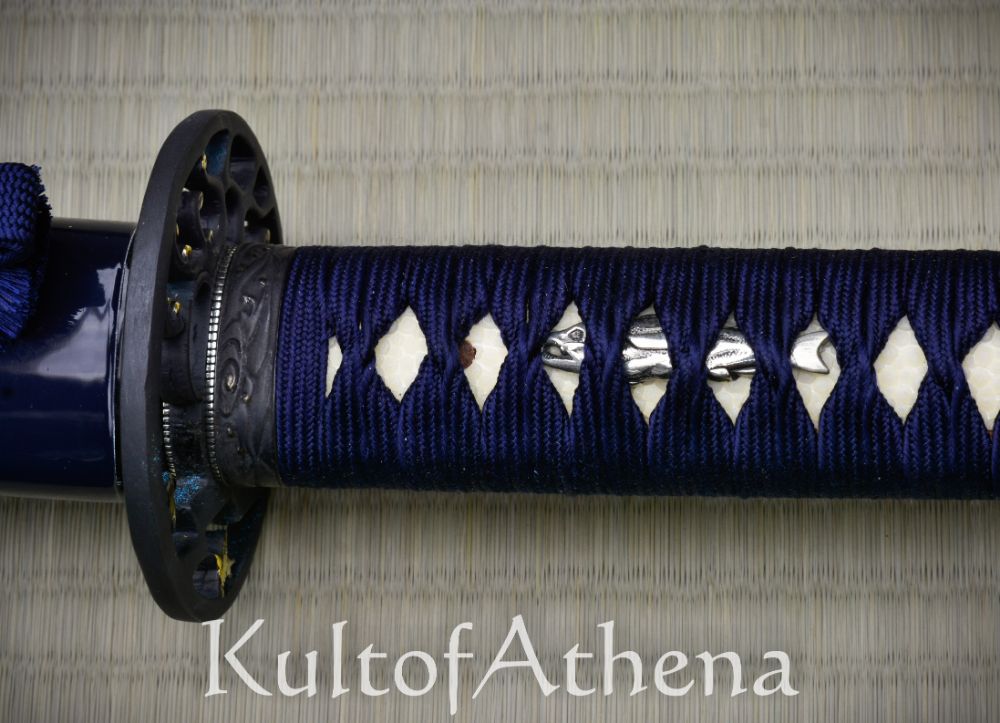
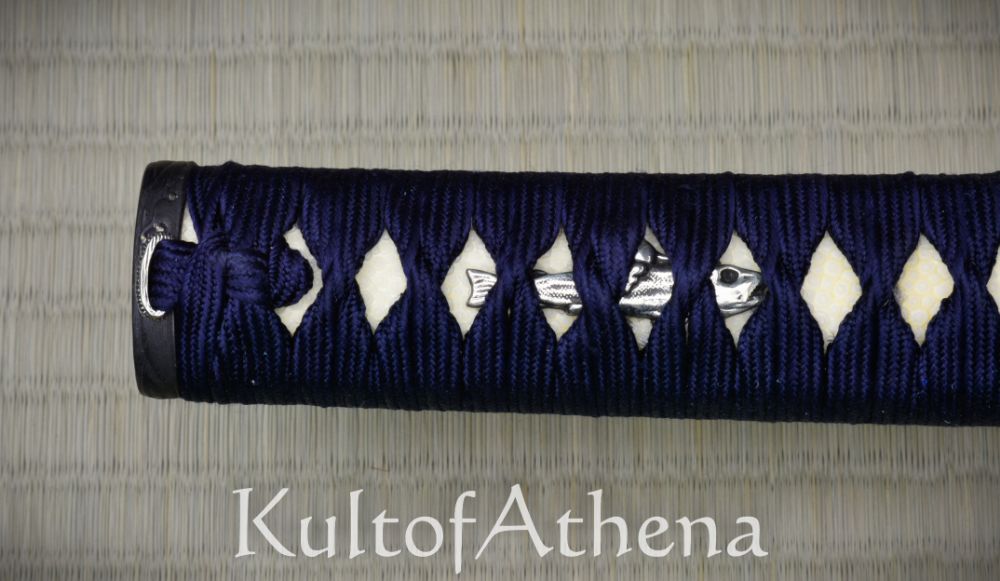
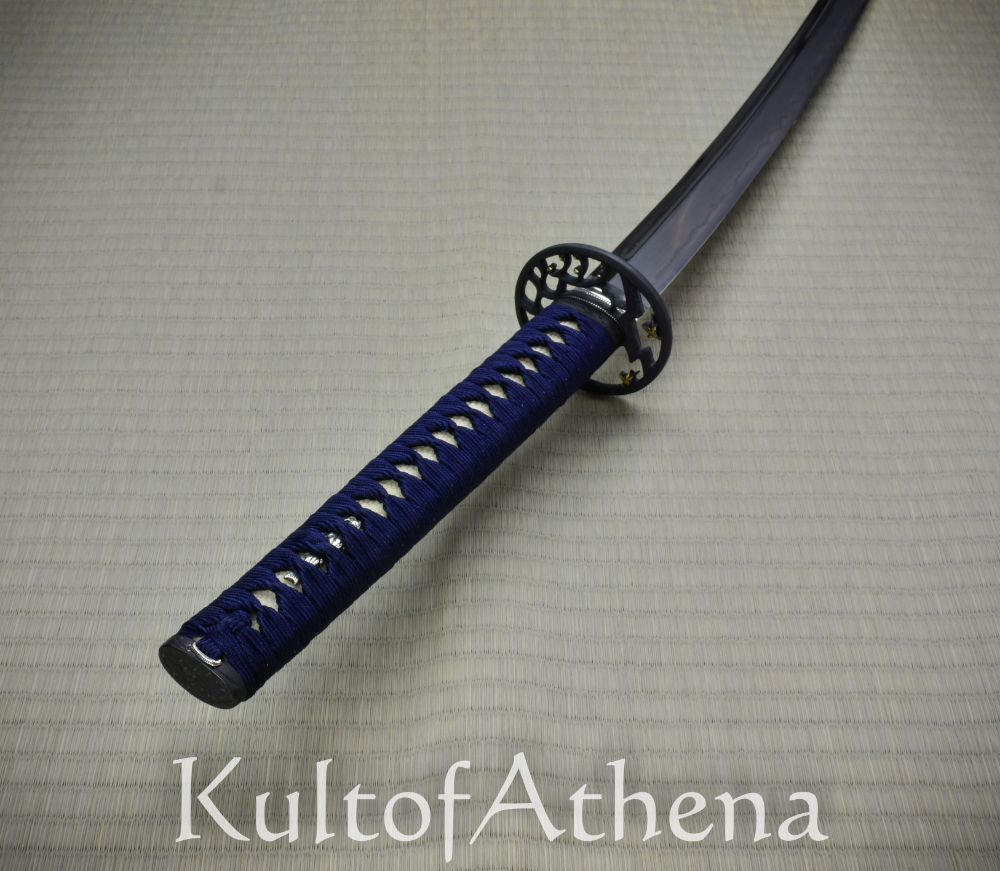
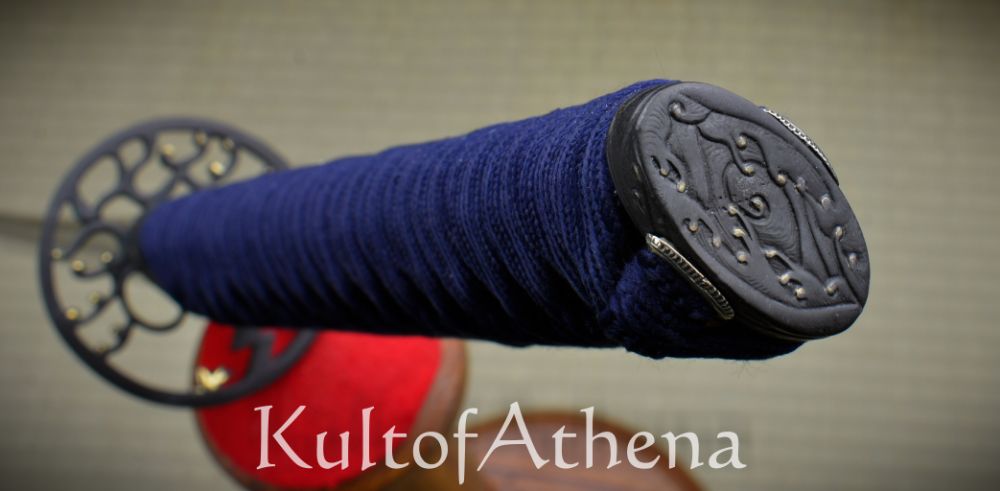
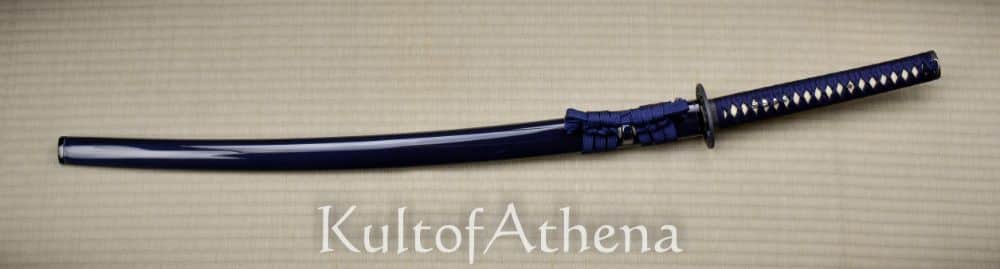
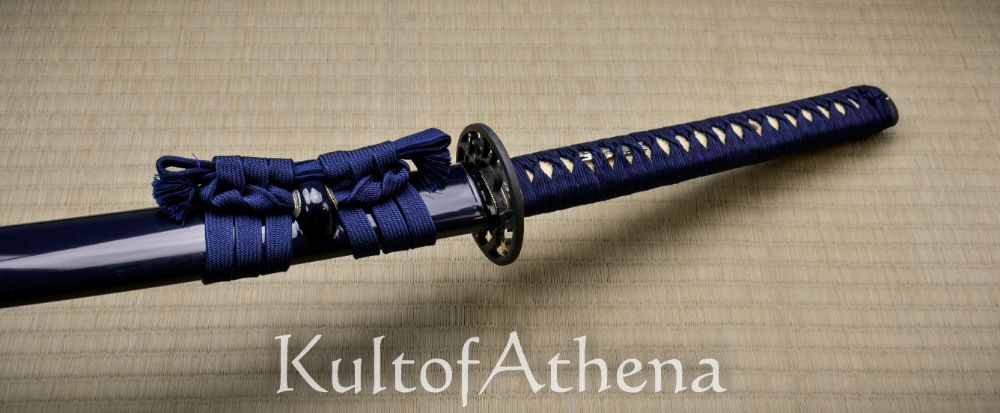
This premium blade is matched with a elevated koshirae mounting to give the sword the fine setting it deserves. The hardwood tsuka grip handle is inlaid with high quality genuine rayskin and tightly overlaid with dark blue tsuka-ito cordage of imported Japanese silk. Fish menuki, hand-crafted in fine silver, lie beneath the tsuka-ito knots. The habaki and seppa components are likewise crafted in fine silver and the distinctive and highly detailed tsuba is of blackened and antiqued brass with detailing picked out in bright brass. The well-carved wooden saya scabbard is coated with carefully applied, multi-layer glossy lacquer which is matched with thematic silver fittings. A dark blue sageo cord of imported Japanese silk is knotted to the scabbard to complete the katana. The sword comes with a green silk sword bag and signed manufacturer’s production certificate
PLEASE NOTE: There may be some minor to moderate cosmetic blemishing present on the scabbard and minor blemishing on the blade. These are handcrafted and hand-finished so minor cosmetic imperfections may be present.
Specifications
Every measurement that matters
- Brand
- Thaitsuki Nihonto
- Culture
- Japanese
- Edge
- Very Sharp
- Pommel
- N/A
- Blade Length
- 29 1/2"
- Blade
- Folded T8 and T10 High Carbon Steel
- Weight
- 2 lb 6.2 oz
- P.O.B.
- 5 7/8''
- Thickness
- 7.7 mm - 4.6 mm
- Width
- 34.3 mm
- Grip Length
- 10 3/8" (Ito Cord Section)
- Country of Origin
- Thailand
- Type
- Katana
Reviews
What collectors are saying
Q&A
Questions from the community
Q What is the blade made of, and how is it constructed? Common Question
The blade uses sanmai lamination: panels of forge-folded T8 high carbon steel form the edge and sides, welded to a core and spine of folded T10 high carbon steel. After folding, the steel carries 1024 layers, with an exterior hardness around 65 HRC for edge retention and an inner core around 35 HRC for shock absorption. It is finished with a genuine hamon from traditional clay tempering, visible as the wavy line along the edge.
Q What is this katana suited for - display, cutting, or sparring? Common Question
This is a battle-ready katana with a very sharp edge, built for cutting work on targets like tatami or water bottles, and its elevated koshirae fittings, hand-polished blade, and genuine hamon also make it a strong display piece. It is not built or edged for sparring or contact use.
Q Is this a full tang katana? Common Question
No, it uses the traditional katana tang (nakago), which runs about three-quarters the length of the grip and is secured by bamboo pegs (mekugi) through the tsuka. This is the traditional and most common katana construction, as opposed to the full-width tang with riveted scales seen on tactical-style swords.
Q How sharp does this sword ship, and can I use it for sparring? Common Question
This katana ships Very Sharp, ready for cutting practice on appropriate targets. A live edge like this is not meant for sparring, theatrical combat, or any contact use against another person or prop.
Q What does the point of balance mean for how this sword handles? Common Question
The point of balance sits 5 7/8'' out from the guard, which keeps weight forward in the blade for driving power through a cut while the 29 1/2'' blade and 2 lb 6.2 oz overall weight stay manageable in the hand. This balance point suits the katana's role as a cutting sword rather than a lighter, hilt-heavy piece.
Q How do I care for the blade and scabbard? Common Question
Wipe the polished blade down after handling and keep it lightly oiled to prevent rust, since it's high carbon steel. The saya is lacquered hardwood with a silk sageo cord, which looks striking but traps moisture, so the blade is better stored out of the scabbard long-term rather than left sheathed.
Q Is the hamon on this blade real, or just an applied pattern? Common Question
The hamon is genuine. The blade is differentially hardened through traditional clay tempering, which produces the wavy, cloud-like temper line you see running along the edge rather than an etched or acid-applied effect.
Q What are the fittings made of? Common Question
The habaki (blade collar) and seppa (spacers) are fine silver, the tsuba is blackened and antiqued brass with bright brass detailing, and the menuki beneath the grip wrap are hand-crafted fine silver in a fish motif. The tsuka is hardwood inlaid with genuine rayskin and wrapped in dark blue Japanese silk ito, and the saya is multi-layer lacquered wood with matching silver fittings.
Q What comes included with the sword? Common Question
The katana comes with a matching lacquered saya, a green silk sword bag, and a signed manufacturer's production certificate.
Q Does the blade have a fuller or groove? Common Question
Yes, the blade carries a bo-hi (groove) running along its length near the spine, visible in the photographs alongside the hamon and ridge line.
Video
See it in motion
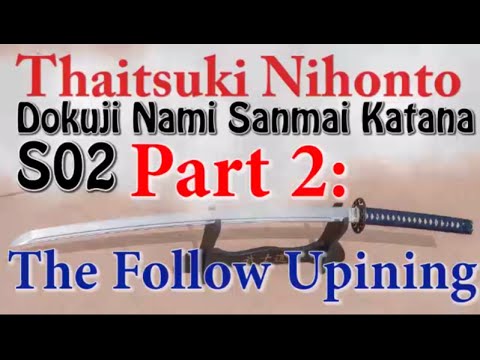
Thaitsuki Dokuji Nami Sanmai Katana S02 Review Part 2: The Followupining
The Maker
Thaitsuki Nihonto
It all began over 400 years ago with a commanding officer stationed in Thailand, who passed on sword making traditions to the Sivarat family. Today Thaitsuki Swords, owned by the Sivarat family, is recognized across the world for their superior heirloom quality. Each sword is individually produced by highly trained smiths, marked with a serial numbered and packaged with a signed certificate of authenticity.
Thaitsuki Nihonto specializes in melding blades of excellent quality with distinguished and elevated koshirae hilt fittings and a premium saya scabbard. Where other brands will cut corners on the finer points of fit and finish of koshirae and blade polish, Thaitsuki Nihonto follows through to create an exquisitely well crafted sword which has had the attention of a skilled craftsman hand-finishing each step to ensure an excellent fit and finish throughout. From Thaitsuki you can expect to see blades of skillfully forged steel, a superb blade polish, components of higher quality metals, a well-knotted grip wrap, finely lacquered scabbard, high quality samegawa rayskin, and close attention paid to details such as a tight and flush fit between the scabbard opening and its encased koiguchi.
Often paired together

No reviews yet. Only logged in customers who have purchased this product may leave a review.