


Citadel Bamboo Katana
Back Ordered
$2,999.00
Join Waitlist
You must register to use the waitlist feature. Please login or create an account.- Shipping estimated at checkout
- Every blade inspected before shipping
- 30-day returns
- Blade
- DNH7 High Carbon Steel
- Overall Length
- 40 3/4''
- Weight
- 2 lb 6.8 oz
- Brand
- Citadel
- Culture
- Japanese
Overview
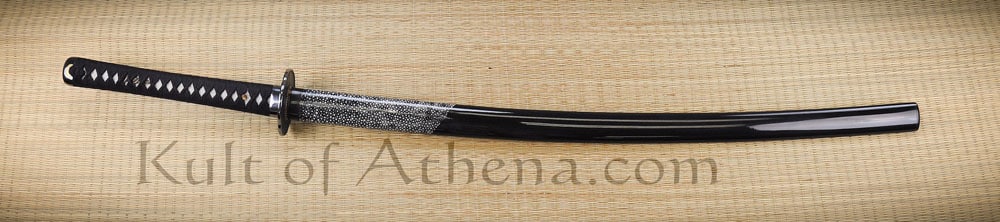
Citadel Bamboo Katana
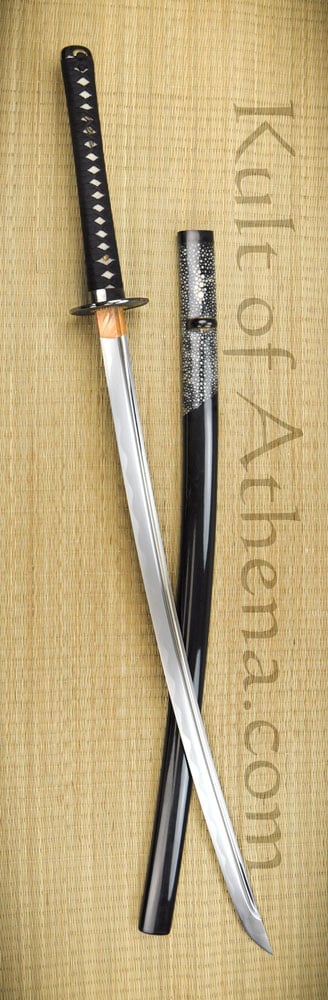
Limited to a mere 100 swords worldwide, the Bamboo Katana is the third sword of Citadels Limited Edition series.
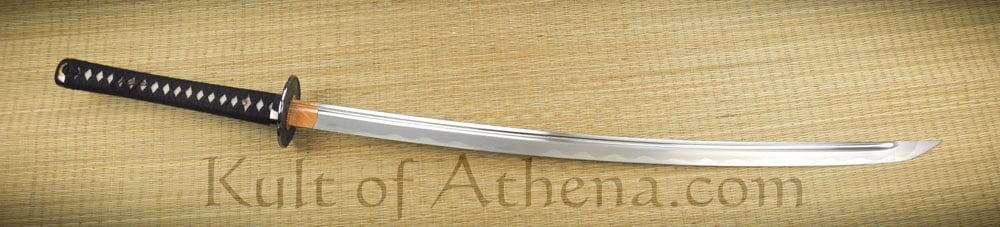
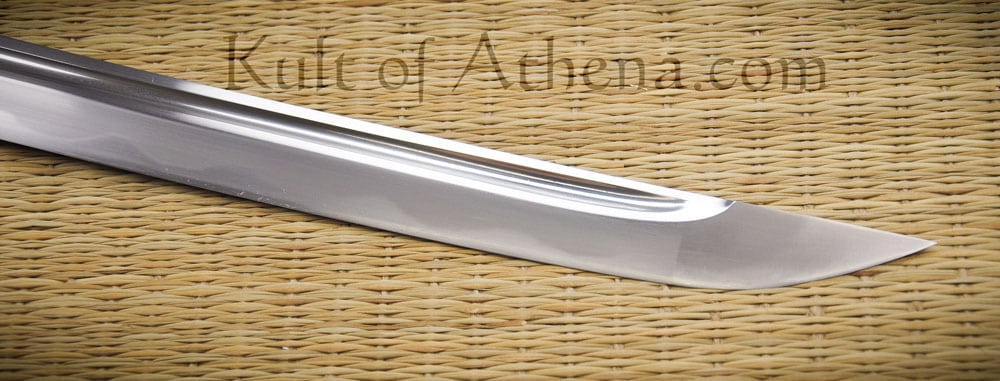
Crafted from 1075 steel, this katana has a long bo-hi groove to reduce weight in the thickest part of the sword; this reduces weight and sacrifices little blade strength because this gives the spine a profile akin to an I-beam - an efficient shape for reducing weight whilst retaining structural integrity. As a bonus, the bo-hi groove disrupts the flow of air over the blade as it strikes, giving a distinctively audible whoosh sound as it slices the air. This is called the Tachikaze - The Sword Wind. A keen ear will notice that the sound differs depending on what angle the blade is swung, and thus will know if his edge was properly aligned in the swing.
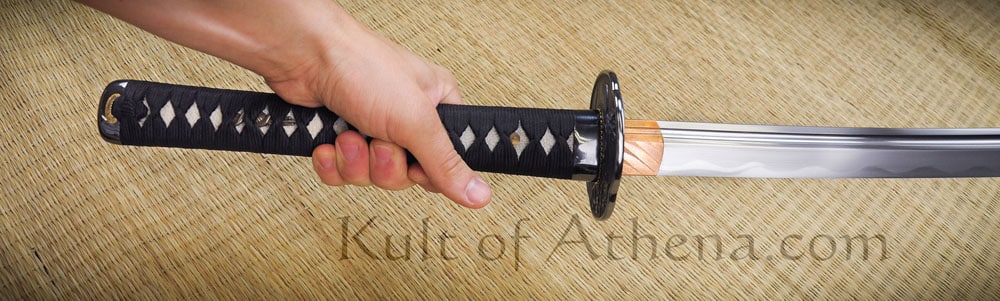
The blade, as evidenced by its uniformly wave-like notare hamon, is differentially tempered with the traditional clay process. The hamon is distinct and quite visible.
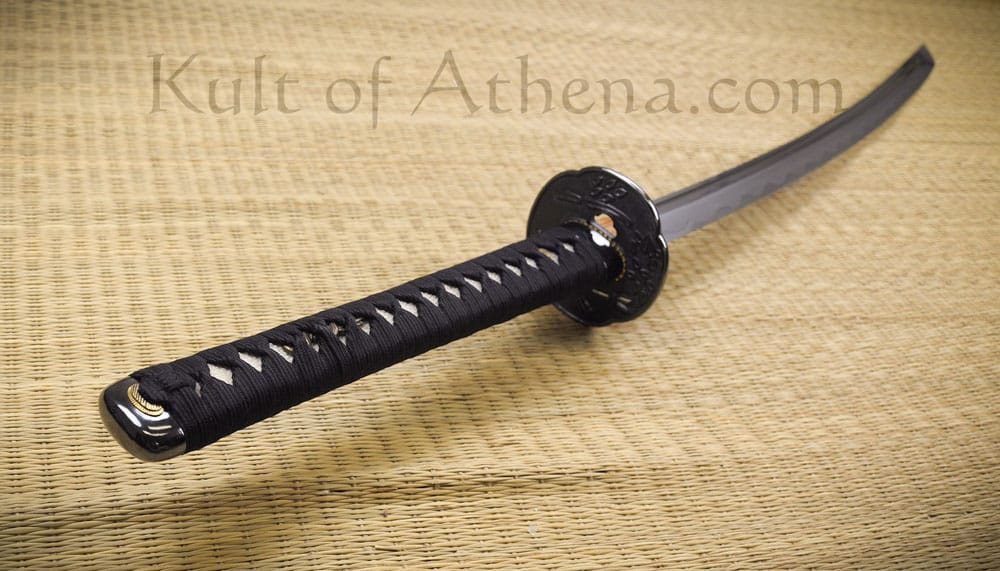
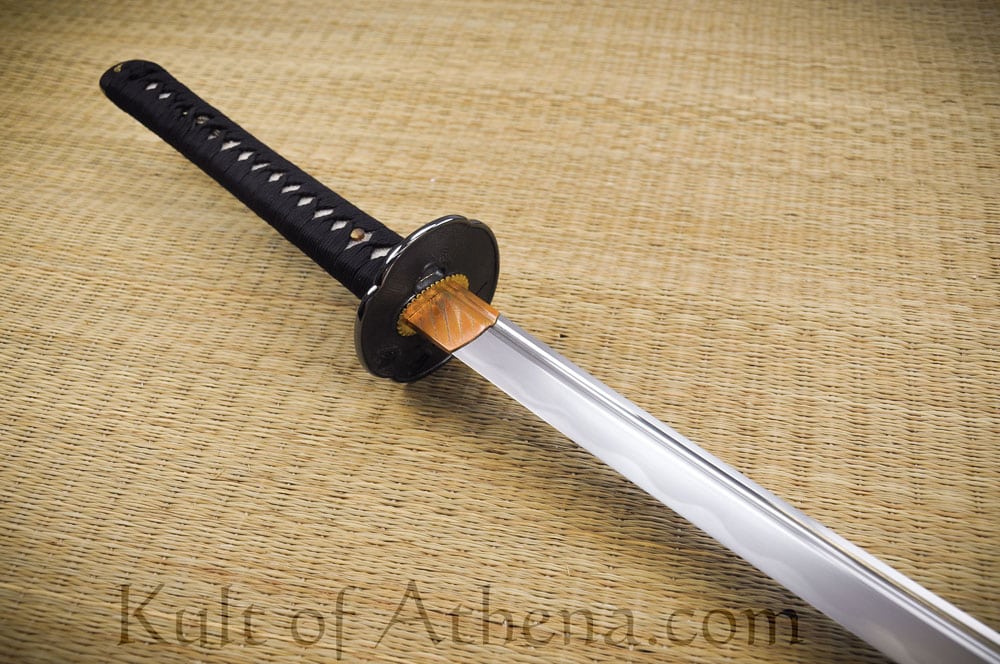
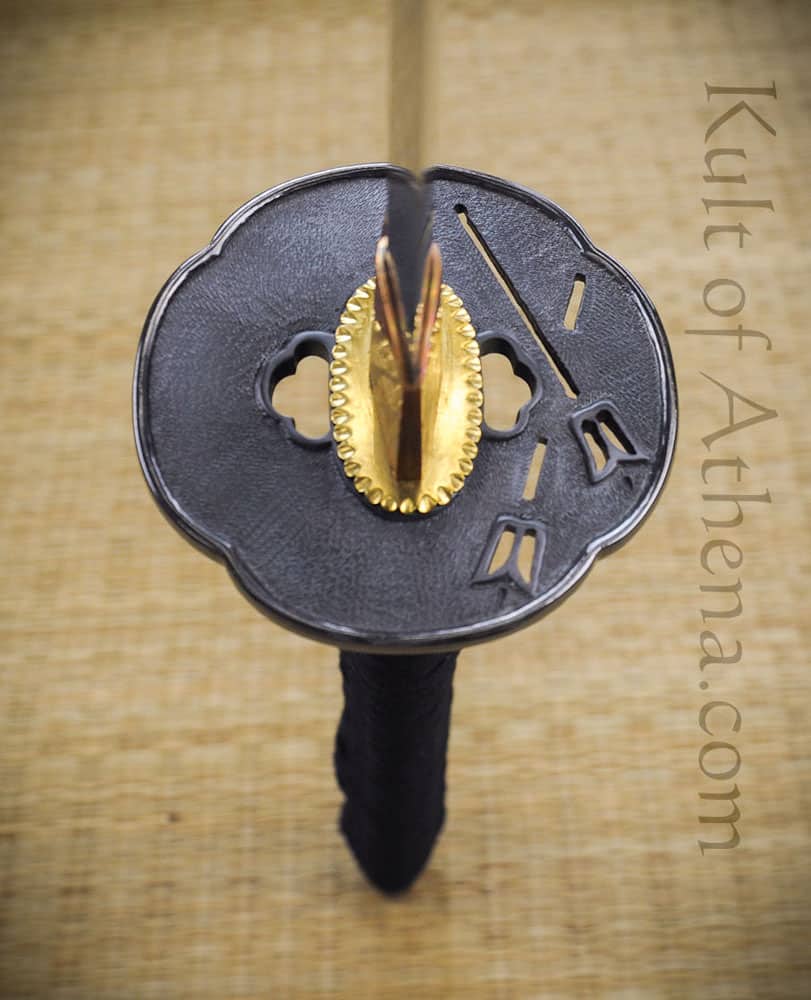
The tsuba is hand-cut, shaped and engraved from pure iron. Its nanako stippled pattern was done by a very patient hand. The tsuba has seki-gane inserts of copper that are designed to be more easily worked and shaped than iron to ensure that the tsuba has a tight fit to the blade. Should it be removed to be put onto another blade it will be easier to fit the tsuba because of the seki-gane. Most production katana omit the seki-gane of the tsuba; its inclusion is indicative of the degree of detail Citadel has imparted into its katana.
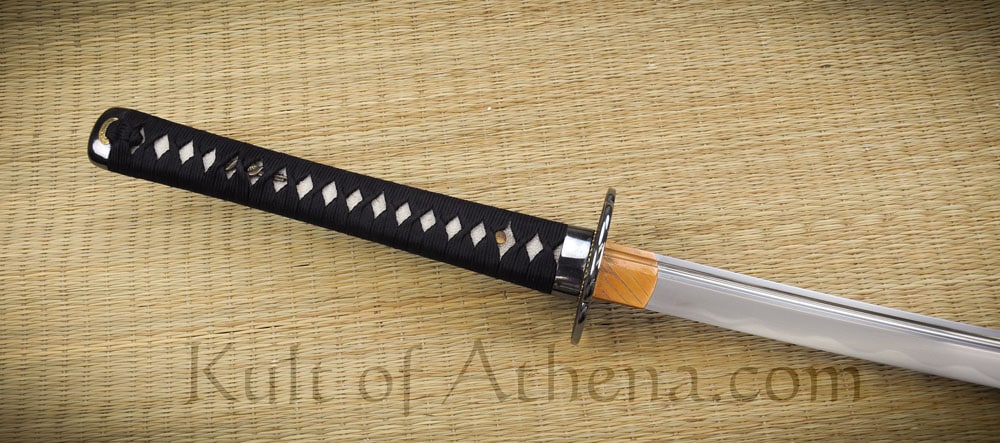
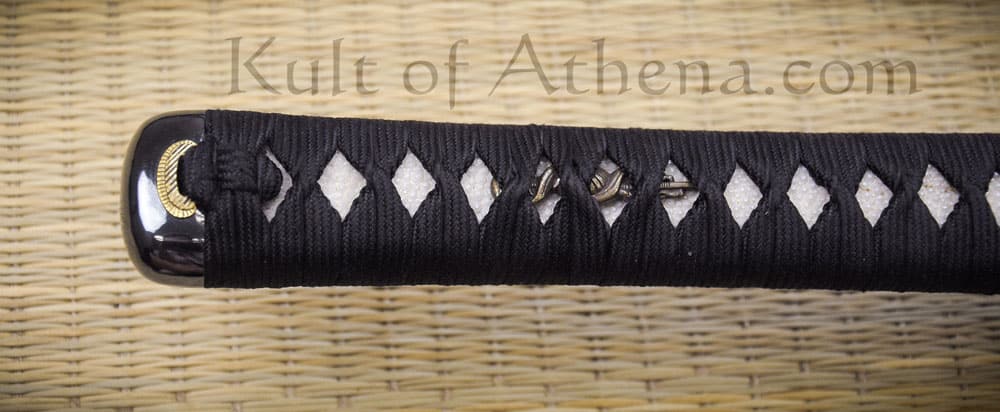
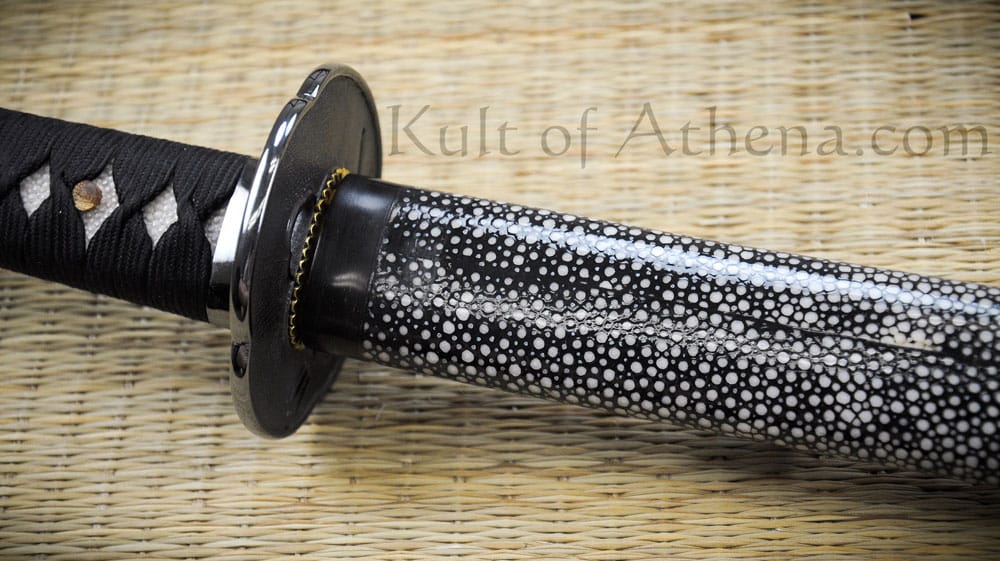
The habaki is of copper and the seppa are brass. The fuchi and kashira fittings are crafted from highly polished pure iron. The wooden tsuka has the rare inclusion of a full ray-skin wrap overlaid with black silk ito imported from Japan. The ito tight and well knotted. A pair of antiqued brass menuki are bound within the folds of the ito.
The saya scabbard is hand carved and given a gloss black lacquer finish. The mouth of the saya has an inlaid wrap of rayskin that was polished until it was smooth and then made flush with the rest of the scabbard by filling its recesses with black lacquer. The koiguchi is of buffalo horn and is carved to precisely fit the scabbard. An untied black sageo cord is included.
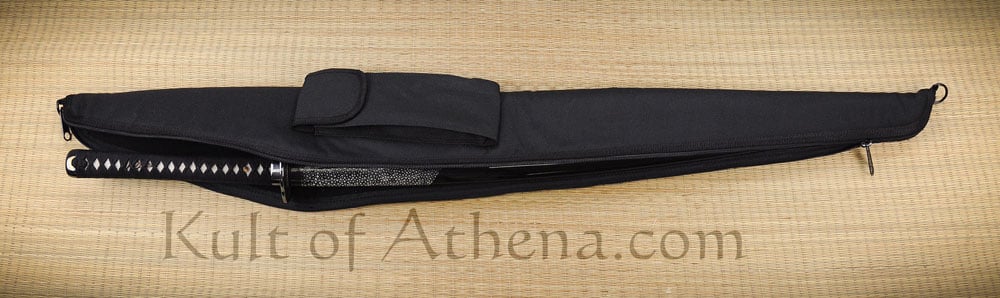
The sword comes with a black cloth sword bag with silk inside. It also comes with a padded, zippered nylon sword carrying bag with a shoulder strap and external zippered compartment.
Specifications
Every measurement that matters
- Brand
- Citadel
- Culture
- Japanese
- Edge
- Very Sharp
- Pommel
- N/A
- Overall Length
- 40 3/4''
- Blade Length
- 29 1/2''
- Blade
- DNH7 High Carbon Steel
- Weight
- 2 lb 6.8 oz
- P.O.B.
- 5 1/2''
- Thickness
- 6.3 mm - 4 mm
- Width
- 30.7 mm
- Grip Length
- 9 5/8''
- Country of Origin
- Cambodia
- Type
- Katana
Reviews
What collectors are saying
Q&A
Questions from the community
Q What is the blade made of, and what is this katana built for? Common Question
The blade is forged from DNH7 high carbon steel, a tool-grade carbon steel chosen for the edge-holding and shock resistance a Battle Ready sword needs. A long bo-hi groove runs down the blade to pull weight out of the thickest part of the spine, giving it an I-beam-like cross section that keeps the blade light without giving up structural strength.
Q Does this sword come sharp, and what can I cut with it? Common Question
Yes, this katana ships Very Sharp. That edge is suited to tatami and water bottles, the standard soft targets for katana cutting practice.
Q Is the tang full length, and is it durable? Common Question
This katana uses the traditional katana tang construction: the tang runs roughly three-quarters of the length of the grip rather than all the way through to the pommel cap, and it is secured with a bamboo peg (mekugi) through the handle. This is the traditional and most common way a katana is built, and on a Battle Ready blade like this one it holds up well to cutting use when the peg and wrap are kept in good condition.
Q Is the hamon a real temper line, or just etched on? Common Question
The hamon is real. This blade is differentially hardened using the traditional clay-coating process, which produces the wave-like notare pattern along the edge, and it's distinct and clearly visible on the finished blade.
Q What is the point of balance like, and what does that mean for handling? Common Question
The point of balance sits 5 1/2 inches out from the guard. That keeps mass closer to the hand relative to the blade's reach, which supports quicker edge control and tighter cutting form rather than a blade-heavy, momentum-driven swing.
Q What fittings and furniture come with this katana? Common Question
The tsuba is hand-cut and engraved from pure iron with a stippled nanako pattern and copper seki-gane inserts for a tight fit to the blade, a detail most production katana skip. The habaki is copper, the seppa are brass, and the fuchi and kashira are polished pure iron; the tsuka is wrapped in genuine ray skin under black silk ito with a pair of antiqued brass menuki bound into the wrap.
Q What does the scabbard look like, and can I store the blade in it? Common Question
The saya is hand-carved wood finished in gloss black lacquer, with a rayskin inlay at the mouth polished flush and a buffalo horn koiguchi carved to fit precisely, plus an untied black sageo cord. For the long term it's better to store the blade out of the saya, since any scabbard can trap moisture against the steel; wipe the blade down and apply a light coat of oil before dry storage.
Q How do I maintain the blade over time? Common Question
Wipe the carbon steel blade down after handling to remove fingerprints and moisture, then apply a light coat of sword oil to prevent rust, since this is a high carbon steel blade and will corrode without care. Keep it in dry storage rather than left in the saya, and keep the ray-skin and ito-wrapped tsuka away from damp conditions as well.
Q What else comes with the sword? Common Question
It includes a black cloth sword bag lined in silk for the blade itself, plus a separate padded nylon carrying bag with a zippered compartment and shoulder strap for transport.
Q Is this a limited production piece? Common Question
Yes, this is the third sword in Citadel's Limited Edition series and only 100 of this Bamboo Katana were made worldwide.
Video
See it in motion
Thoughts on Citadel V.S. Motohara/Evolution Blades
The Maker
Citadel
Citadel’s Cambodia-based workshop creates some of the finest production Japanese bladed weapons available. In addition to forging blades of outstanding quality Citadel’s capable craftsmen focus and emphasize many of the fine details in fit and finish that are overlooked by other manufacturers to create an entirely premium quality product. Details such as habaki blade collars which are custom crafted to fit the contours of an individual sword, full-wrap premium rayskin and koiguchi scabbard openings which are seamlessly sleeved into carved horn are just some of the many refined details that can be seen on many of their offerings.
Often paired together

Detailed and functional Blade: Hamon is a little more prominent than in the photos. Polish is just right for a blade that will see some use.
Tsuba/Fuchigashira: Everything is beautiful in person. The stippling on the tsuba is amazing up close. The fuchi/kashira appear jet black in photos, but under most light they have a deep reflective silver grey appearance. Everything is super tight and solid.
Tsuka: Silk feels nice and is super tight. I can’t wiggle it at all.
Saya: Fits like a glove and has a nice “satin” finish that doesn’t show fingerprints easily. (Another reason I feel this sword is made to be used!)
I could only find one fault with mine. When holding the sword with the blade facing straight down, the blade is at 6 o’clock, the mune is at 12 o’clock. However, the tsuka (most noticeably the kashira end) is pointing at 11 and 7 o’clock. So it’s not perfectly aligned. For that I would give it a 9 out of 10.
The sword bag holds the sword very snug and it even comes with two spare mekugi (another “nudge nudge” to use this thing). I cut some tatami with it and it didn’t even leave a scuff or mark. I also hit a wooden dowel on my sword stand and I couldn’t find a mark on the blade from that either. The sword still looks brand new after some use. I have much confidence in the construction and durability of this sword.
If you’re looking for a well made, attractive enough katana that had amazing attention to detail when being made and can take some abuse and still look new, this one is for you. Otherwise, (for this price) there are swords that look more flashy hanging on the wall with silver bits and complex polishes, laminations, and folds.