






Infantryman’s Hanger / Cutlass – Universal Swords
Out of stock
$189.99
Join Waitlist
You must register to use the waitlist feature. Please login or create an account.- Shipping estimated at checkout
- Every blade inspected before shipping
- 30-day returns
- Blade
- 1060-1065 High Carbon Steel
- Overall Length
- 30 7/8''
- Weight
- 2 lb 0.5 oz
- Brand
- Universal Swords
- Culture
- Anglo-Saxon
Overview
Infantryman's Hanger / Cutlass - Universal Swords
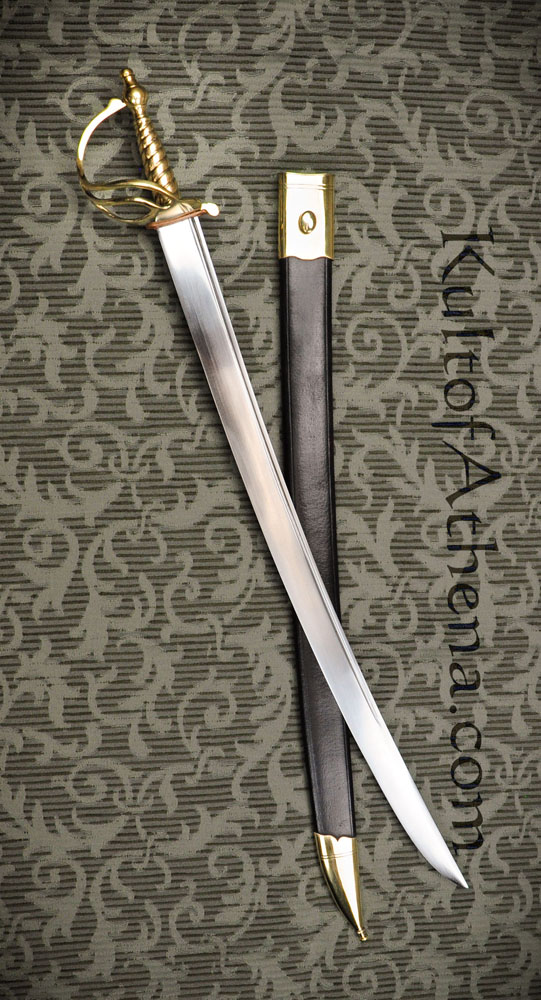
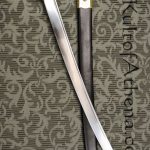
This Hanger sword has a blade of 1060-1065 High Carbon Steel peened to a hilt of brass. Its companion scabbard is crafted from sturdy leather with chape and throat pieces of brass.
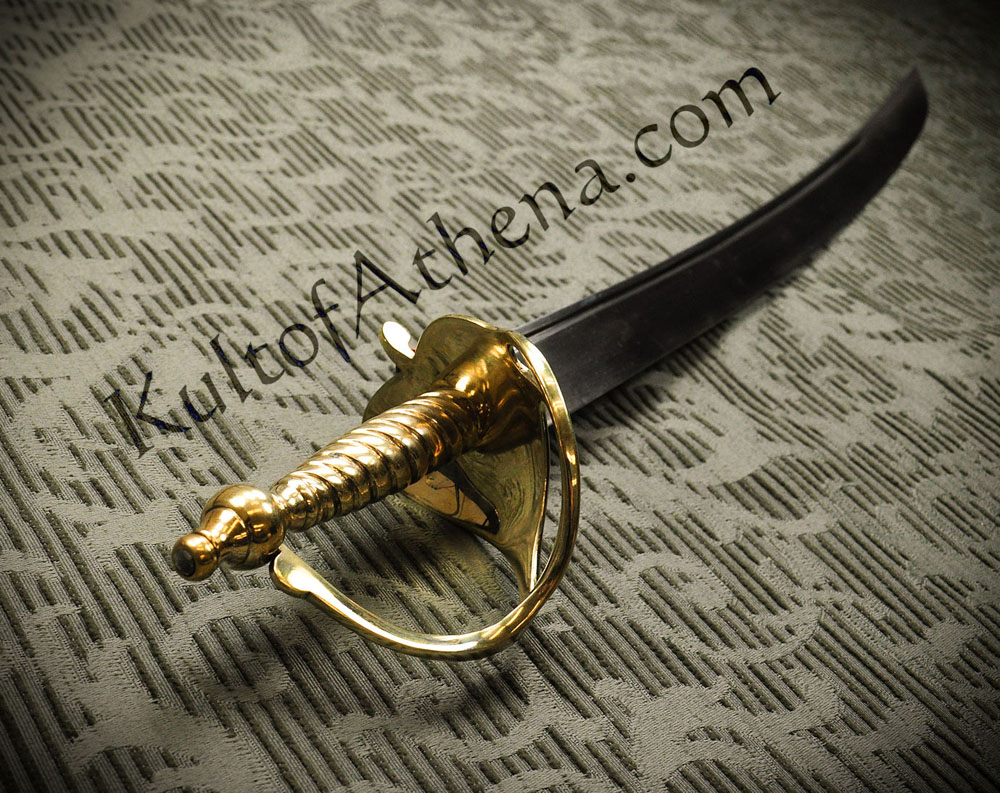
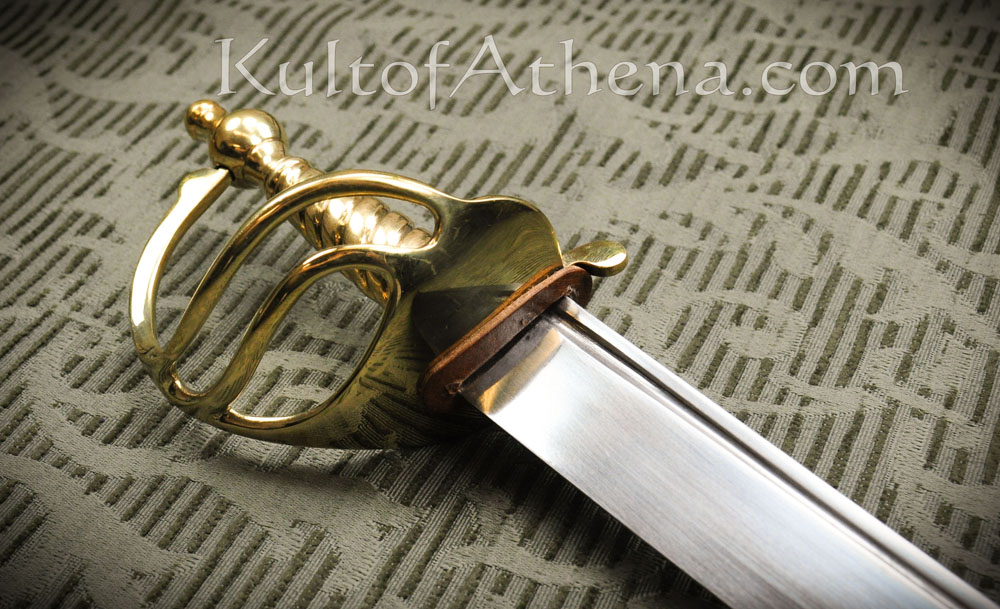
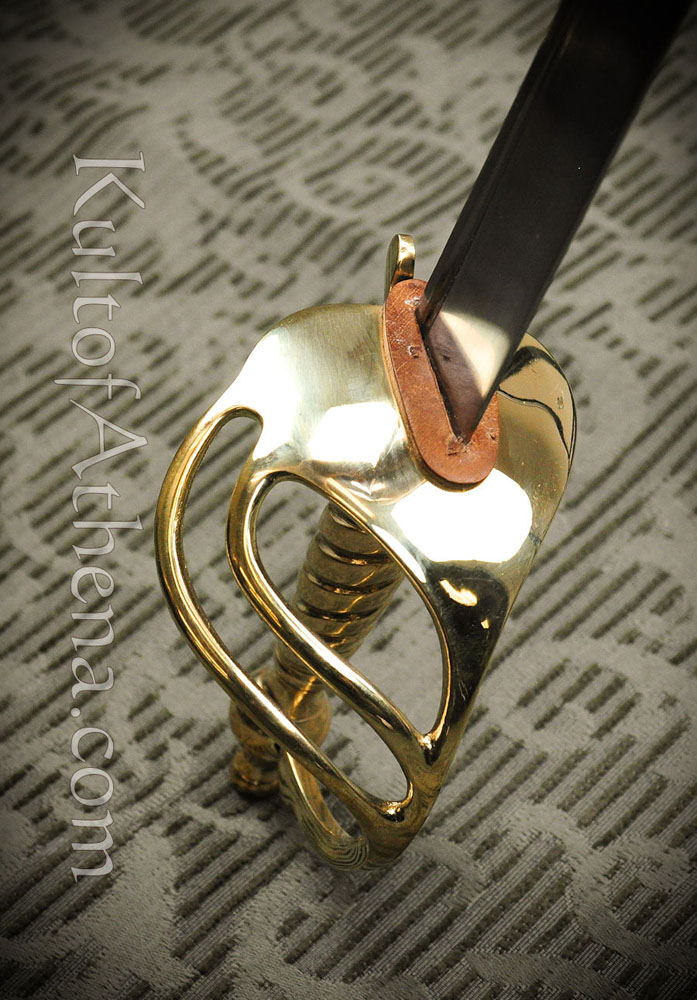
This reproduction of a British infantrymans hanger is based on an extant example dating to 1760. These British brass-hilted swords were heavily influenced by French and German hangers from the continent as evidenced by its half-basket hilt with a heart shaped guard.
The hanger sword is designed for close-in fighting - the blade is an ideal length for a close-quarters scrum and the wide, cutlass-like blade delivers forceful chops, hacks and sweeping slashes. The clipped point lends itself well to a slightly upturned thrust.
This form of the Hanger is very similar to the Cutlass, and a blade of this type offered here would do quite well when used as a Cutlass.
Specifications
Every measurement that matters
- Brand
- Universal Swords
- Culture
- Anglo-Saxon
- Edge
- Unsharpened
- Pommel
- Peened
- Overall Length
- 30 7/8''
- Blade Length
- 25 1/2''
- Blade
- 1060-1065 High Carbon Steel
- Weight
- 2 lb 0.5 oz
- P.O.B.
- 5 1/2''
- Thickness
- 5.4 mm - 3.1 mm
- Width
- 35.9 mm
- Grip Length
- 3 3/4''
- Country of Origin
- India
- Type
- Saber
Reviews
What collectors are saying
Q&A
Questions from the community
Q What is this hanger based on historically? Common Question
This is a reproduction of a British infantryman's hanger dating to around 1760, with a half-basket brass hilt and heart-shaped guard that reflects the French and German hanger designs that influenced British swordsmiths of the period. The same blade form was also used as a cutlass, so this piece suits either role.
Q What is the blade steel, and how durable is it? Common Question
The blade is 1060-1065 high carbon steel, a tough, shock-resistant steel used across battle-ready swords for its ability to take hard impact without chipping or snapping. Combined with the full peened construction, it's built to handle real cutting and chopping use rather than display alone.
Q Is the tang full length, and how is it built? Common Question
The blade's tang runs the full length of the grip as one piece with the blade steel and is peened over the pommel at the end, which is the traditional construction method for a durable, battle-ready sword. This is a stronger build than a hilt pinned or bolted on separately, and it's what lets this piece stand up to real cutting work.
Q Does this sword come sharpened? Common Question
No, this hanger ships with an unsharpened edge. It's built on battle-ready construction with the same high carbon steel and full peened tang you'd want on a working sword, so it's a sound base if you want to put an edge on it yourself for cutting tatami or water bottles.
Q What is this sword best suited for — cutting, sparring, or display? Common Question
This hanger is built for close-quarters cutting work: the wide, cutlass-like blade is shaped to deliver forceful chops, hacks, and sweeping slashes, and the clipped point allows for an upturned thrust. It is not sold sharpened, so as it ships it suits handling, study, and display; sharpened and used within its design it's suited to cutting tatami or water bottles. It is not padded or blunted for sparring, and should not be used for contact or stage combat.
Q Where does the sword balance, and what does that suit? Common Question
The point of balance sits 5 1/2 inches out from the guard, keeping the weight concentrated close to the hand. That balance point, paired with the wide 35.9 mm blade, gives the blade authority in a chop while still staying quick enough for close-in work, matching the hanger's original role as a close-quarters fighting sword.
Q What is the hilt made of, and how is the grip finished? Common Question
The hilt is brass, with a half-basket guard, knuckle bow, and a grip cast or wrapped with a ribbed, wire-like texture, all finished in polished brass tone. The pommel is a rounded brass cap, peened down over the tang to lock the hilt to the blade.
Q What is the scabbard made of, and can I store the blade in it long-term? Common Question
The scabbard is sturdy leather with brass throat and chape (tip) fittings. Leather scabbards can trap moisture against the blade over time, so for long-term storage it's better to keep the sword out of the scabbard, wiped down and lightly oiled, rather than left sheathed.
Q How should I maintain the blade to prevent rust? Common Question
Wipe the blade down after handling and keep a light coat of oil on the high carbon steel, since this steel will corrode if left bare and exposed to moisture. Store the sword in a dry place outside its leather scabbard, and check the peened brass pommel and fittings periodically to make sure everything stays tight and clean.
The Maker
Universal Swords
With origins going back to 1960, India’s Universal Swords has been making reproduction swords for decades. With an emphasis on military sabers, universal produces a number of designs not found elsewhere. As the official US distributor of Universal Swords, KOA will be expanding to stock their entire line over time.
Often paired together
It looks good on a belt but the handle is very small and uncomfortable so don’t expect to hold it unless you’ve got small hands