
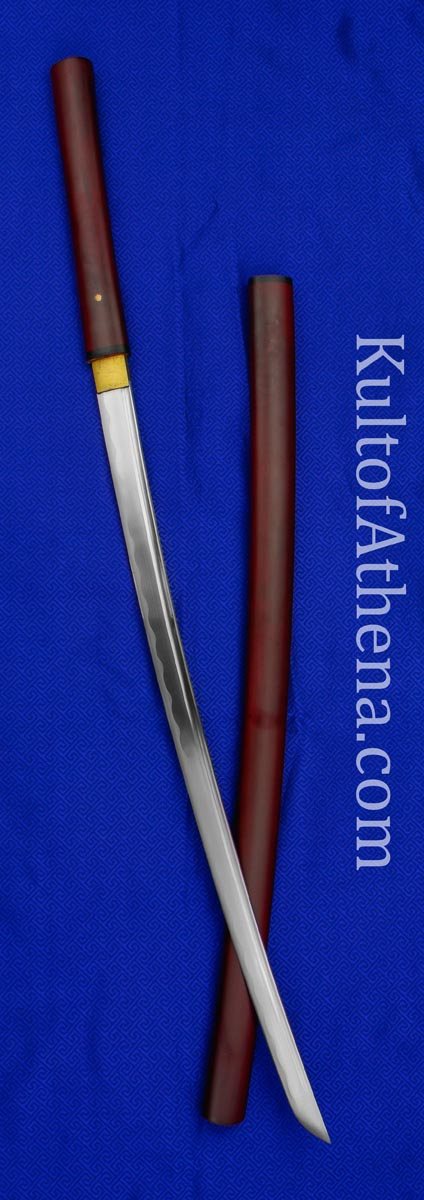
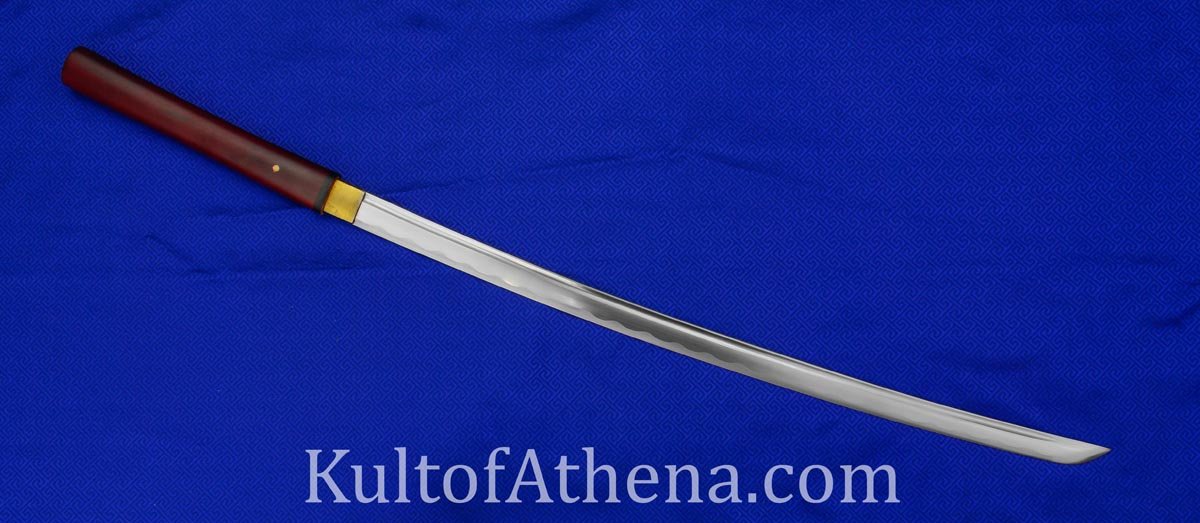
Bishamon Red Shirasaya Katana
Back Ordered
$69.99
Join Waitlist
You must register to use the waitlist feature. Please login or create an account.- Shipping estimated at checkout
- Every blade inspected before shipping
- 30-day returns
- Overall Length
- 38 5/8"
- Weight
- 2 lbs 1.5 oz
- Brand
- Musha
- Culture
- Japanese
Overview
Bishamon Red Shirasaya Katana
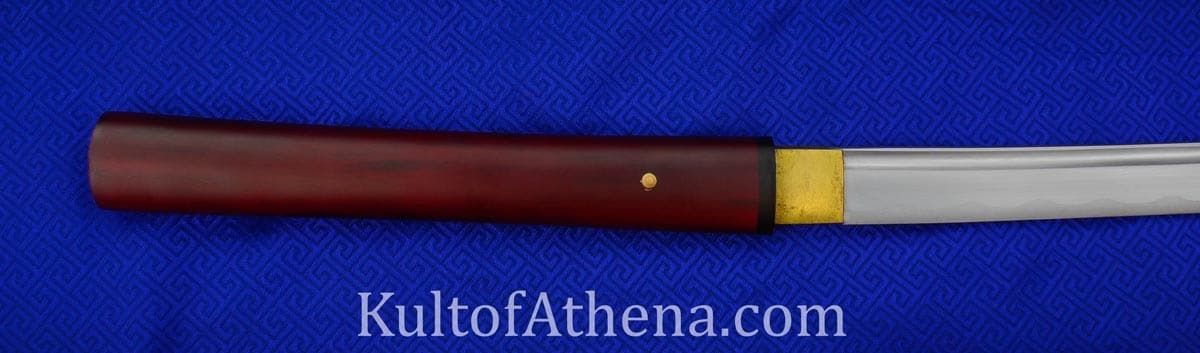
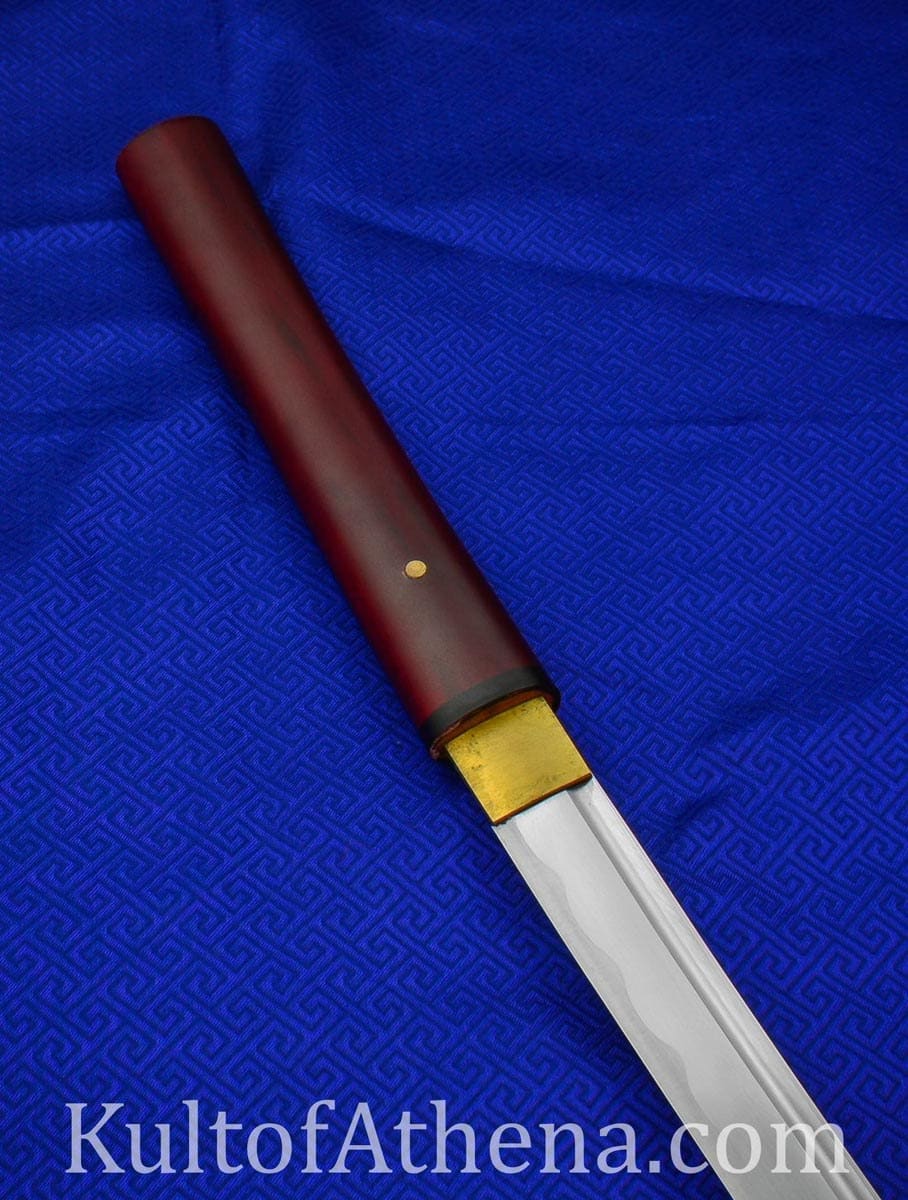
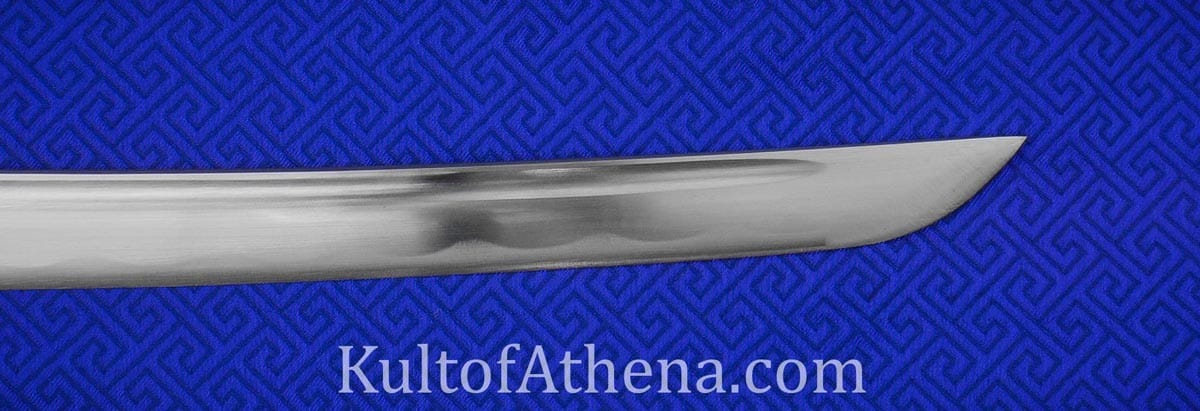
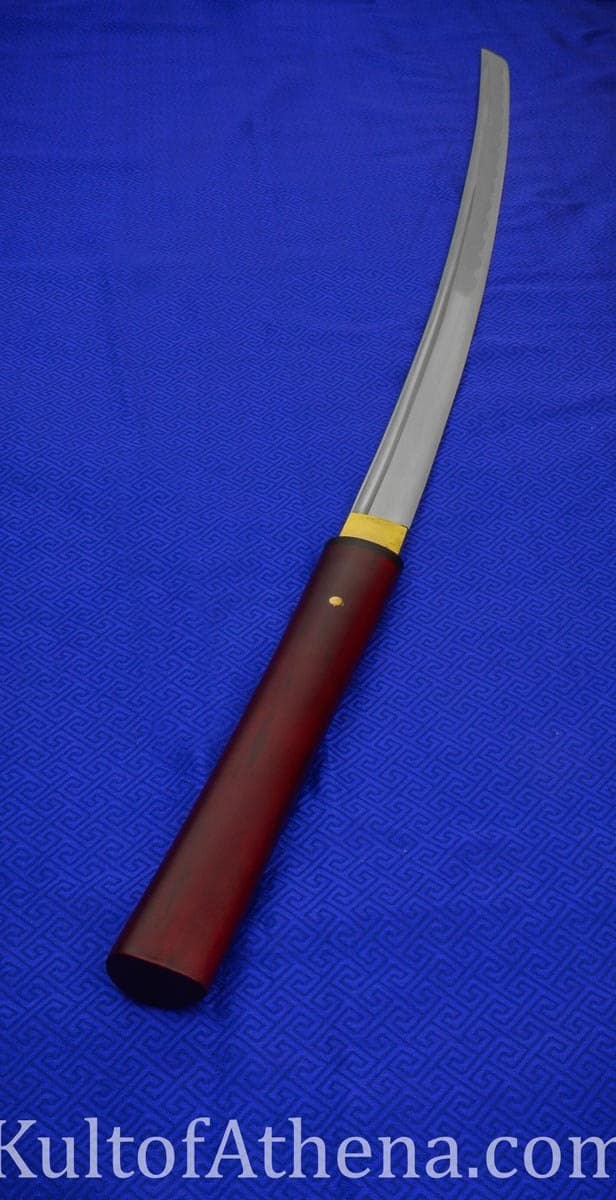
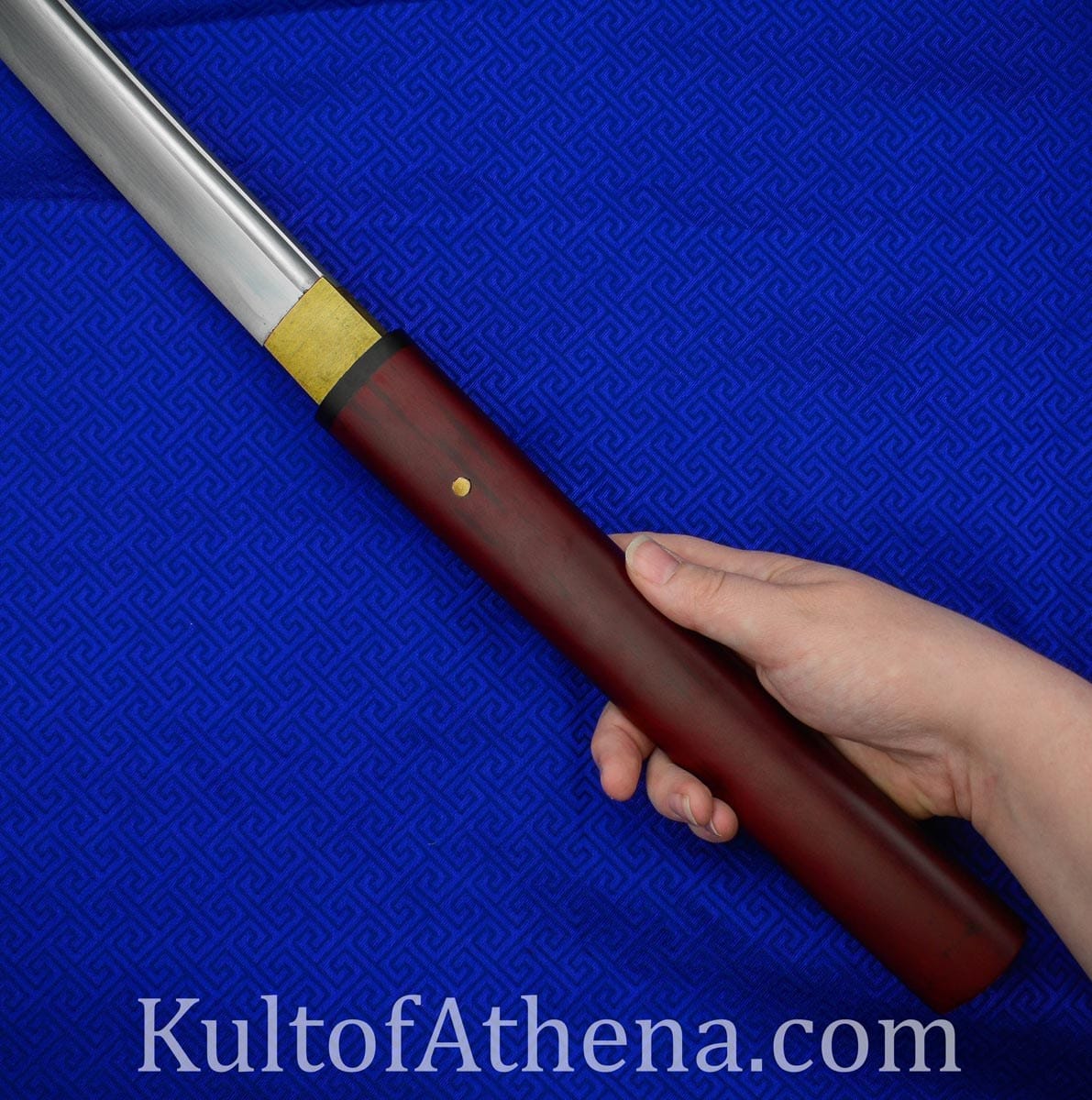
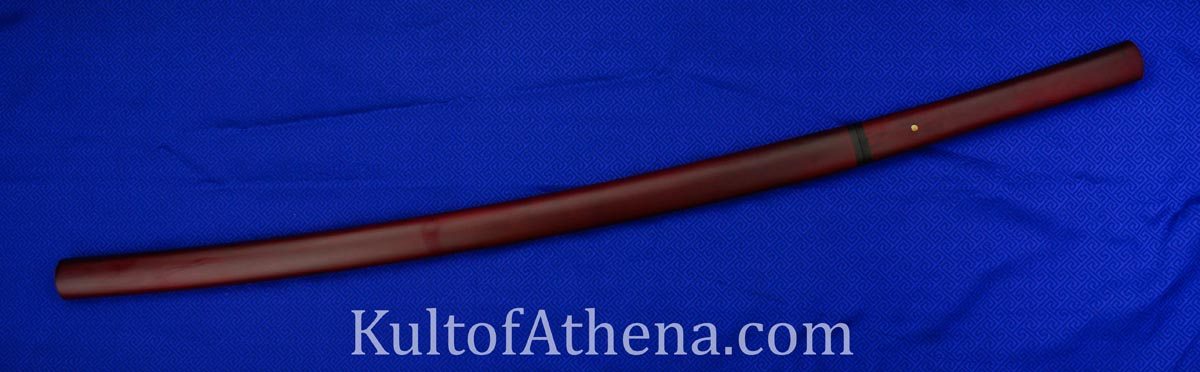
This Shirasaya Katana by Bishamon has its wooden scabbard and grip finished in a vibrant dark red hue; its mounted blade is forged from sharpened and tempered 1045 high carbon steel with an etched hamon. The habaki blade collar is fashioned from brass and the blade tang is secured to the grip in the traditional manner with a mekugi bamboo pin.
Japanese blades that were not to be used for some time were often removed from their typical Koshirae mountings of tsuba and wrapped tsuka, and mounted into the featureless Shirasaya. Standard Koshirae mountings were prone to accumulate moisture over time, hence the placement of the blade into a protective wood-casing of the Shirasaya. Though Shirasaya mounting is primarily for storage, the blade is securely affixed and can still be used if necessary. Though this is ill-advised as the hand may slip onto the exposed blade during an impact.
Specifications
Every measurement that matters
- Brand
- Musha
- Culture
- Japanese
- Edge
- Sharp
- Pommel
- N/A
- Overall Length
- 38 5/8"
- Blade Length
- 28"
- Weight
- 2 lbs 1.5 oz
- P.O.B.
- 7 3/8"
- Thickness
- 7.7 mm - 5.1 mm
- Width
- 32.1 mm
- Grip Length
- 10 5/8"
- Country of Origin
- China
Reviews
What collectors are saying
Q&A
Questions from the community
Q What is this sword made for, and is it something I can actually use? Common Question
This Shirasaya Katana is forged from 1045 high carbon steel and ships with a sharp edge, making it suited to cutting practice on targets like tatami or water bottles as well as display. The plain, fitting-free shirasaya mounting is traditionally a storage form, but the blade is pinned securely enough to be drawn and used.
Q Is this a full tang sword? Common Question
The blade's tang (nakago) is the same steel stock as the rest of the blade, running the full length of the grip, and is held in place with a traditional bamboo mekugi pin rather than rivets through scale grips. This is the standard, functional tang construction used on real Japanese swords, not a tactical-style riveted tang.
Q What is a shirasaya, and why doesn't this sword have a guard or ornate fittings? Common Question
Shirasaya is the plain wood storage mounting Japanese swords were traditionally moved into when not worn in their normal fittings, since the everyday koshirae mountings with wrapped grip and tsuba tend to trap moisture against the blade over time. This sword follows that same form, with a bare red-lacquered wood grip and scabbard and no tsuba. It can still be drawn and used, though the lack of a guard means more care is needed to keep the hand from sliding onto the blade on impact.
Q Where does this sword balance, and what does that mean for handling? Common Question
The point of balance sits 7 3/8" out from the guard area, which keeps enough weight forward in the blade to carry through a cut while still leaving the sword controllable in the hand. That balance, combined with the 28" blade and 2 lb 1.5 oz overall weight, suits it to cutting practice as well as display.
Q How should I take care of this sword? Common Question
Wipe the blade down after handling or cutting and apply a light coat of sword oil to the 1045 carbon steel to keep rust off, since it will corrode if left damp or bare-handed. The red lacquered wood saya looks striking but will trap moisture against the blade over time, so it's better to store the sword oiled and out of the scabbard for the long term rather than sheathed.
Q Can I cut targets with this sword? Common Question
Yes. With a sharpened 1045 high carbon steel blade, this katana is built to handle cutting practice on tatami mats or water bottles.
Q Is the hamon on the blade real, from differential hardening? Common Question
The hamon on this blade is etched into the polished steel rather than produced by a differential clay-tempering process. It still shows clearly along the edge, giving the blade the traditional wavy temper-line look.
Q What is the grip made of, and how is it finished? Common Question
The grip (tsuka) is wood finished in the same vibrant dark red lacquer as the scabbard, with a round mekugi peg visible on its surface securing the tang. A brass habaki collar sits where the grip meets the blade.
The Maker
Musha
Musha swords offer a variety of functional, battle ready blades made using 1045 carbon steel.
Often paired together

No reviews yet. Only logged in customers who have purchased this product may leave a review.