




Denmark-Norway M1701 Sword – Universal Swords
In stock
$239.99
- Shipping estimated at checkout
- Every blade inspected before shipping
- 30-day returns
- Blade
- 1060-1065 High Carbon Steel
- Overall Length
- 37 7/8''
- Weight
- 2 lb 5.6 oz
- Brand
- Universal Swords
Overview
Denmark-Norway M1701 Sword - Universal Swords
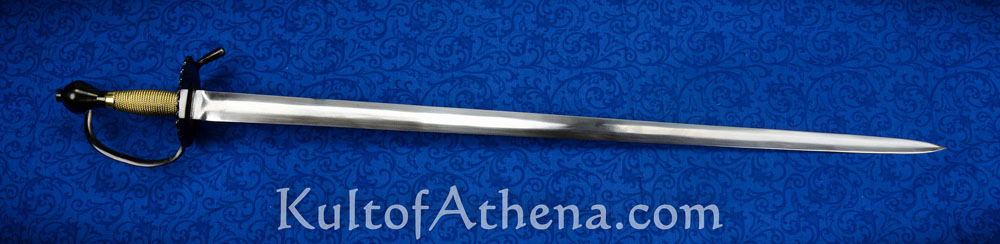
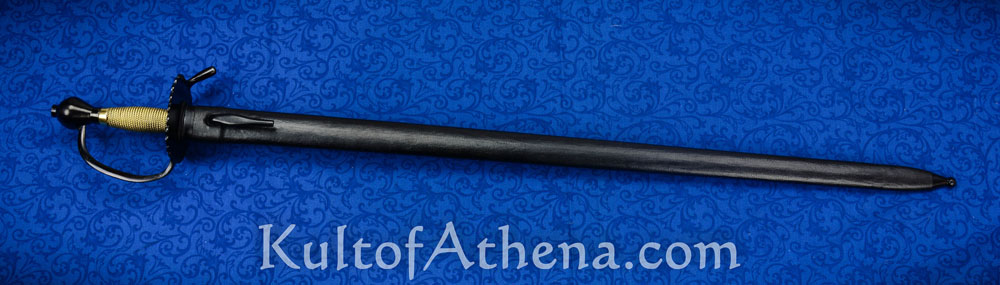
This Denmark-Norway M1701 Infantry Sword has a blade forged from 1055 high carbon steel; the hilt is blackened steel and the wooden grip is tightly wound in braided brass wire surmounted by brass ferrules. The blade is securely mounted into the hilt with a peened pommel. The companion scabbard is made from wood with a fitted wrap of leather; a blackened steel chape, locket and hanger complete the scabbard.
An early standard pattern sword, the M1701 was mass-produced for soldiers of the Denmark-Norway Union; the first 1701 order for them required the importation of 12,000 German-made Solingen blades which were often mounted into iron hilts which were painted black for rust resistance. A long-lived fighting blade, the M1701 was in use as late as 1778. In the early 19th century many of the old 1701 swords were cut down and shortened for use as naval hangers.
Specifications
Every measurement that matters
- Brand
- Universal Swords
- Edge
- Unsharpened
- Pommel
- Peened
- Overall Length
- 37 7/8''
- Blade Length
- 32 1/8''
- Blade
- 1060-1065 High Carbon Steel
- Weight
- 2 lb 5.6 oz
- P.O.B.
- 5 1/4''
- Thickness
- 5.3 mm - 2.5 mm
- Width
- 33.4 mm
- Grip Length
- 3 3/8''
- Country of Origin
- India
- Type
- Saber
Reviews
What collectors are saying
Q&A
Questions from the community
Q What is the blade made of, and how durable is it for regular handling? Common Question
The blade is forged from 1060-1065 high carbon steel, a tough, shock-resistant alloy commonly used in battle-ready swords meant to take real handling without chipping or snapping. The hilt is peened onto the blade, locking the two together for a sword built to hold up over time.
Q Is this sword sharp, and what is it meant to be used for? Common Question
This sword ships unsharpened, which makes it suited for display, historical study, and reenactment handling rather than cutting tatami or water bottles. It's classed Battle Ready, meaning the blade and fittings are built to hold up to regular handling, but the edge itself is not ground for cutting work.
Q How is the blade secured into the hilt? Common Question
The blade is mounted into the hilt and the pommel is peened over the tang, a traditional method that locks the blade, grip, and pommel together into one solid assembly rather than relying on adhesive or pins alone. This is the kind of construction expected on a sword meant for real handling rather than a display-only piece.
Q What does the point of balance tell me about how this sword handles? Common Question
The point of balance sits 5 1/4 inches out from the guard, keeping the weight close to the hand. That's typical of a saber pattern like the M1701, built for quick, agile cuts rather than a blade-heavy chopping feel.
Q What are the grip and hilt made from? Common Question
The hilt is blackened steel, and the grip underneath is wood, tightly wrapped in braided brass wire and capped with brass ferrules. This mirrors the finish used on the originals, which were often blackened for rust resistance.
Q What's the historical background of the M1701? Common Question
The M1701 was a standard-issue infantry sword for the Denmark-Norway Union, first fielded using imported German Solingen blades mounted into blackened iron hilts. It stayed in service for decades, still in use as late as 1778, and many surviving examples were later cut down into naval hangers in the early 1800s.
Q How should I take care of this sword long term? Common Question
Wipe the blade down after handling and keep a light coat of oil on the steel to prevent rust, especially since it's high carbon steel rather than stainless. Store the sword in a dry place out of its scabbard for the long term, since the wood-and-leather scabbard can trap moisture against the blade.
Q What is the scabbard made from? Common Question
The scabbard is wood with a fitted leather wrap, finished with a blackened steel chape, locket, and hanger to match the hilt. It's built for carrying and display, but like any wood-and-leather scabbard it should not be used as the sword's long-term storage spot.
The Maker
Universal Swords
With origins going back to 1960, India’s Universal Swords has been making reproduction swords for decades. With an emphasis on military sabers, universal produces a number of designs not found elsewhere. As the official US distributor of Universal Swords, KOA will be expanding to stock their entire line over time.
Often paired together
A very solid sword build wise. I can’t say how accurate it is to originals but biased on online pics & one online review of this replica the looks & overall design of the sword & scabbard are accurate. Where I don’t know how accurate it is in the blade. It’s got profile taper & done distal taper but not a lot of distal. Its more sluggish & too heavy than I would have guessed but I know very little about swords of the 1700s; especially Scandinavian swords of the 1700s.
That being said the online review says:
“Universal Swords are popularly regarded as being display pieces that you can sorta handle. They produce primarily 18th and 19th century swords that look alright at a glance, but don’t hold up when compared to original examples. However, an exception to this is the Gavelins line. Commissioned by the now defunct Gavelins Arms, this collection of Swedish and Norwegian swords are unique in that they are highly accurate to the originals in terms of looks and stats.”
Given the review was written in 2019 & it is now 2025 it may be quality has slipped a bit & mine is slightly beefier than older versions? It’s not unweildable but is like a hefty medieval arming sword or Viking era sword in authority. Since it’s an infantry sword, not cavalry sword, normally it think it a bit too heavy for the peroid. But since it is made for infantry and soldiers swords are often over built to compensate for abuse it may well be accurate.
I ordered KoA sharpening as it normally comes unsharpened. It’s rather sharp but has a rather pronounced secondary bevel effecting it’s cutting. Apple seeding should improve that. I just wish KoA sharpened more acutely.
Overall:
Great looker, decent to swing & cutting depends on how it’s sharpened; but not for those who want a light sword or have weaker wrists.