


Thaitsuki Roiyaru Sanmai Wakizashi
In stock
$2,250.00
- Shipping estimated at checkout
- Every blade inspected before shipping
- 30-day returns
- Overall Length
- 29 1/8''
- Weight
- 1 lb 11.9 oz
- Brand
- Thaitsuki Nihonto
- Culture
- Japanese
Overview
Thaitsuki Roiyaru Sanmai Wakizashi
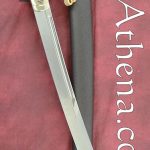
The Roiyaru Sanmai Wakizashi is a companion blade to the Roiyaru Sanmai Katana. It has a Koto-style hand-forged blade of high carbon steel that has been folded to produce 1024 internal layers. The half-bohi blade has been heat-treated with the traditional clay-coating process and tempered to an edge hardness of 60 HRC and a body hardness of 35 HRC. Its waved hamon from this process is clearly visible along the edge. The blade is finished by being hand polished and sharpened.
The Habaki, Seppa and Menuki are of silver and the fuchi, and kashira are of blackened brass with silver flower accents. The tsuba of interwoven flora, is crafted from blackened brass. The tsuka grip is wrapped with blackened rayskin and overlaid with tightly woven gold-brown Japanese silk tsuka-ito with silver flowered menuki beneath.
The two-layer wooden Saya scabbard is coated with a hand-rubbed textured brown lacquer. It has been fitted with silver accents, including a silver sayajiri at its tip. A sageo of light-brown cord is knotted to the Saya. The sword comes with a green silk sword bag and a numbered and signed production certificate.
PLEASE NOTE: There may be some minor to moderate cosmetic blemishing present on the scabbard and minor blemishing on the blade. These are handcrafted and hand-finished so minor cosmetic imperfections may be present.
Specifications
Every measurement that matters
- Brand
- Thaitsuki Nihonto
- Culture
- Japanese
- Edge
- Very Sharp
- Pommel
- N/A
- Overall Length
- 29 1/8''
- Blade Length
- 20 3/4''
- Weight
- 1 lb 11.9 oz
- P.O.B.
- 3 5/8''
- Thickness
- 7.6 mm - 5.2 mm
- Width
- 30.3 mm
- Grip Length
- 8 3/8''
- Country of Origin
- Thailand
- Type
- Wakizashi
Reviews
What collectors are saying
Q&A
Questions from the community
Q What steel is the blade made from, and how is it constructed? Common Question
The blade is hand-forged from high carbon steel that has been folded to create 1024 internal layers, a traditional method used to refine the steel's grain structure. It's clay-coated and heat-treated in the traditional way, producing a visible wavy hamon along the edge, with the cutting edge brought to 60 HRC and the body left softer at 35 HRC for resilience.
Q Does this wakizashi come sharp, and what can I cut with it? Common Question
Yes, this blade ships Very Sharp and hand-polished. It's suited to test cutting on tatami mats and water bottles, in keeping with its traditional Japanese short-sword design.
Q What is the point of balance, and what does it mean for handling? Common Question
The point of balance sits 3 5/8'' from the guard, keeping weight concentrated close to the hand. That balance point suits the wakizashi's role as a quick, maneuverable companion blade rather than a sword built for heavy, extended cuts.
Q What are the handle and fittings made of? Common Question
The habaki (blade collar), seppa (spacers), and menuki (grip ornaments) are silver, while the fuchi and kashira are blackened brass accented with silver flowers. The tsuba is blackened brass worked in an interwoven floral design, and the tsuka is wrapped in blackened rayskin under tightly woven gold-brown Japanese silk ito.
Q What does the scabbard look like, and what's it made of? Common Question
The saya is built from two layers of wood and finished in a hand-rubbed, textured brown lacquer, with silver fittings including a silver sayajiri at the tip. A light-brown sageo cord is knotted to the scabbard. The photographs also show a decorative scalloped metal chape and a cord-wrapped kurikata along the body of the saya.
Q What comes included with the sword? Common Question
The wakizashi ships with a green silk sword bag and a numbered, signed production certificate, in addition to its fitted saya and sageo cord.
Q How should I care for this sword over time? Common Question
Wipe the blade down after handling and keep a light coat of oil on the steel to prevent rust, especially since the edge ships sharp. Store the sword somewhere dry, and keep in mind that the lacquered wooden saya can trap moisture against the blade, so it's better to store the sword outside the scabbard rather than leave it sheathed long-term.
Q Is this sword meant for display, cutting practice, or both? Common Question
With a Very Sharp edge, a clay-tempered high-carbon blade, and traditional silver and brass fittings, this wakizashi works both as a cutting blade for tatami and water bottles and as a piece worth displaying in its lacquered saya. Which role fits best depends on whether you want to use the edge or keep the sword primarily mounted for show.
The Maker
Thaitsuki Nihonto
It all began over 400 years ago with a commanding officer stationed in Thailand, who passed on sword making traditions to the Sivarat family. Today Thaitsuki Swords, owned by the Sivarat family, is recognized across the world for their superior heirloom quality. Each sword is individually produced by highly trained smiths, marked with a serial numbered and packaged with a signed certificate of authenticity.
Thaitsuki Nihonto specializes in melding blades of excellent quality with distinguished and elevated koshirae hilt fittings and a premium saya scabbard. Where other brands will cut corners on the finer points of fit and finish of koshirae and blade polish, Thaitsuki Nihonto follows through to create an exquisitely well crafted sword which has had the attention of a skilled craftsman hand-finishing each step to ensure an excellent fit and finish throughout. From Thaitsuki you can expect to see blades of skillfully forged steel, a superb blade polish, components of higher quality metals, a well-knotted grip wrap, finely lacquered scabbard, high quality samegawa rayskin, and close attention paid to details such as a tight and flush fit between the scabbard opening and its encased koiguchi.
Often paired together
No reviews yet. Only logged in customers who have purchased this product may leave a review.